
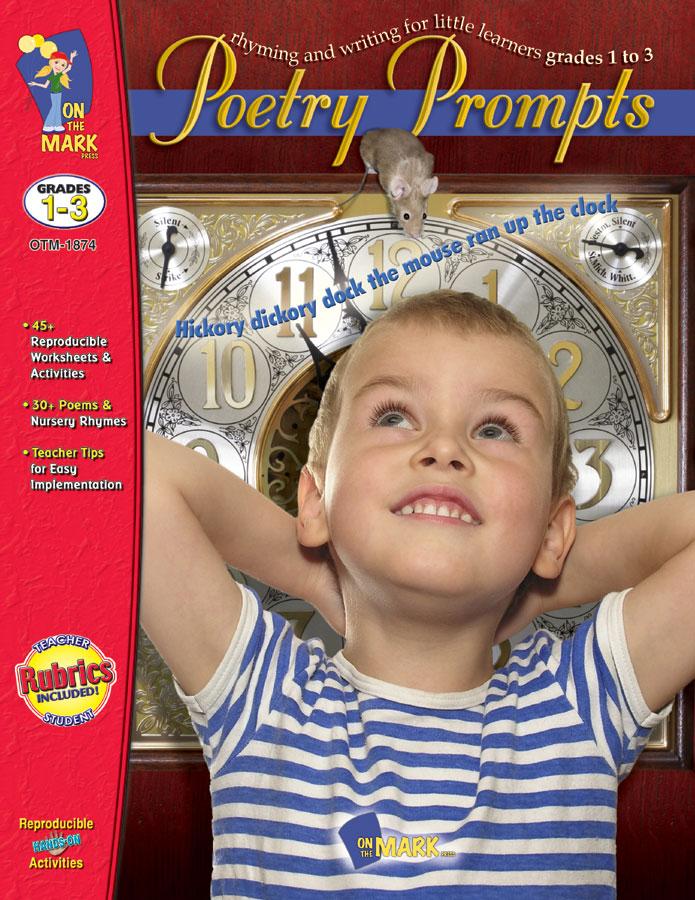
Poetry Prompts Grades 1-3
EBOTM1874
$24.99 CAD
Additional information:
- Author : Solski, Ruth
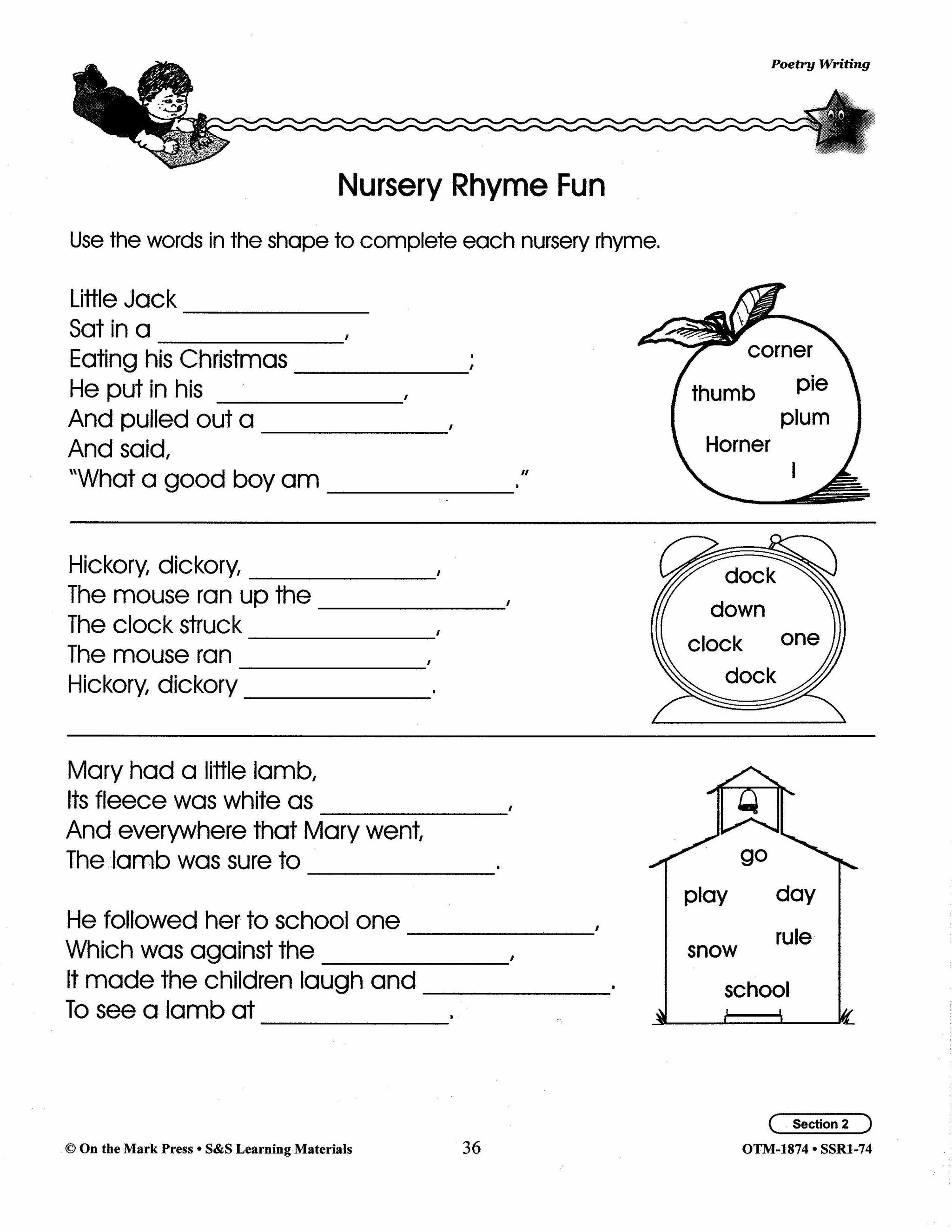
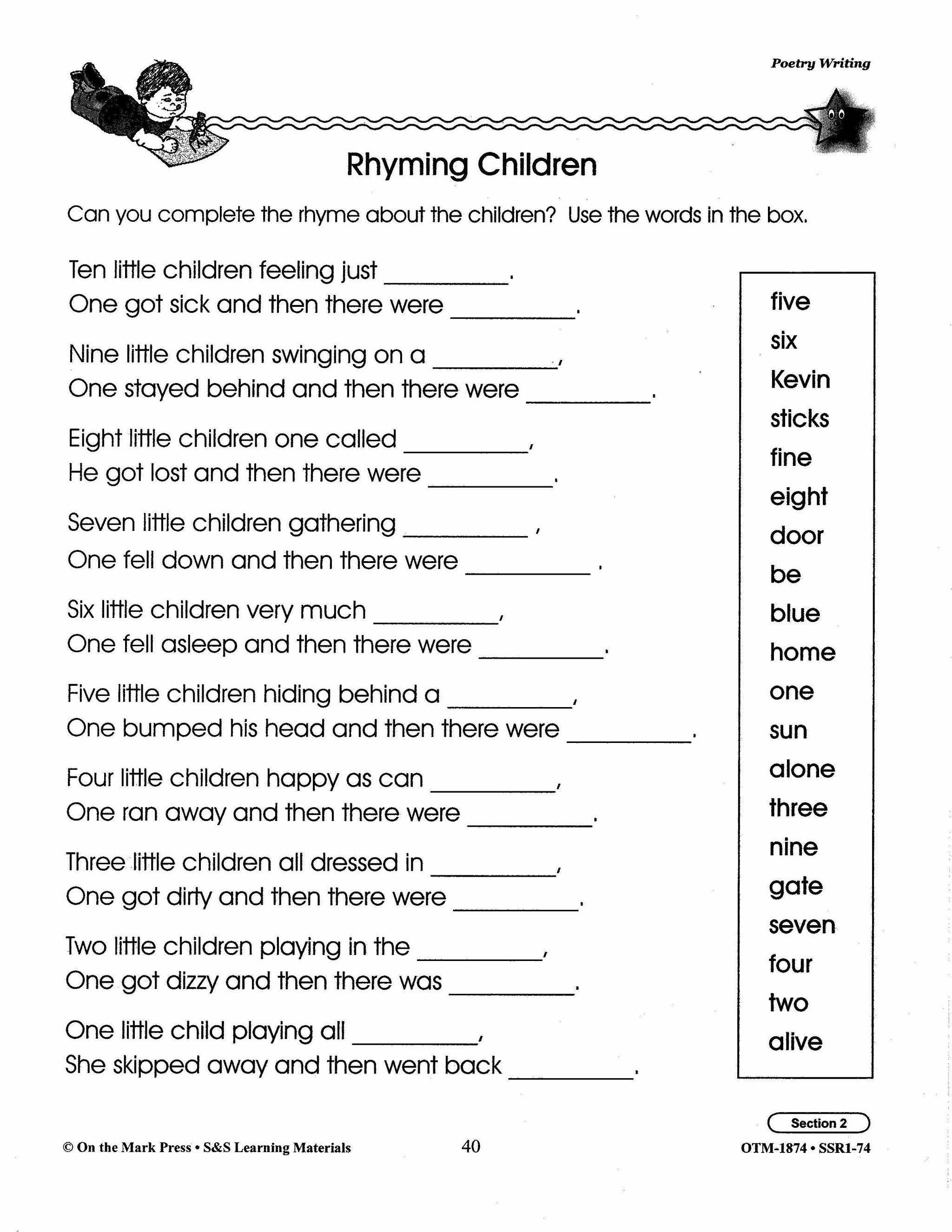
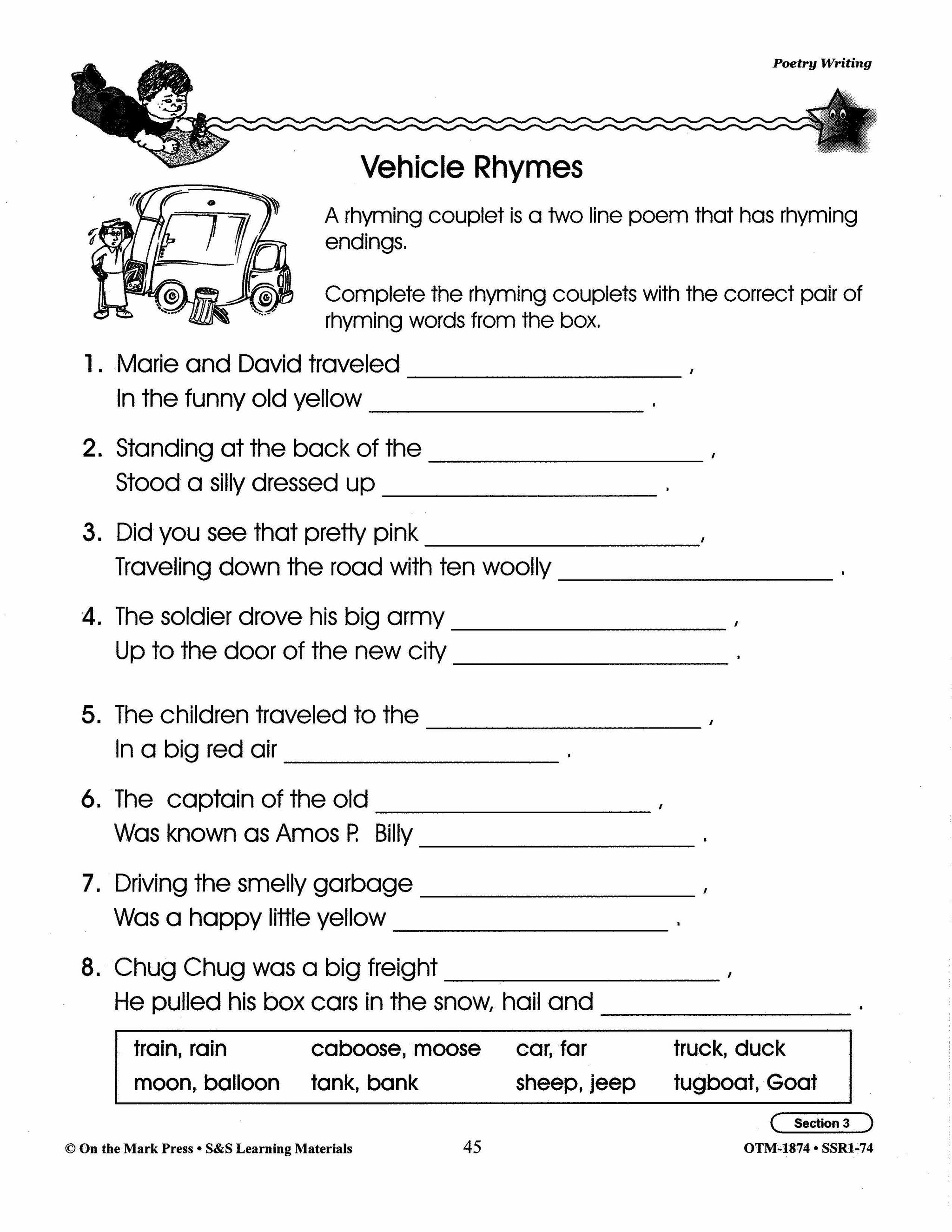
Help young learners fall in love with poetry! This resource introduces rhyme, rhythm, sound, and expression through choral reading, nursery rhymes, word‑family lists, and guided writing templates. Students learn to identify rhyming words, read with fluency, and create their own poems—including couplets, acrostics, limericks, haiku, and cinquains.
Curriculum Alignment
Canada: Meets Language expectations across all provinces and territories, including:
-
Ontario (Oral 1.1–1.6; Reading 2.1–2.4; Writing 1.1–1.6)
-
BC (Comprehend & Connect; Create & Communicate)
-
Alberta (1.1–3.3)
-
Saskatchewan (CR/CC/CP outcomes)
-
Manitoba (Clusters 1–4)
-
Atlantic Provinces (Speaking, Reading, Writing)
United States: Aligned to Common Core ELA for Grades 1–3: RL.1–3.4, RF.1–3.4, W.1–3.3, SL.1–3.4.
A perfect addition to any literacy program, poetry unit, or creative writing block.
Ideas for teaching poetry to primary children include:
- How to listen to poetry and recite poetry using choral reading skills
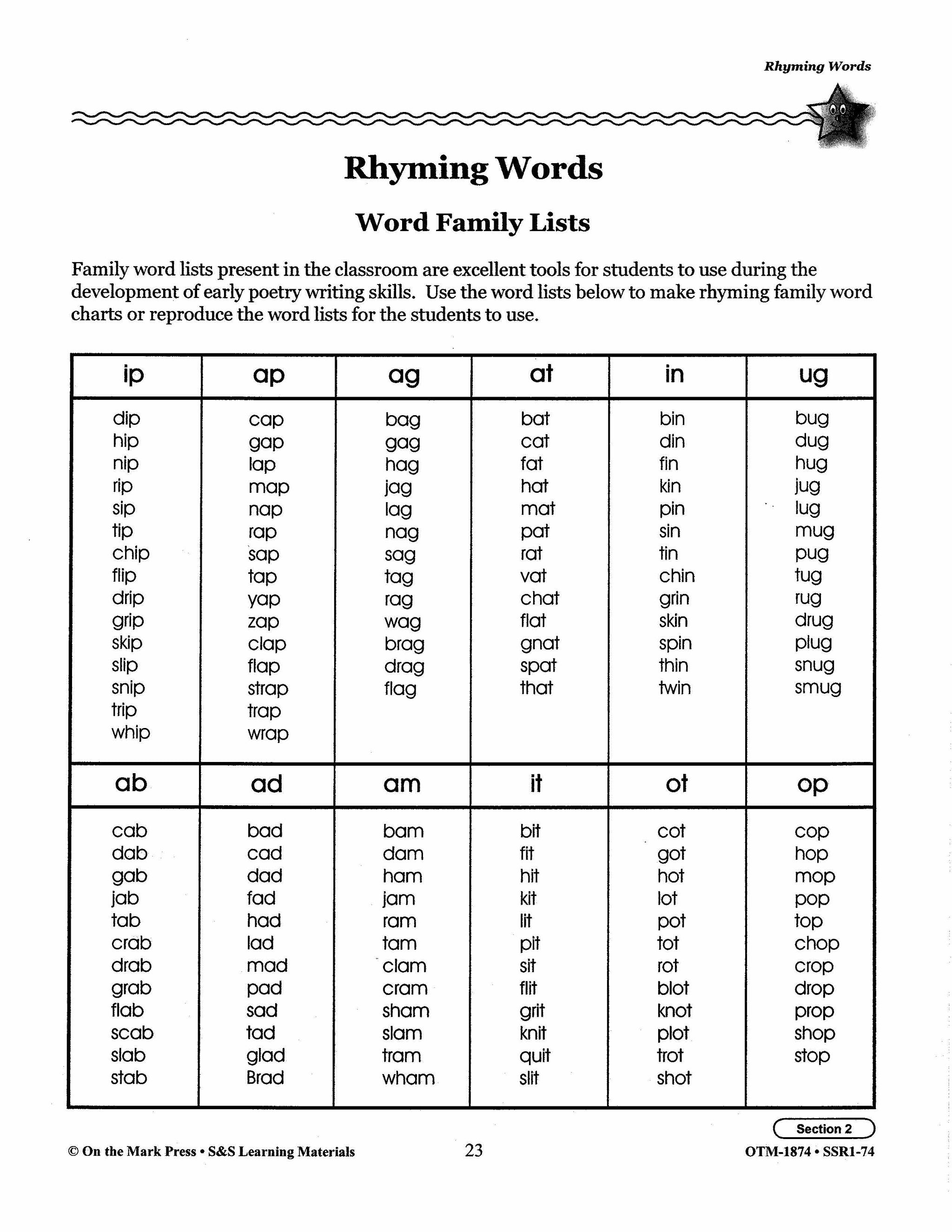
- Exercises that include the word list for the development of early poetry writing skills
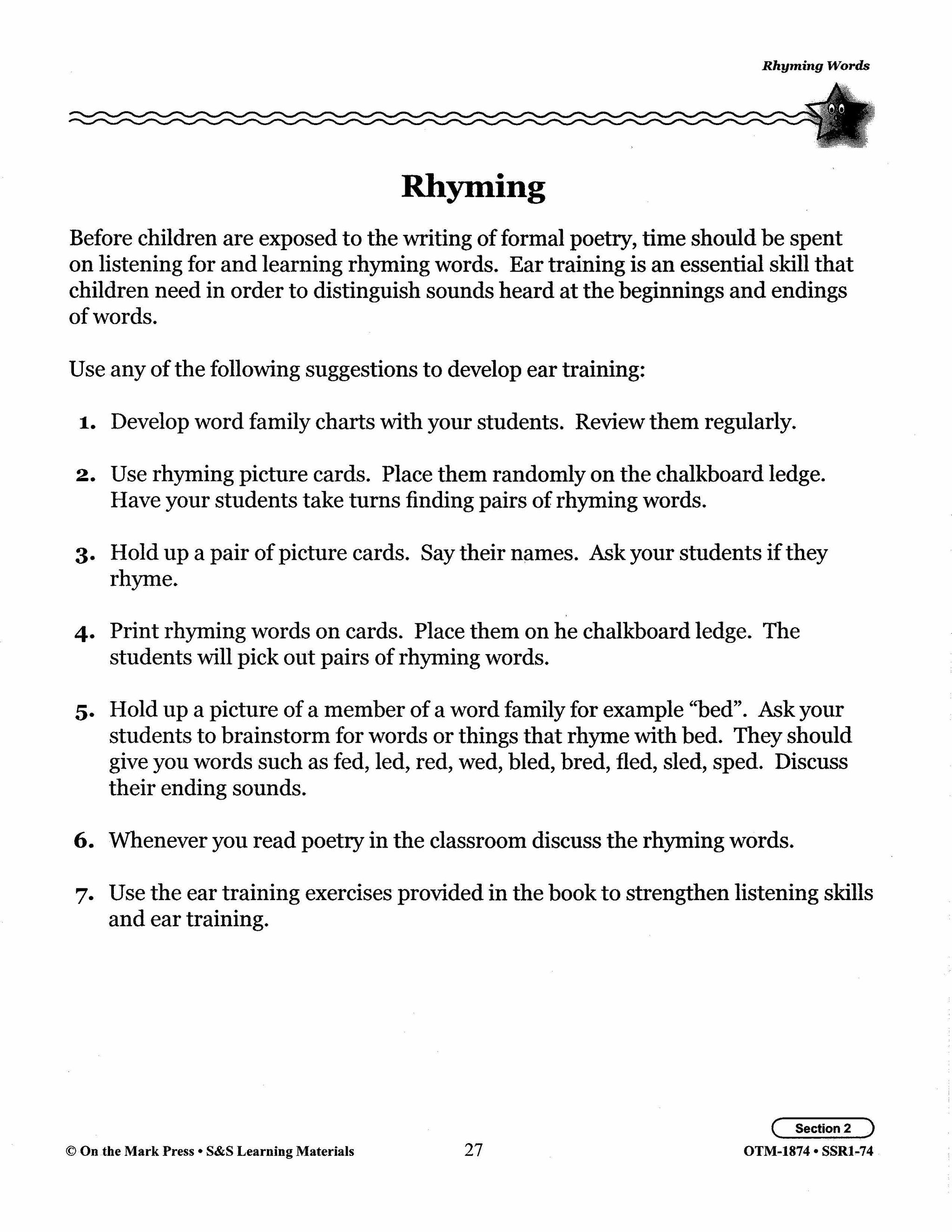
- Lessons for the development of listening and ear training skills using two and three rhyming words
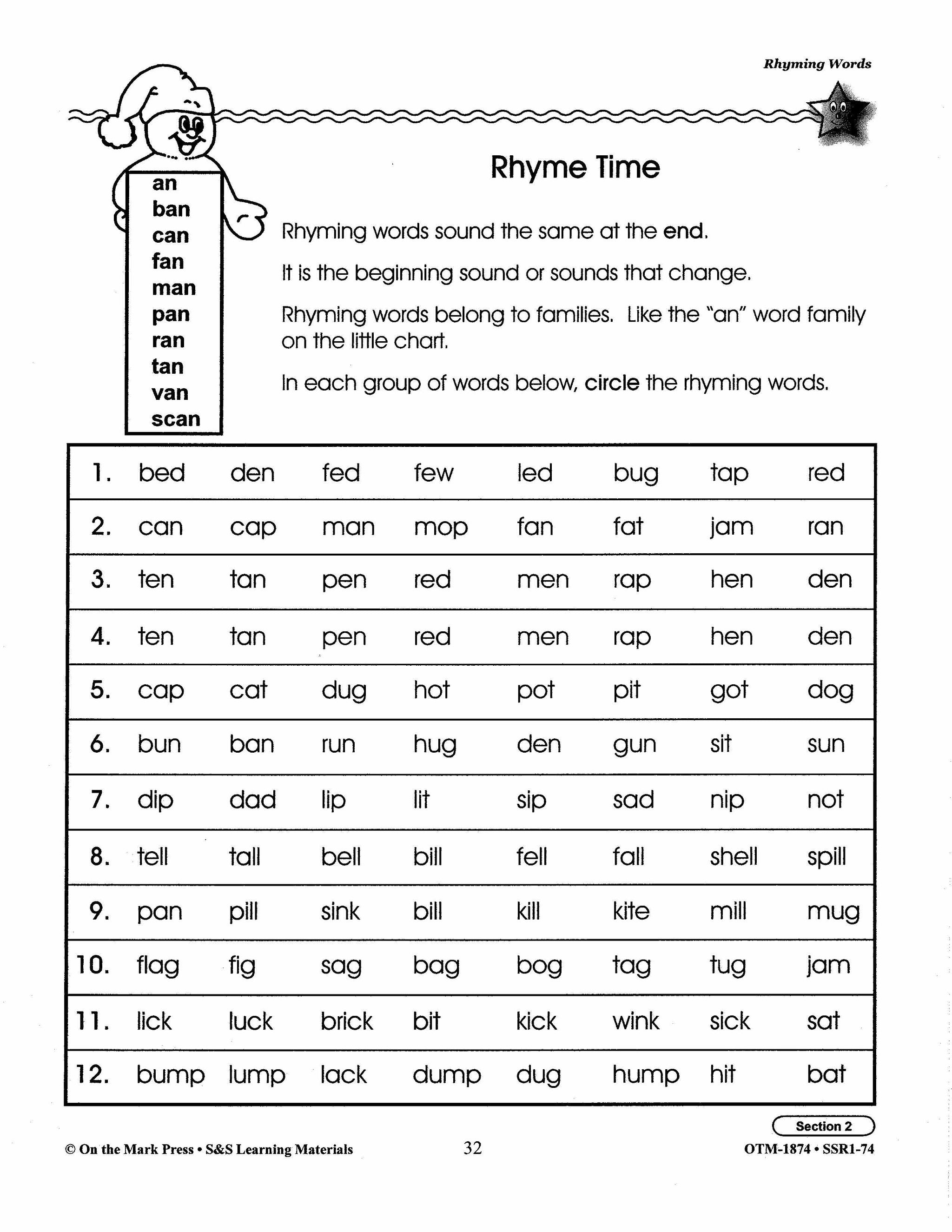
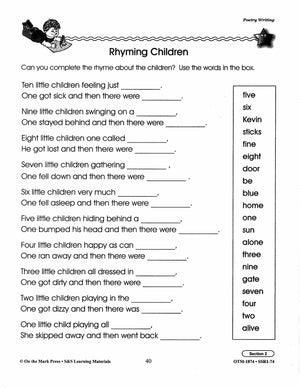
- Worksheets that progress to solving rhyming riddles
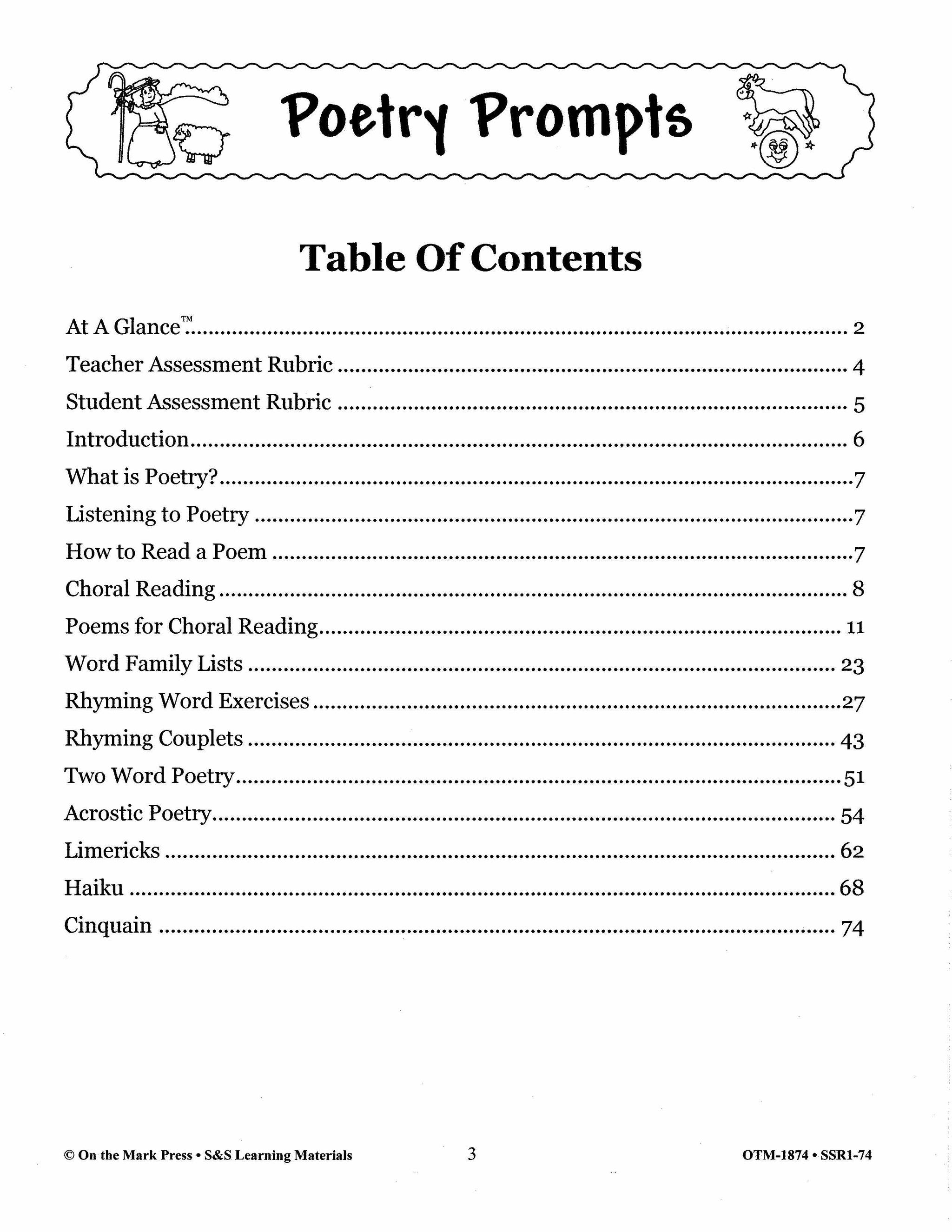
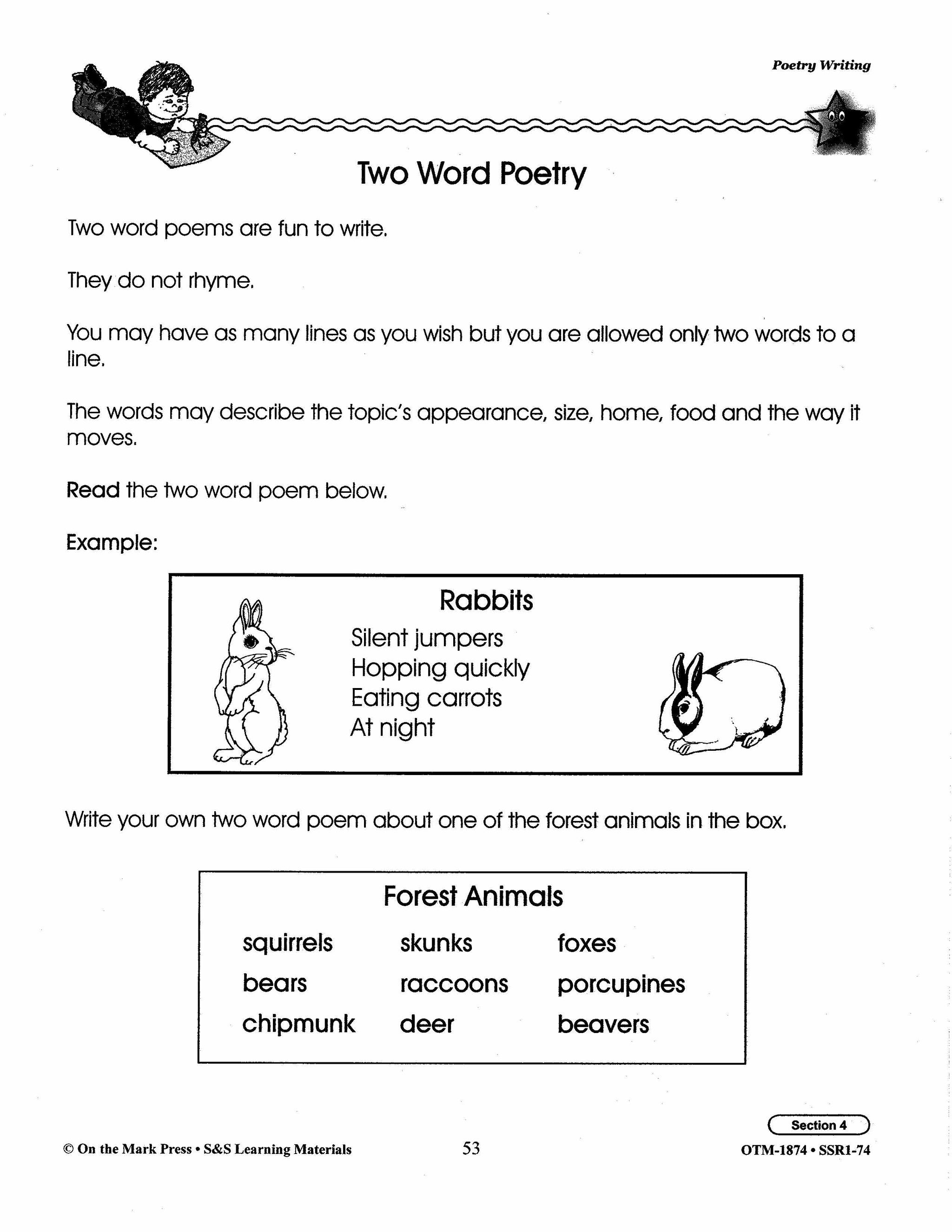
Your students will learn to write poetry through 15+ worksheets. A further 30+ worksheets and activities will extend students' poetry writing skills in the following poetry forms:
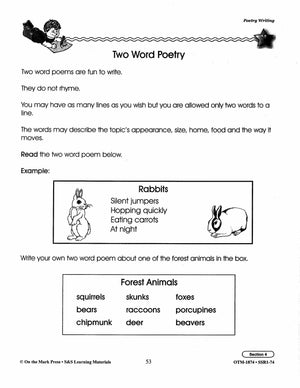
- Two-word poems:
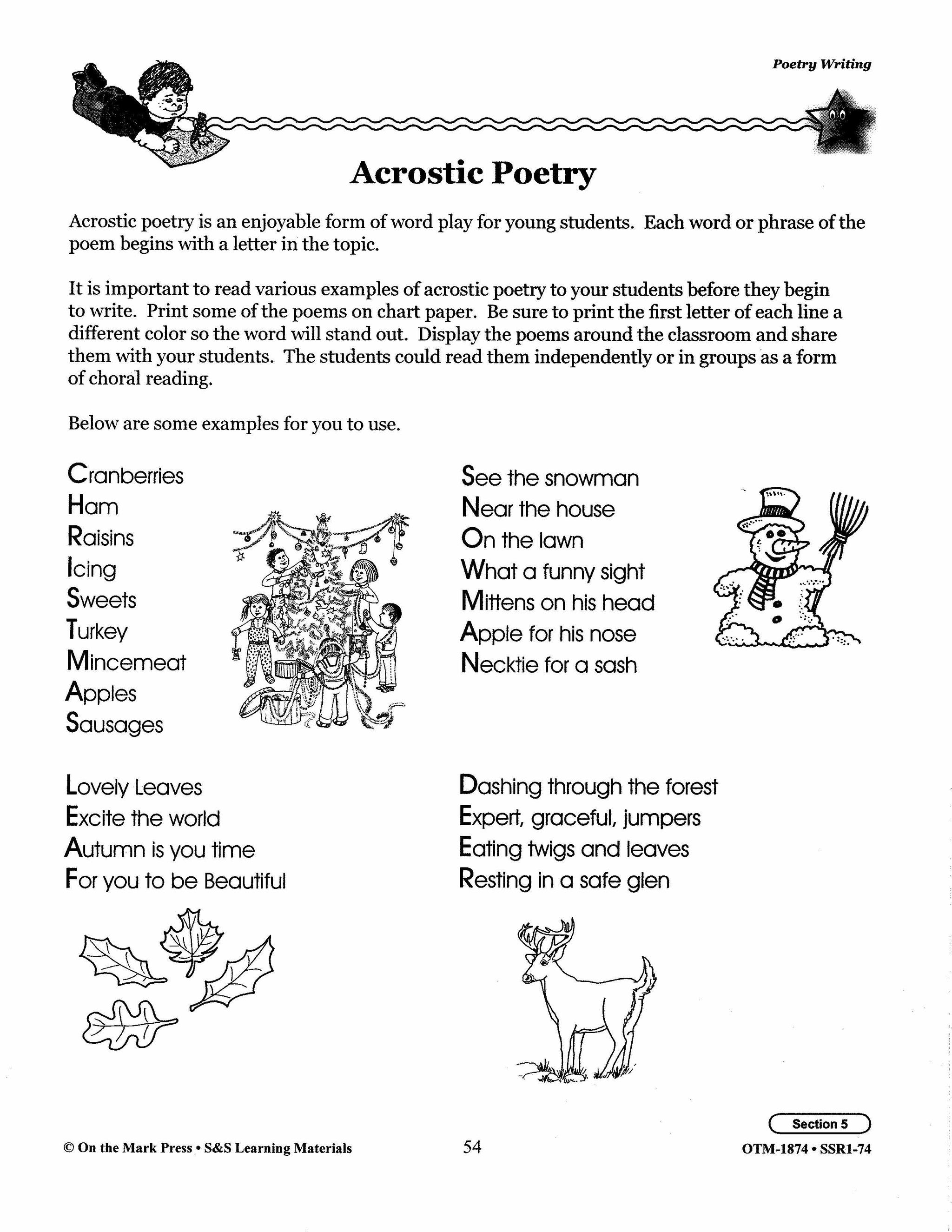
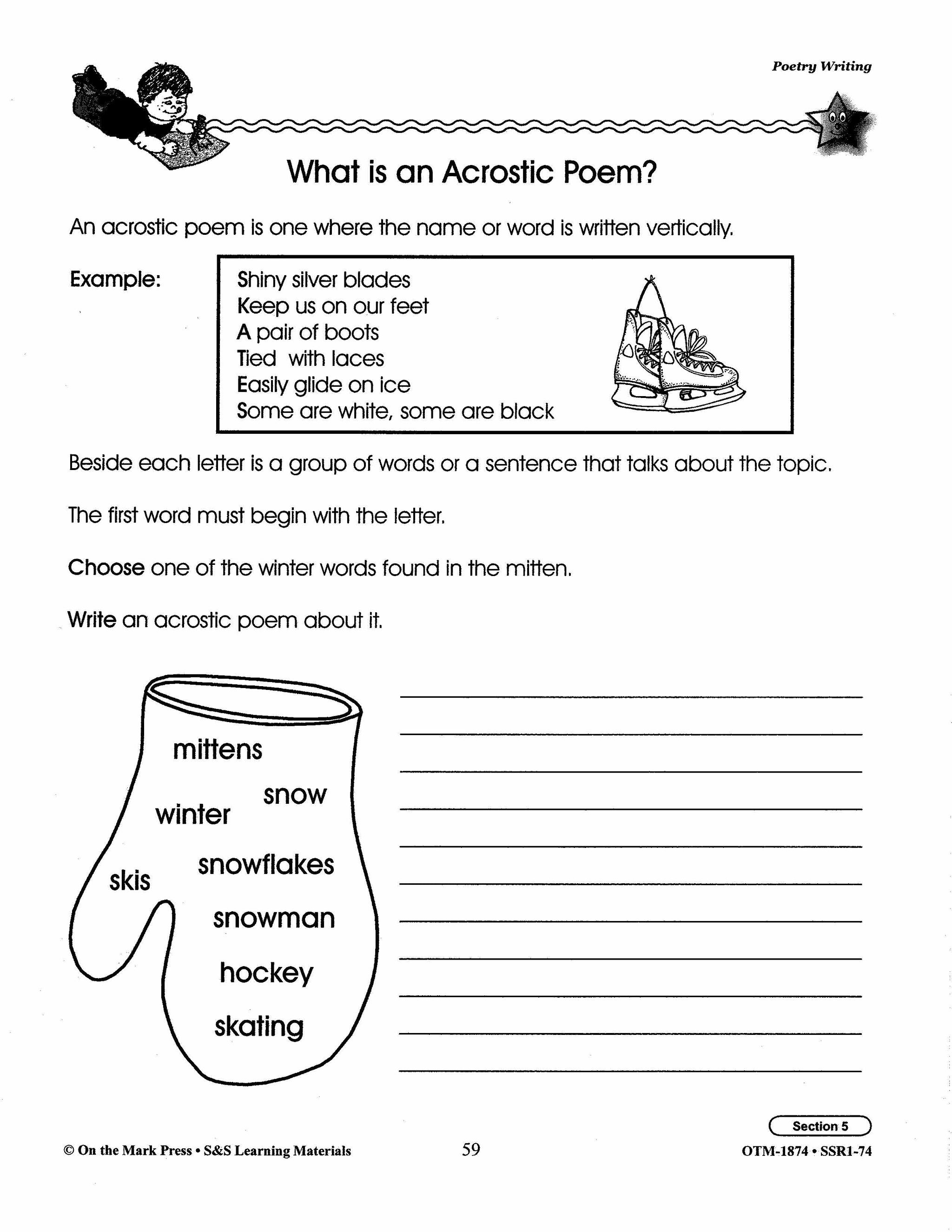
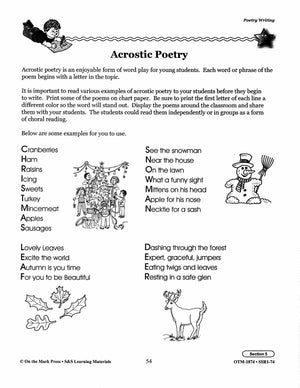
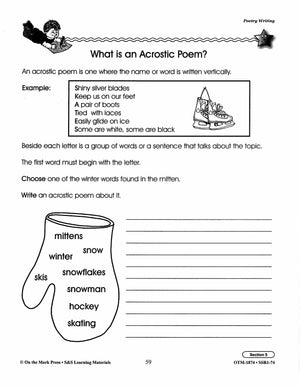
- Acrostic
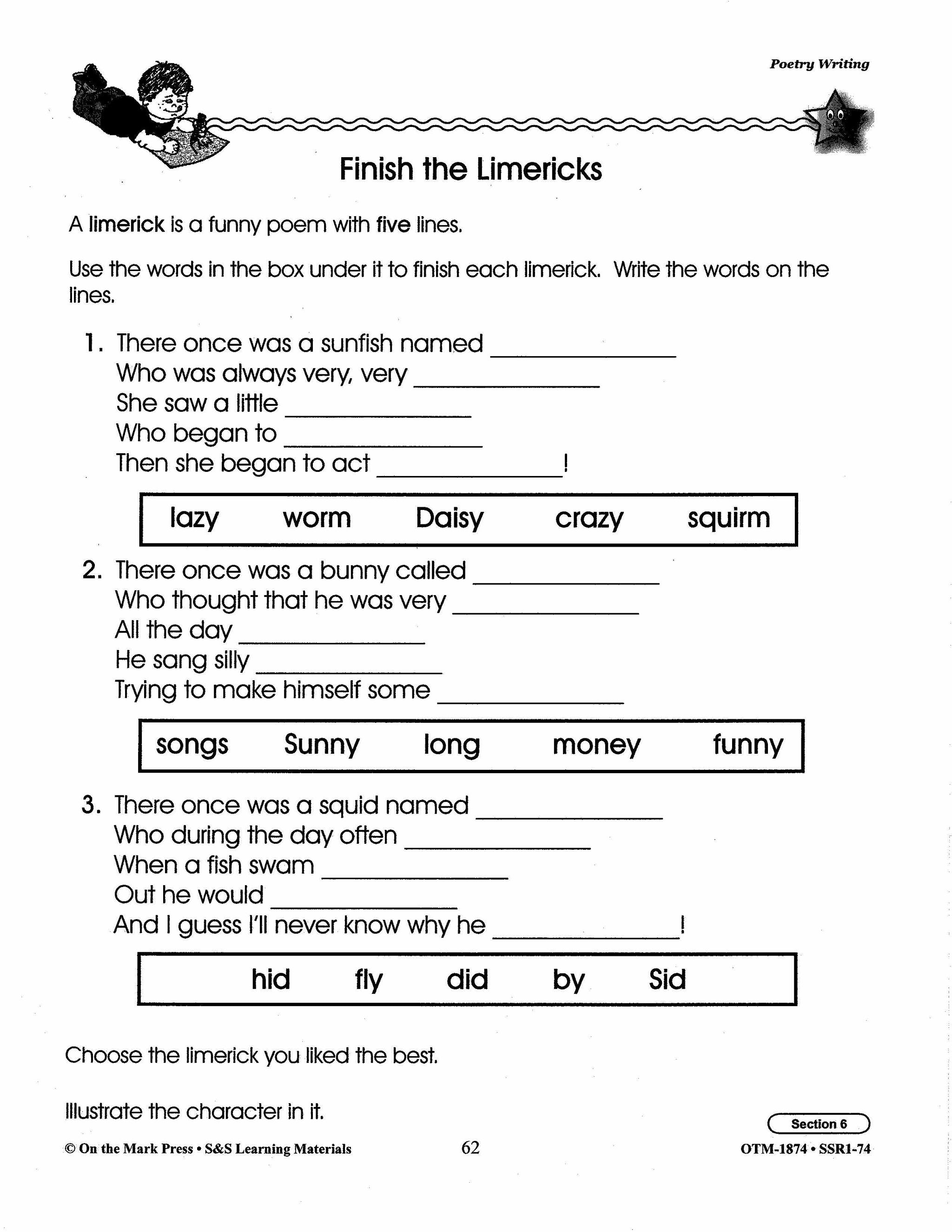
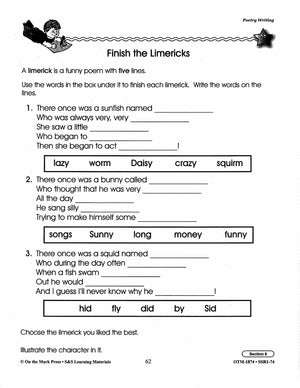
- Limerick
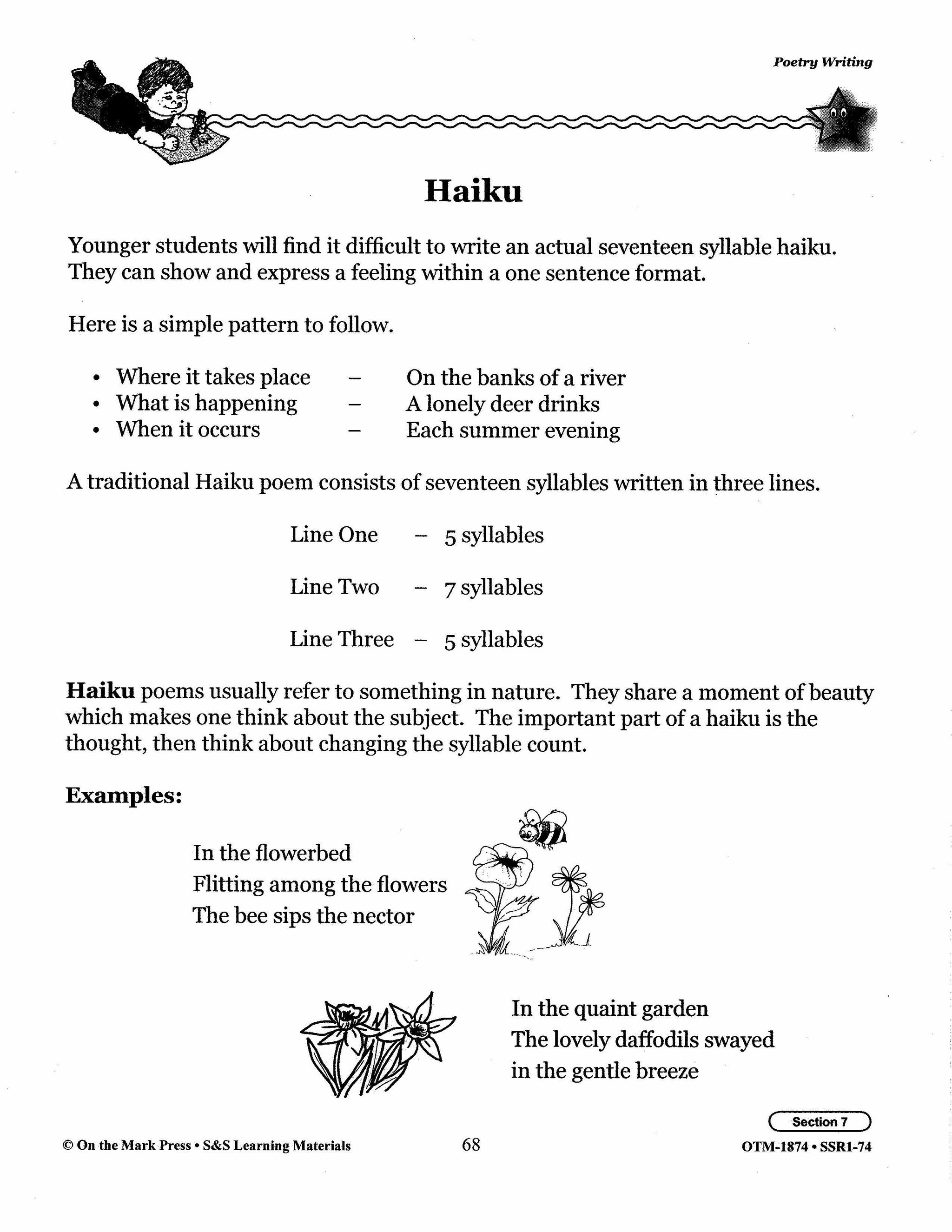
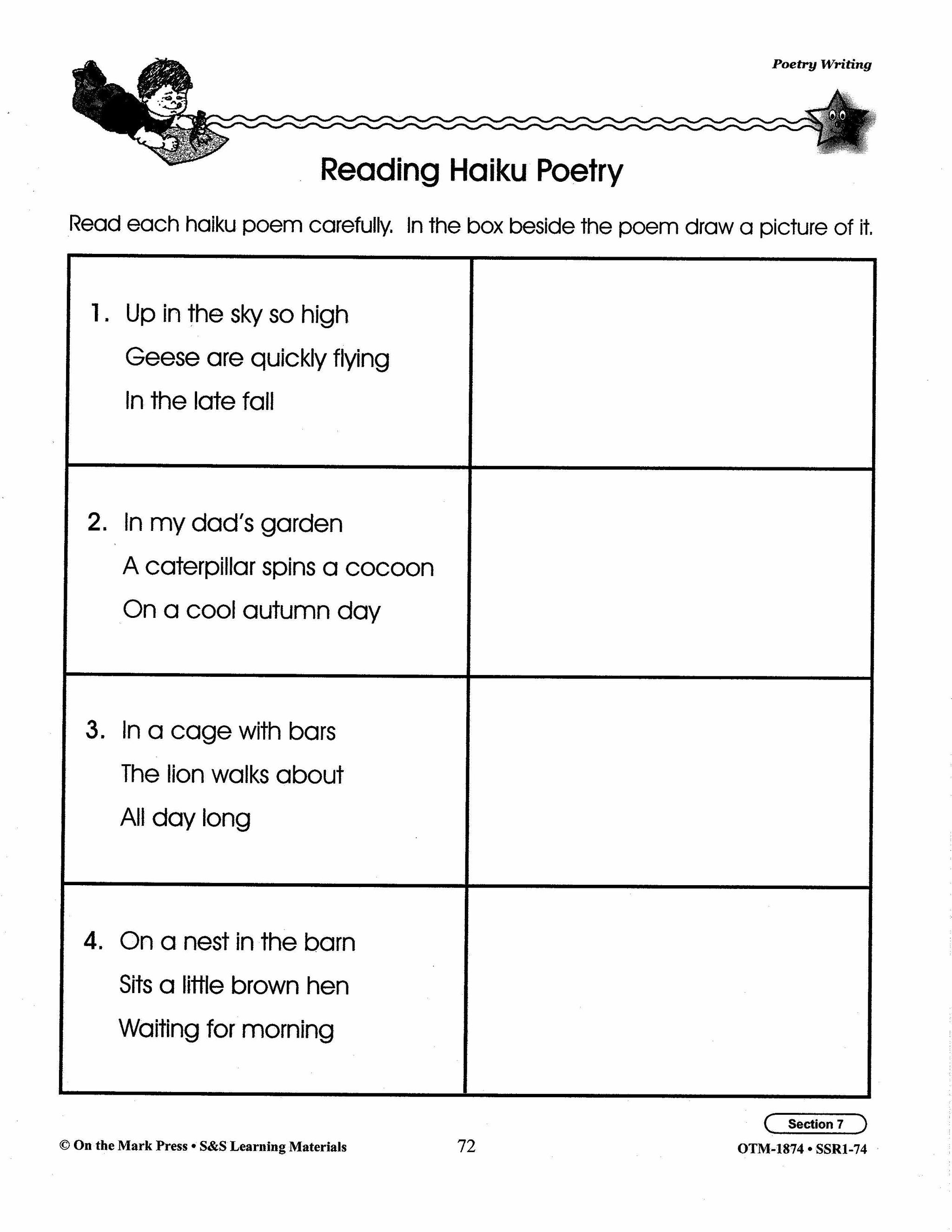
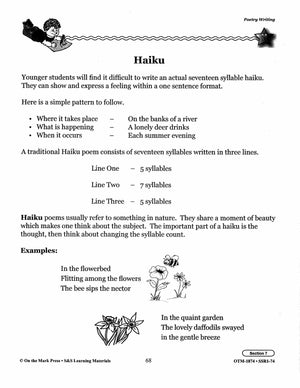
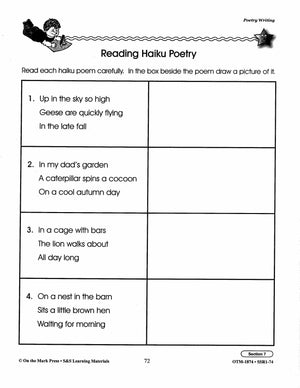
- Haiku
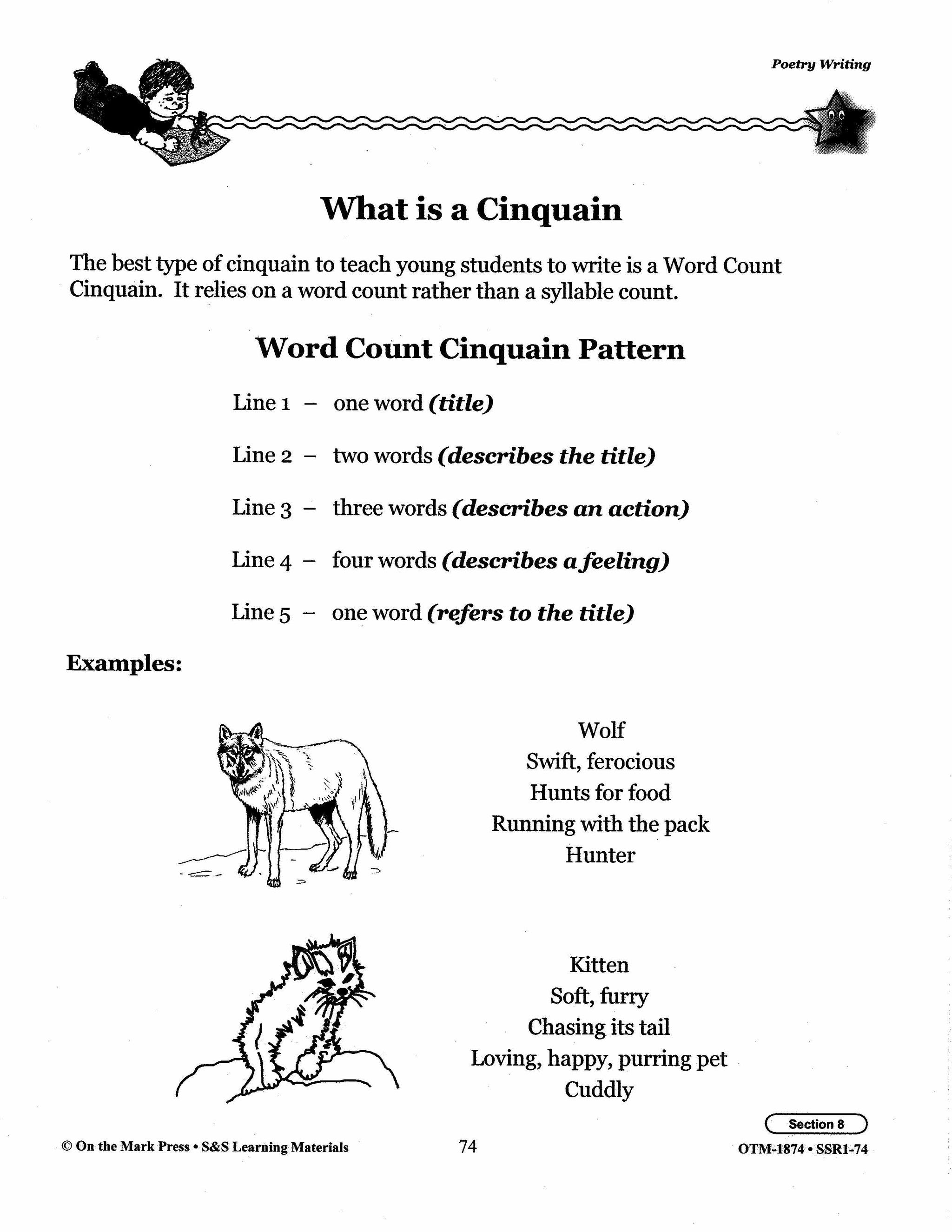
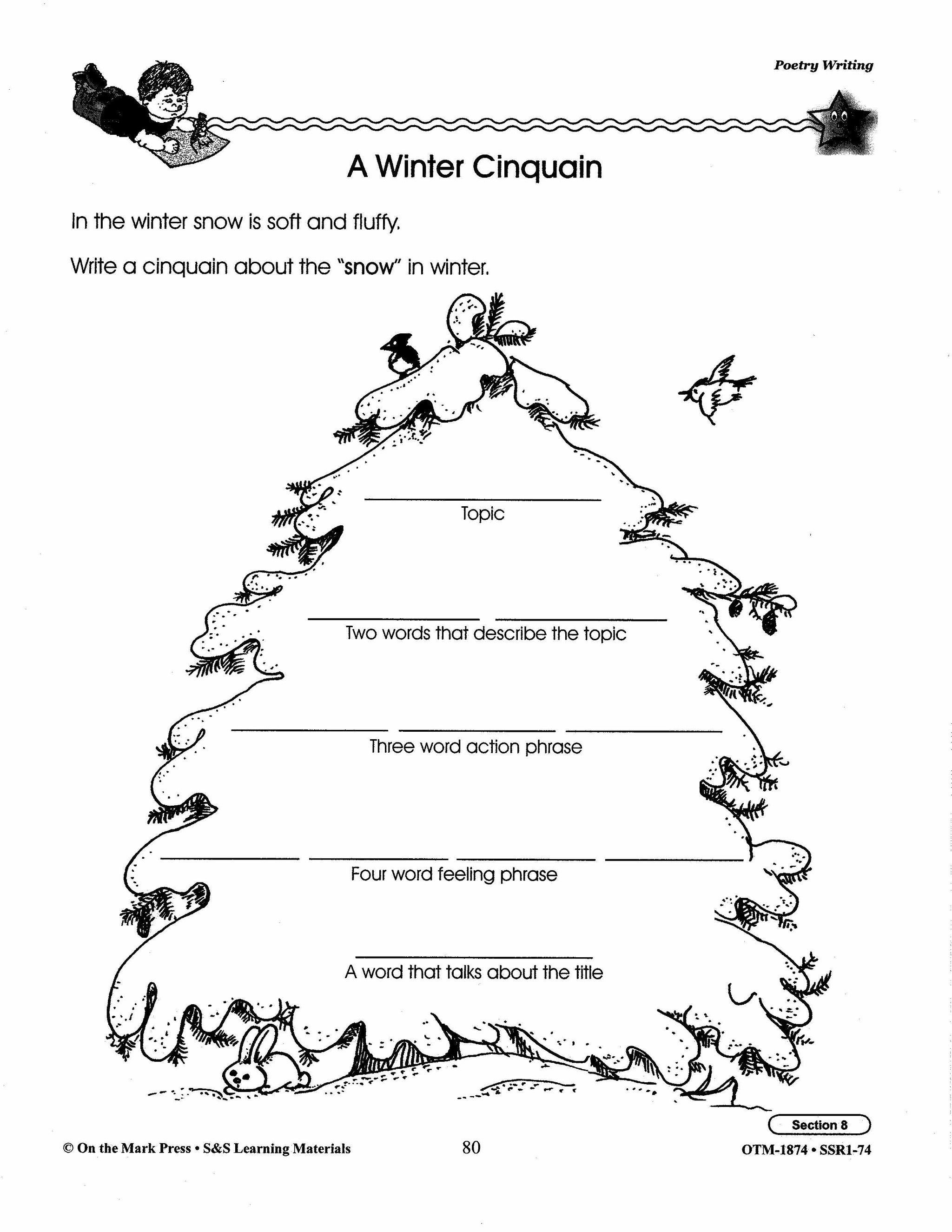
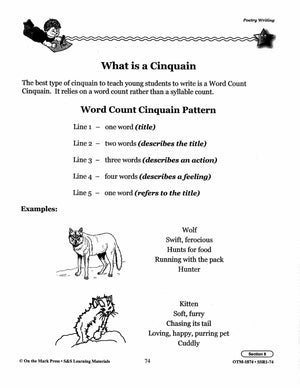
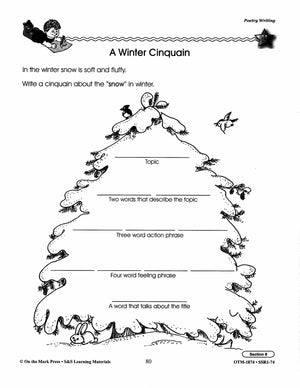
- Cinquain
Poetry is a literary art form that is often forgotten about in the classroom. Young students sometimes experience great difficulty writing any form of poetry. Hopefully the ideas and activities in this book will provide you with some easy ways to introduce poetry writing to your students. You will find guidance in reading, appreciating and writing a variety of poetry forms.
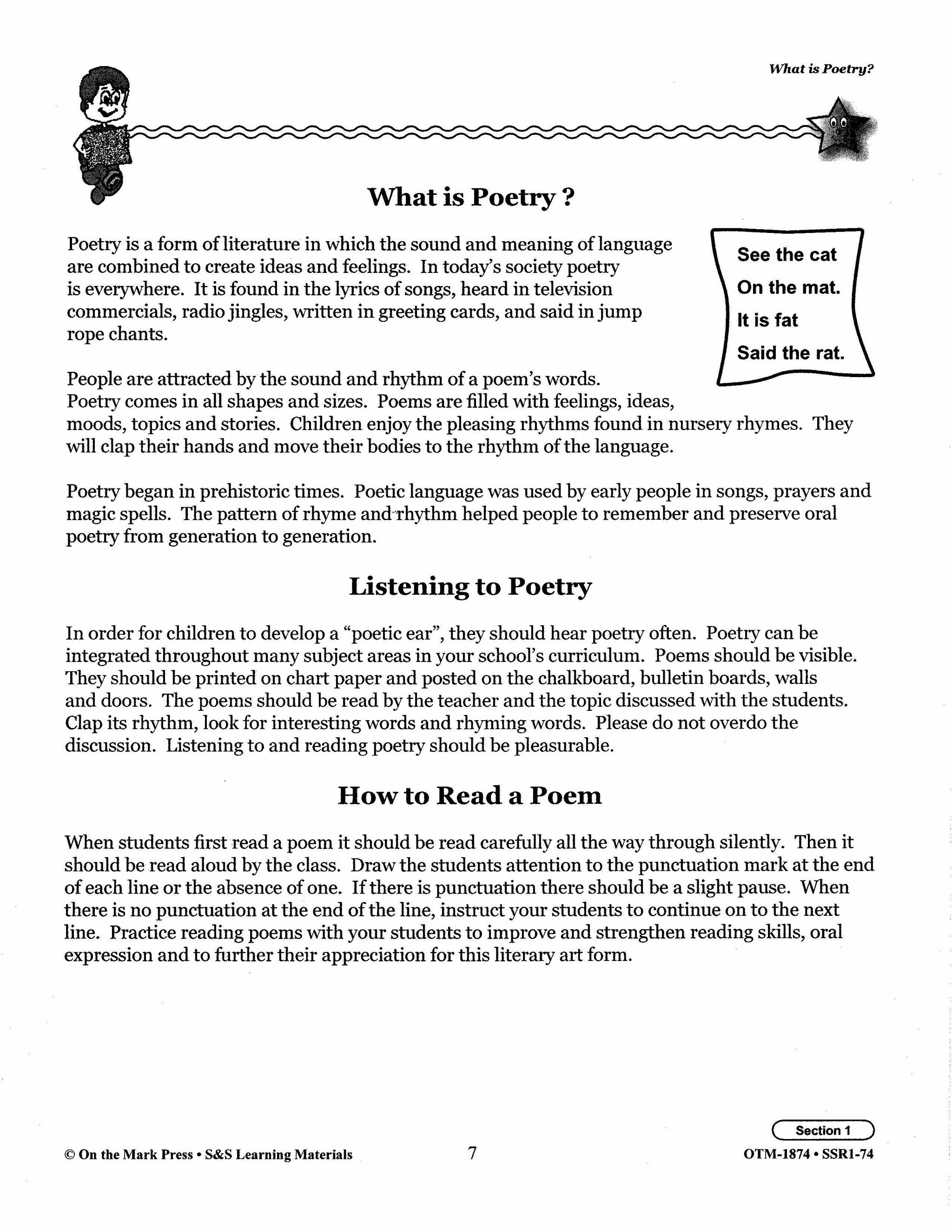
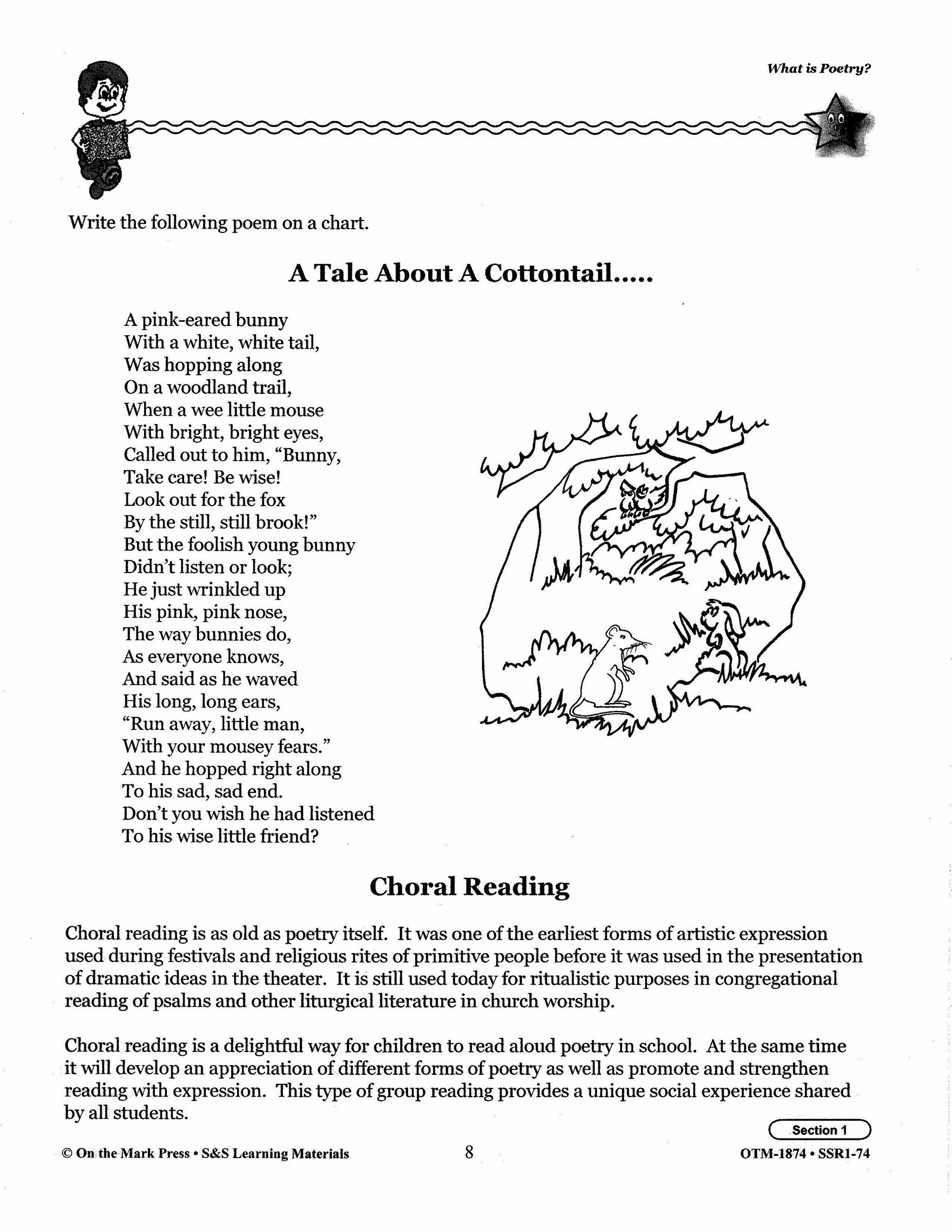
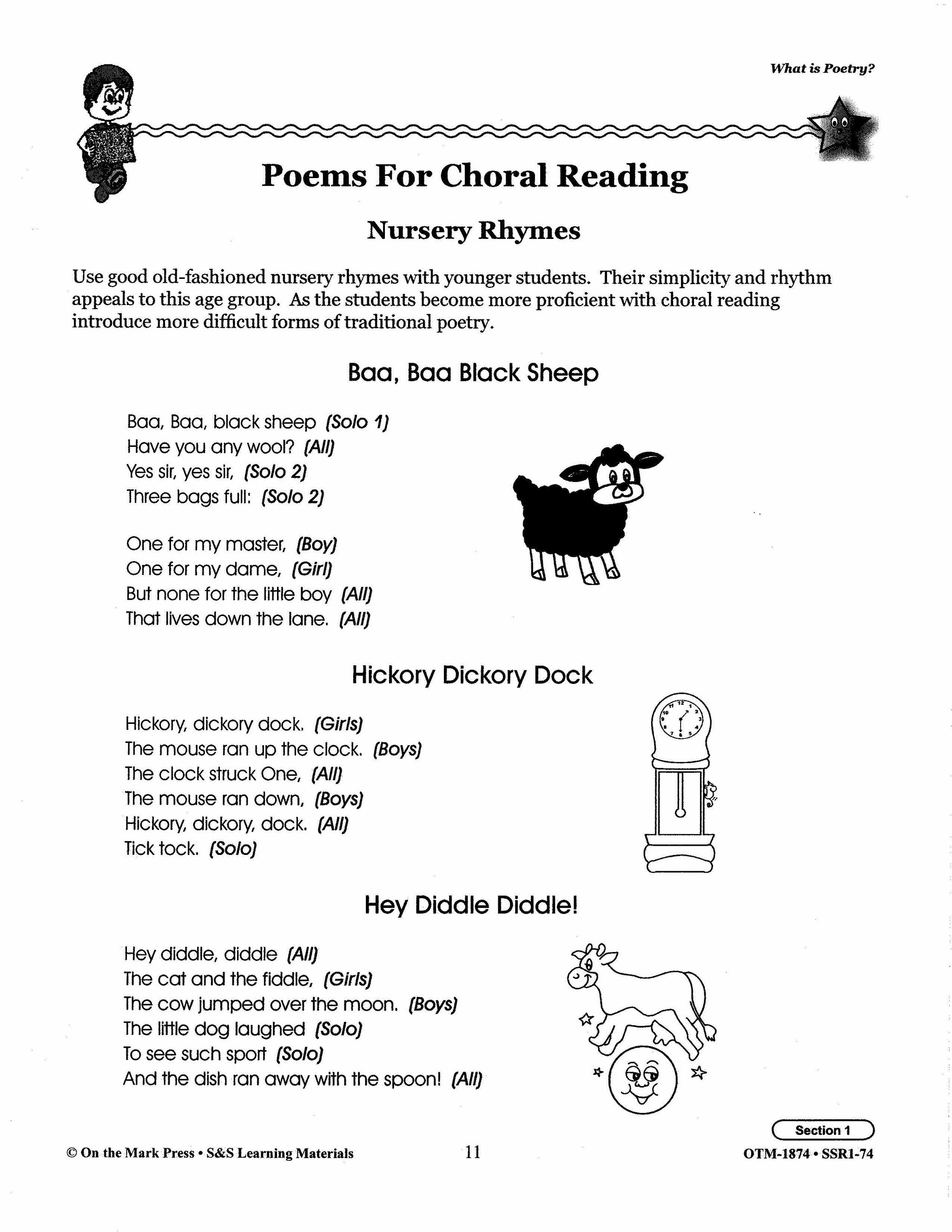
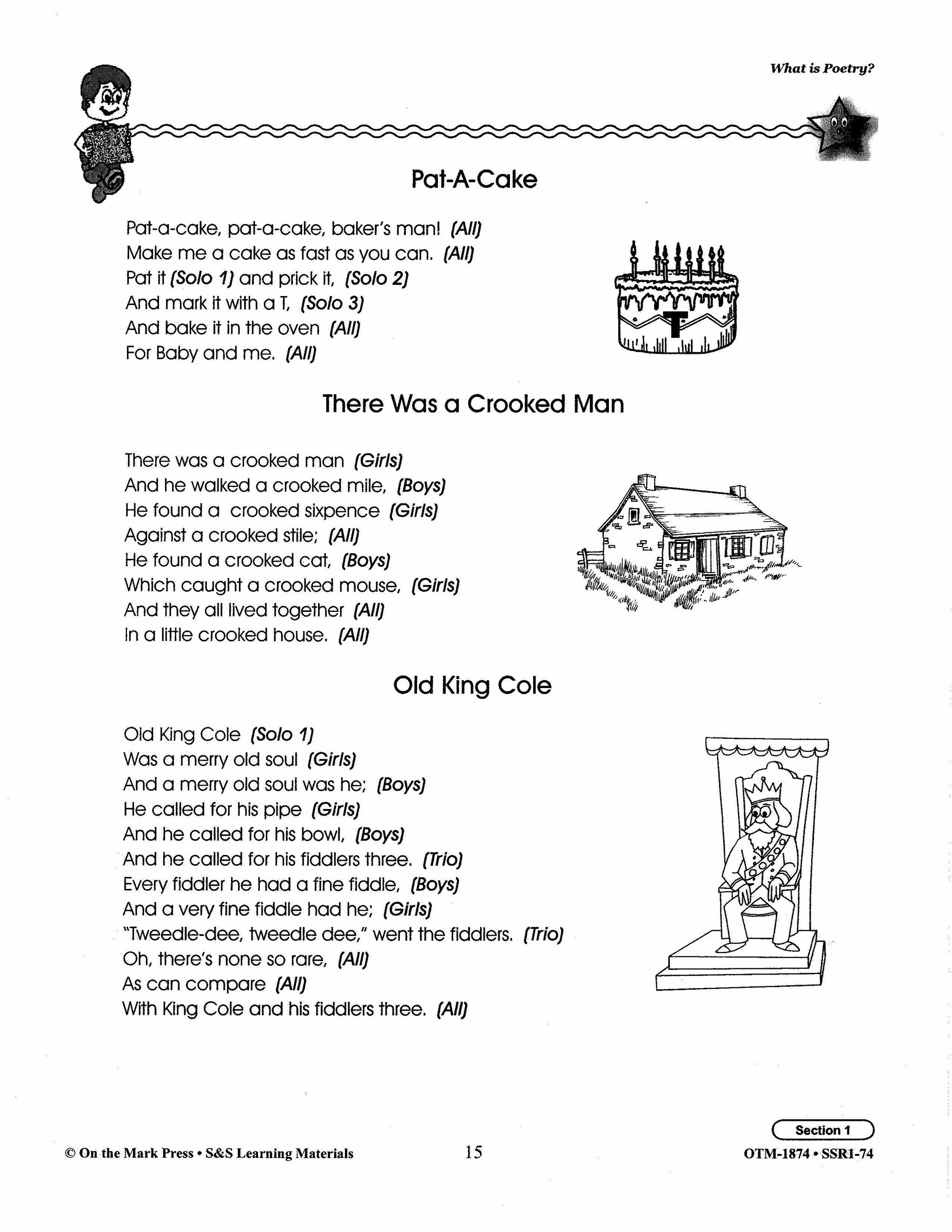
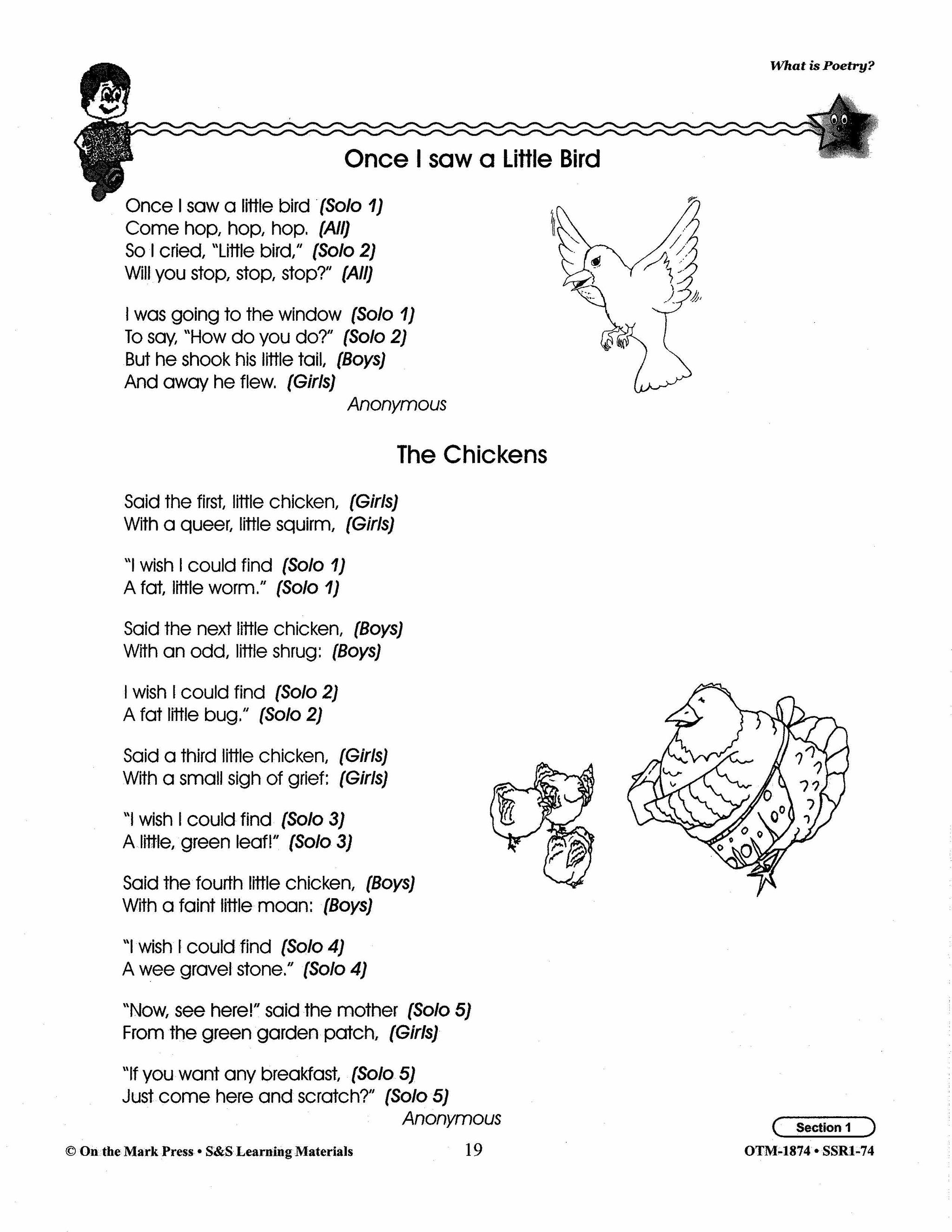
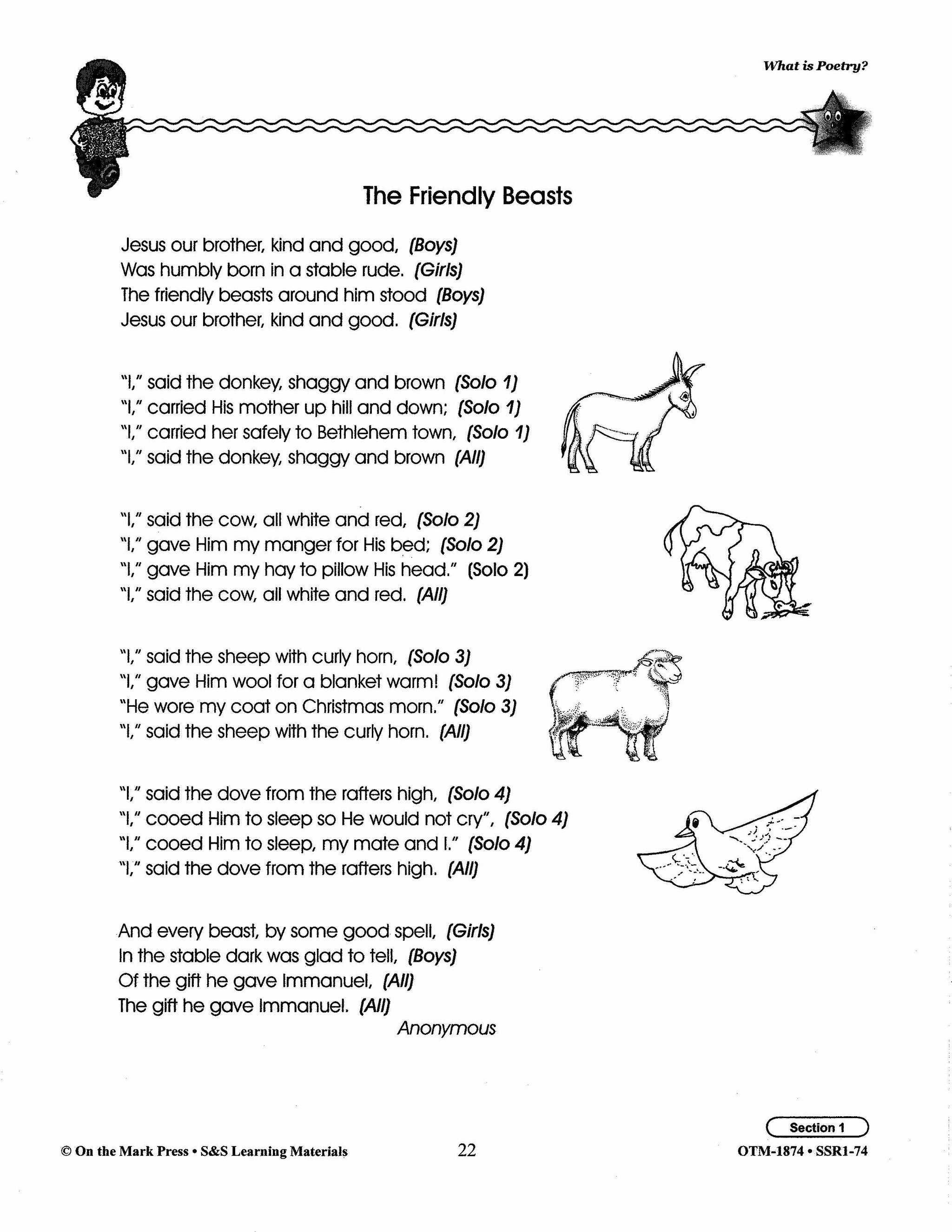
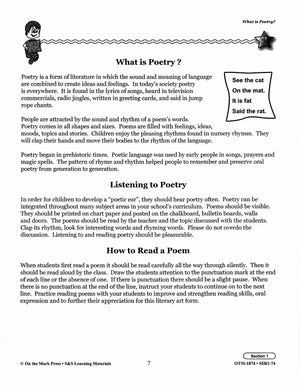
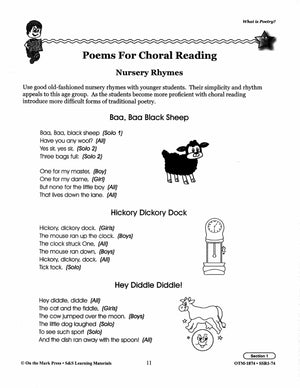
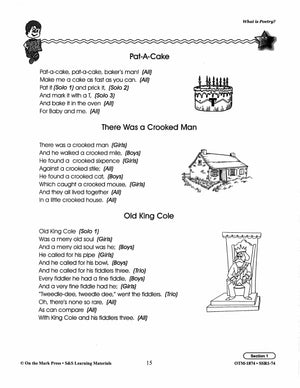
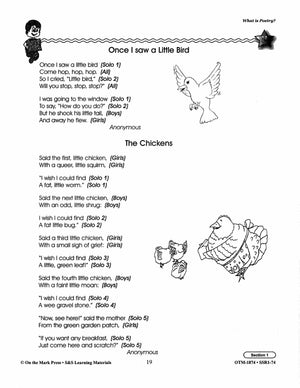
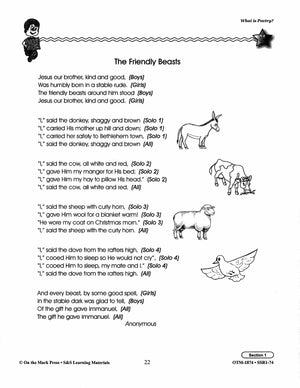
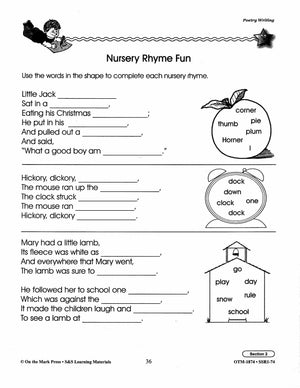
The "What is Poetry" section establishes the base for poetry writing. It stresses the importance of listening to and the reading of poetry in the classroom on a regular basis. Choral reading is promoted and explained how to use with your students. This section also contains twenty nursery rhymes and ten rhyming poems divided into parts for choral reading.
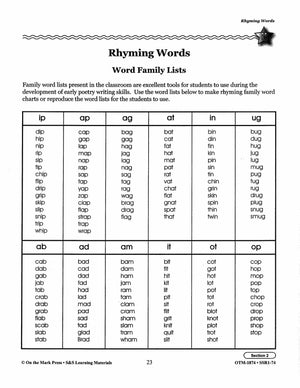
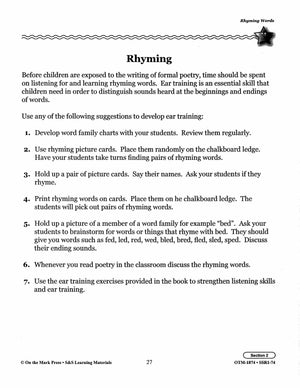
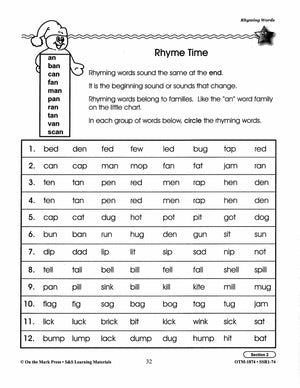
Rhyming skills are reviewed in the "Rhyming Words" section. In this section you will find Word Family Lists, ideas to recall rhyming skills, ear training and listening skills and an assortment of rhyming activities and worksheets.
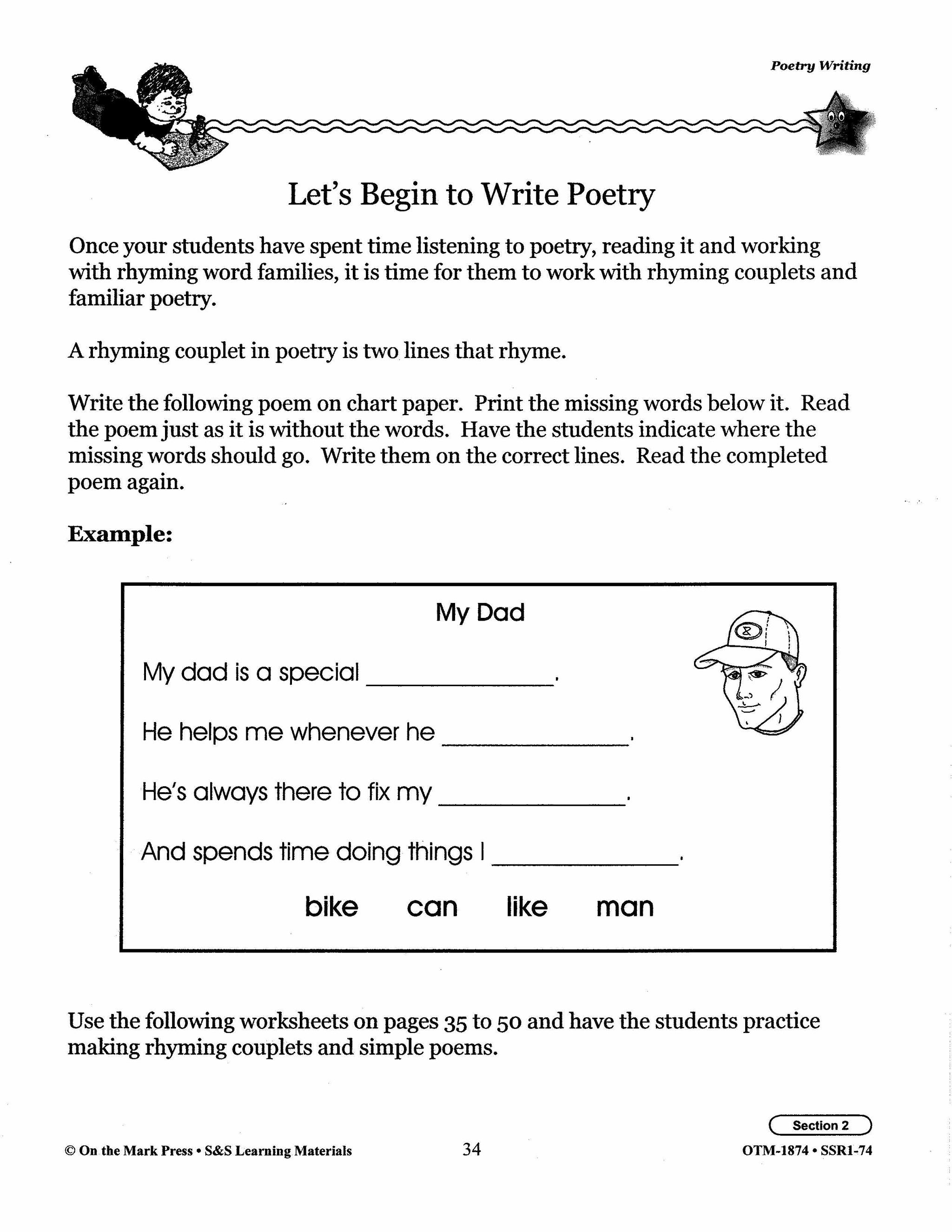
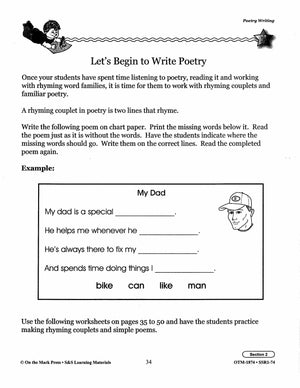
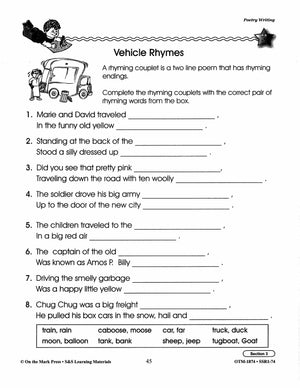
Poetry writing development ideas are located in the "Traditional Poetry" section. Here you will find ways to teach and practice writing rhyming couplets, two word poetry, acrostic poetry, limericks, haiku and cinquains.