


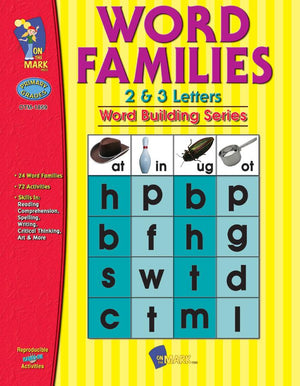
Word Families 2 & 3 Letters Grades 1-3
EBOTM1859
$24.99 CAD
Additional information:
- Author : Habib, Karen Anne
Give your Grade 1–3 learners a strong phonics foundation with Word Families: 2 & 3 Letters. This resource teaches rhyming patterns, decoding, spelling, and reading simple words through engaging worksheets, poems, picture matching, and word‑building activities. It aligns with early‑literacy standards across all Canadian provinces and territories (phonemic awareness, decoding, spelling patterns, vocabulary development) and meets U.S. Common Core Grade 1 Foundational Skills (RF.1.2, RF.1.3, RF.1.4). Perfect for classroom instruction, literacy centers, intervention, and home learning.
Twenty-four-word families are covered in this resource featuring 2 and 3 letter word families for each of the 5 vowels.Standards Review: Word Families – 2 & 3 Letters
(Canadian provincial/territorial standards + U.S. Common Core Grade 1)
The resource focuses heavily on phonemic awareness, decoding, rhyming, spelling patterns, and reading simple words in context. These skills appear throughout the document, including statements such as:
“Phonemic awareness is the ability to identify and use speech sounds… to successfully decode words.” “Word families promote… decoding with skill and competence… auditory discrimination.”
These directly map to foundational early‑literacy expectations across Canada and the U.S.
Canadian Curriculum Alignment
What the resource teaches (core skill set):
- Phonemic awareness
- Rhyming & word families
- Decoding CVC and CVCC words
- Blending & segmenting phonemes
- Spelling using common patterns
- Reading words in context
- Vocabulary building
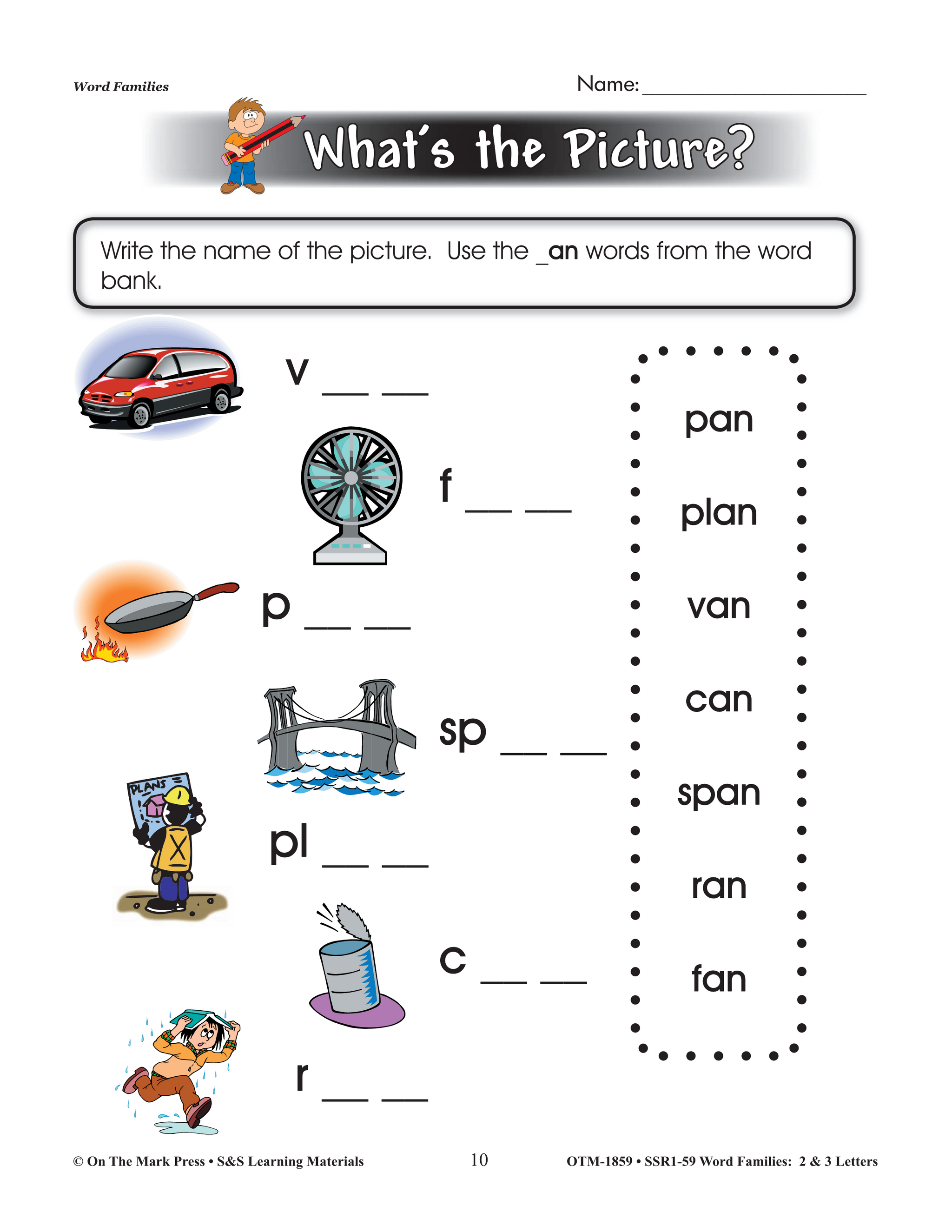
- Matching pictures to words
- Following written instructions
- Writing simple sentences
These skills appear repeatedly in the resource, e.g.:
“Students will become familiar with the rhyming words… by completing the worksheets… strengthen reading, writing, and spelling skills.”
Province‑by‑Province Alignment (Grades 1–3)
Ontario (Language, Grades 1–3)
- A1.1–A1.4 Phonological awareness (rhyming, blending, segmenting)
- A2.1–A2.3 Decoding using letter‑sound relationships
- B1.1–B1.3 Reading words in context
- C1.1–C1.4 Spelling patterns, word solving
- D1.1–D1.3 Vocabulary development
British Columbia (ELA K–3)
- Phonemic awareness (sound manipulation)
- Decoding and word recognition
- High‑frequency word reading
- Simple sentence comprehension
Alberta (ELA K–3)
- Phonological awareness
- Recognizing and using spelling patterns
- Reading familiar words
- Constructing meaning from simple texts
Saskatchewan (ELA K–3)
- Phonological awareness
- Word recognition strategies
- Reading and responding to simple texts
Manitoba (ELA K–3)
- Sound‑symbol relationships
- Rhyming and word families
- Reading and spelling common patterns
Quebec (English Language Arts Cycle 1)
- Mobilizing decoding strategies
- Recognizing sound patterns
- Reading simple texts
Nova Scotia (ELA Primary–3)
- Phonemic awareness
- Decoding and word solving
- Reading simple sentences
New Brunswick (ELA K–3)
- Phonological awareness
- Reading familiar words
- Vocabulary building
Prince Edward Island (ELA K–3)
- Sound‑symbol relationships
- Word families and rhyming
- Reading simple texts
Newfoundland & Labrador (ELA K–3)
- Phonemic awareness
- Decoding and spelling patterns
- Reading simple texts
Yukon (follows BC curriculum)
- Same alignment as BC
Northwest Territories (ELA K–3)
- Phonological awareness
- Decoding strategies
- Reading simple texts
Nunavut (ELA K–3)
- Phonemic awareness
- Reading familiar words
- Vocabulary development
U.S. Common Core Alignment (Grade 1 ELA)
Foundational Skills (RF.1)
- RF.1.2 Phonological awareness (rhyming, blending, segmenting)
- RF.1.3 Phonics & word recognition (CVC, CVCC, common spelling patterns)
- RF.1.4 Reading with accuracy and fluency
Language Standards (L.1)
- L.1.2 Spelling simple words using patterns
- L.1.4 Determining meaning using phonics knowledge
Reading Standards (RL.1 & RI.1)
- Reading simple texts
- Answering questions about short passages (e.g., “A Silly Poem” pages)
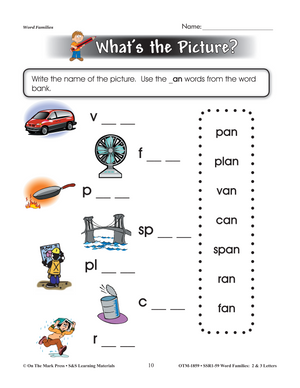
The resource’s activities—such as filling in missing phonemes, reading short poems, and matching pictures—directly support these expectations.