
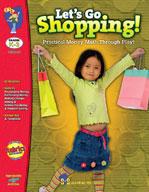
Let's Go Shopping with Canadian Money using real- life scenarios Grades K-3
EBK136
$25.99 CAD
Additional information:
- Author : Venier, Lana D.
Help your students master Canadian money with Let’s Go Shopping!—a comprehensive financial literacy unit packed with real‑life activities, shopping scenarios, and hands‑on practice. Students learn to identify coins and bills, count money, create equivalent sets, add and subtract amounts, compare prices, and make change. Engaging contexts like candy shops, flea markets, lemonade stands, and class stores make learning meaningful and fun.
This resource aligns with provincial and territorial math standards across Canada, including Ontario, BC, Alberta, Manitoba, Saskatchewan, and Atlantic provinces. Perfect for whole‑class lessons, math centres, or financial literacy units, Let’s Go Shopping! provides worksheets, templates, rubrics, and multi‑step problem‑solving tasks that build confidence and real‑world money skills.
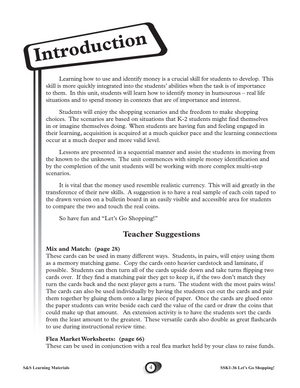
Real-life scenarios help students learn about money. Age-appropriate activities concentrate on what is fun and interesting for young children, such as a candy store, a flea market, a trip to the beach, role-playing in a grocery store, and restaurant setting.-
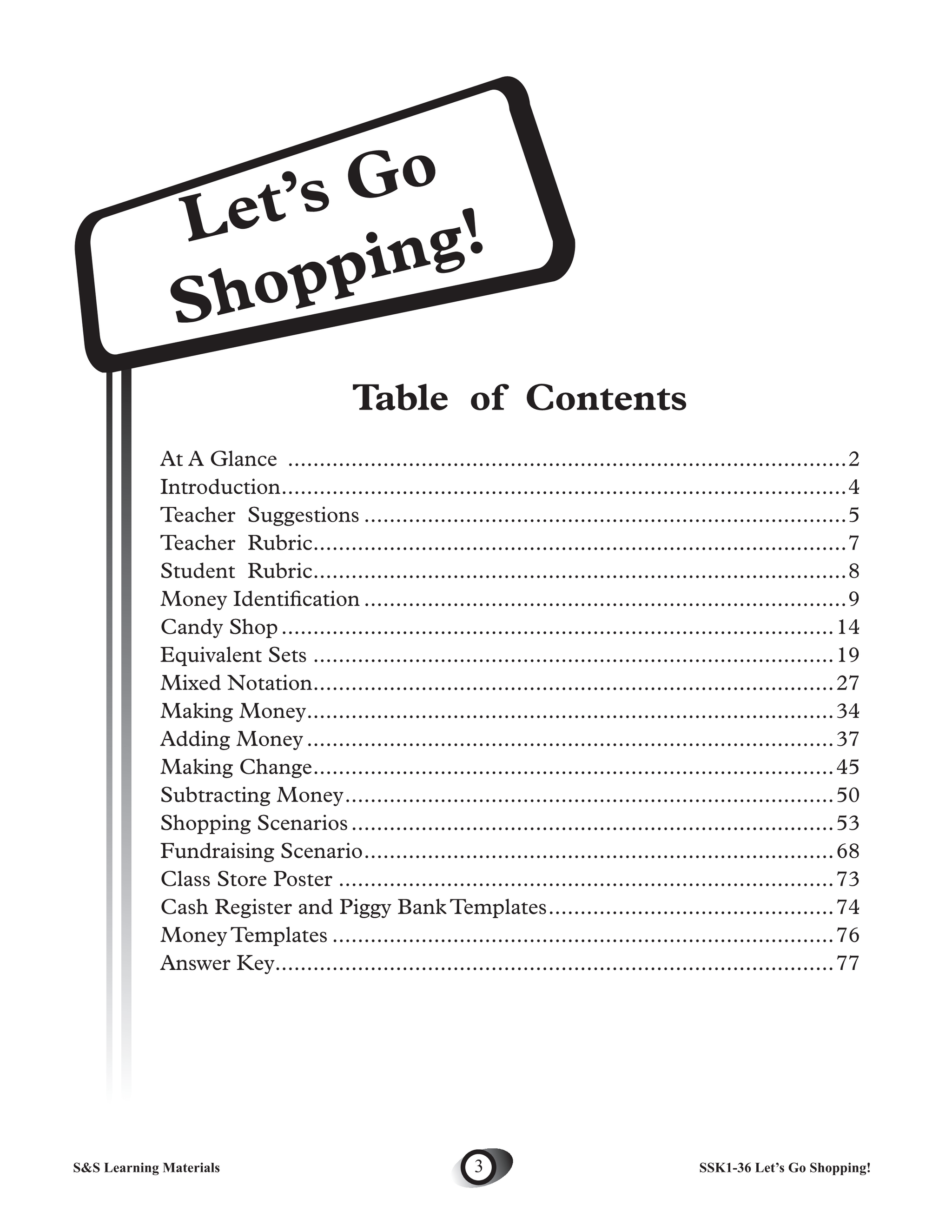
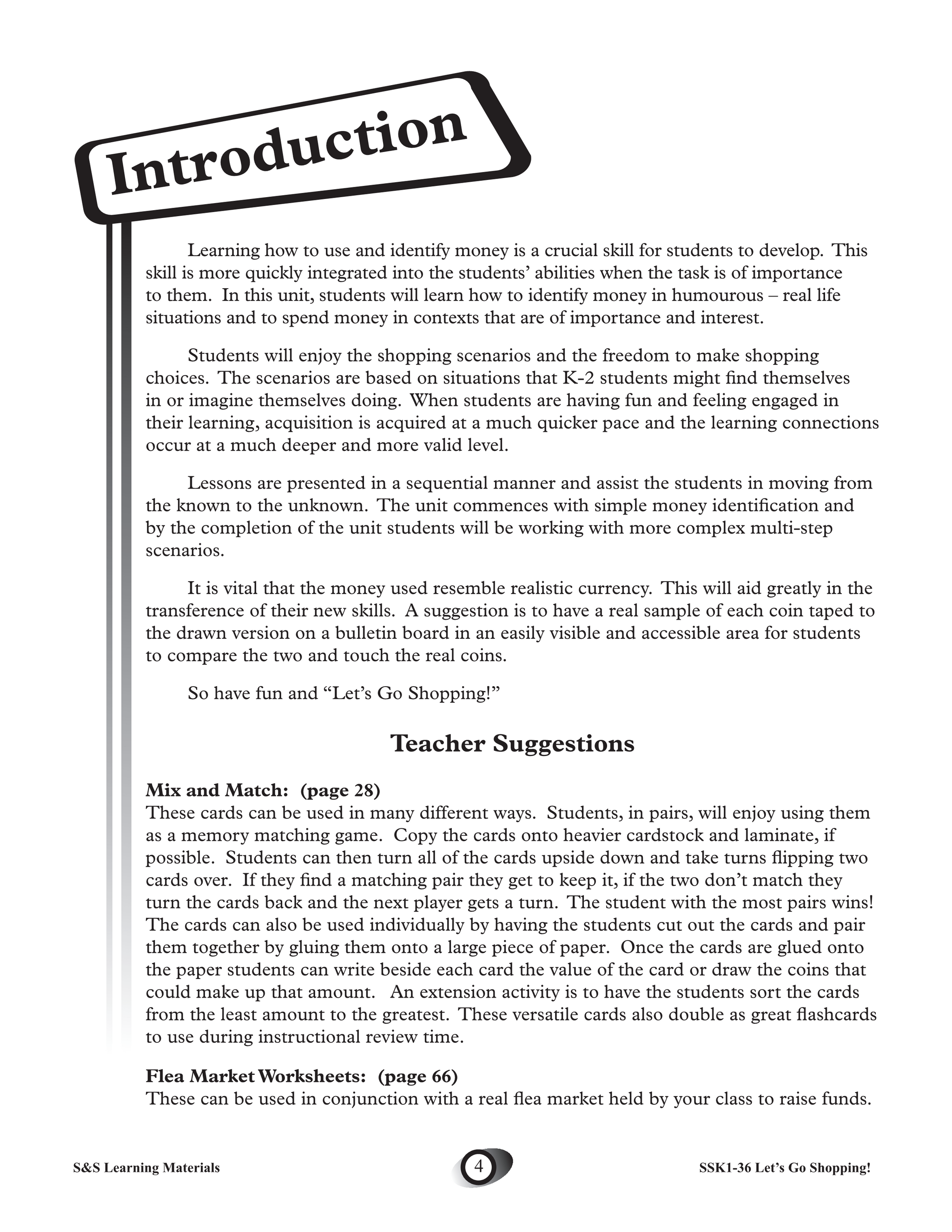
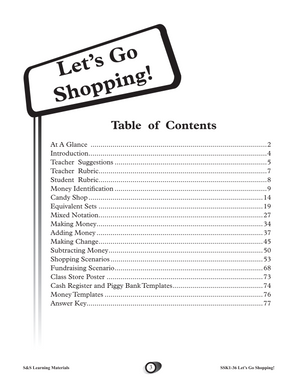
Introduction
-
Teacher Suggestions
-
Teacher Rubric
-
Student Rubric
-
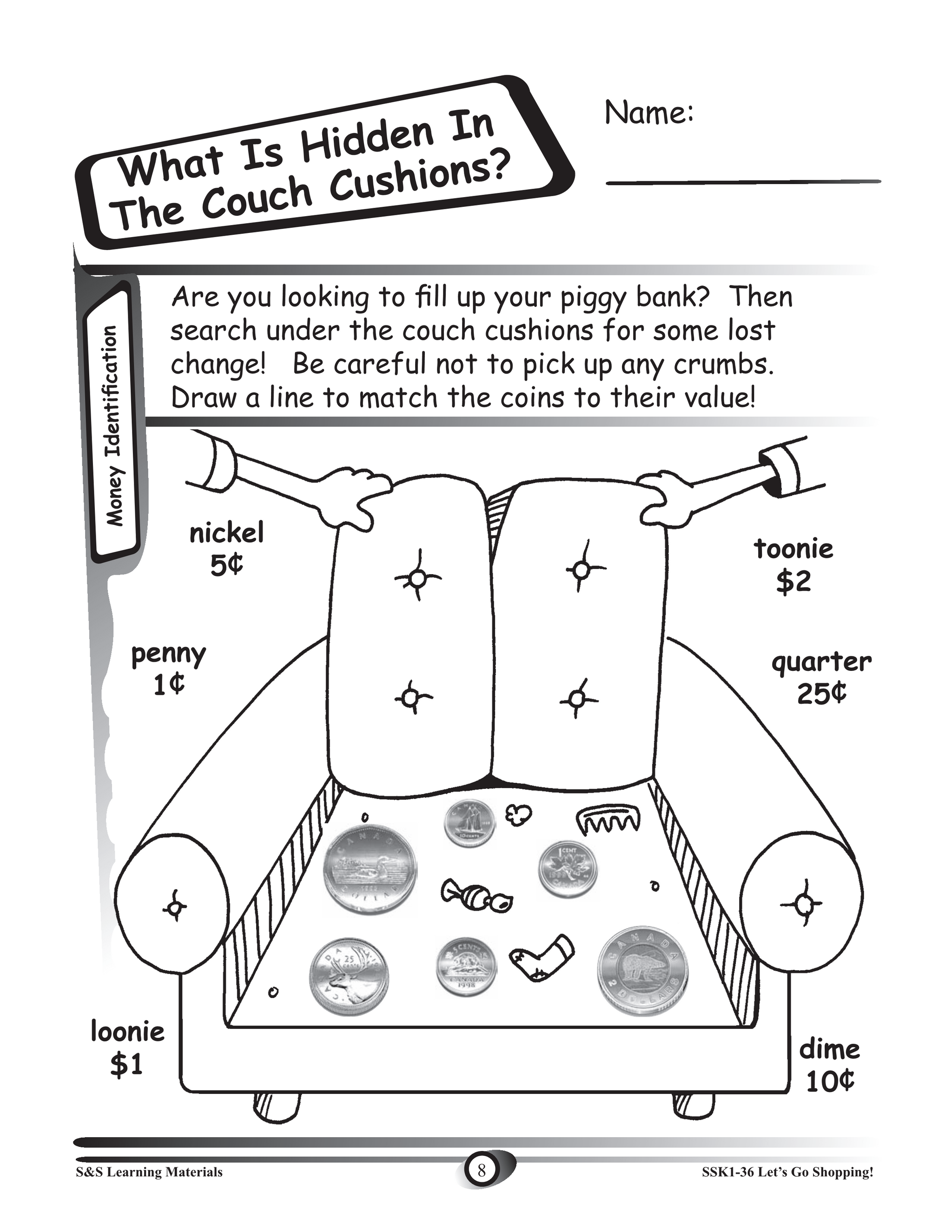
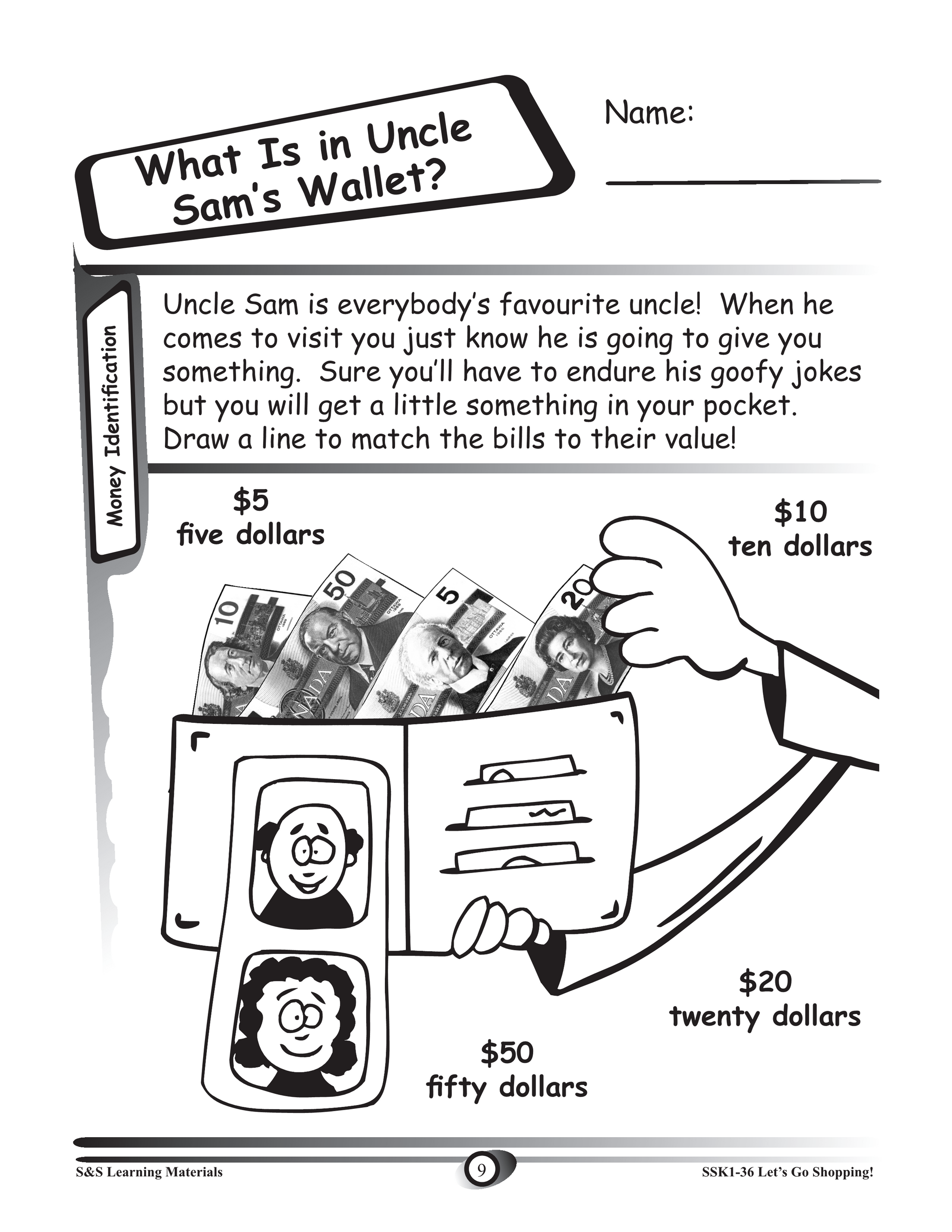
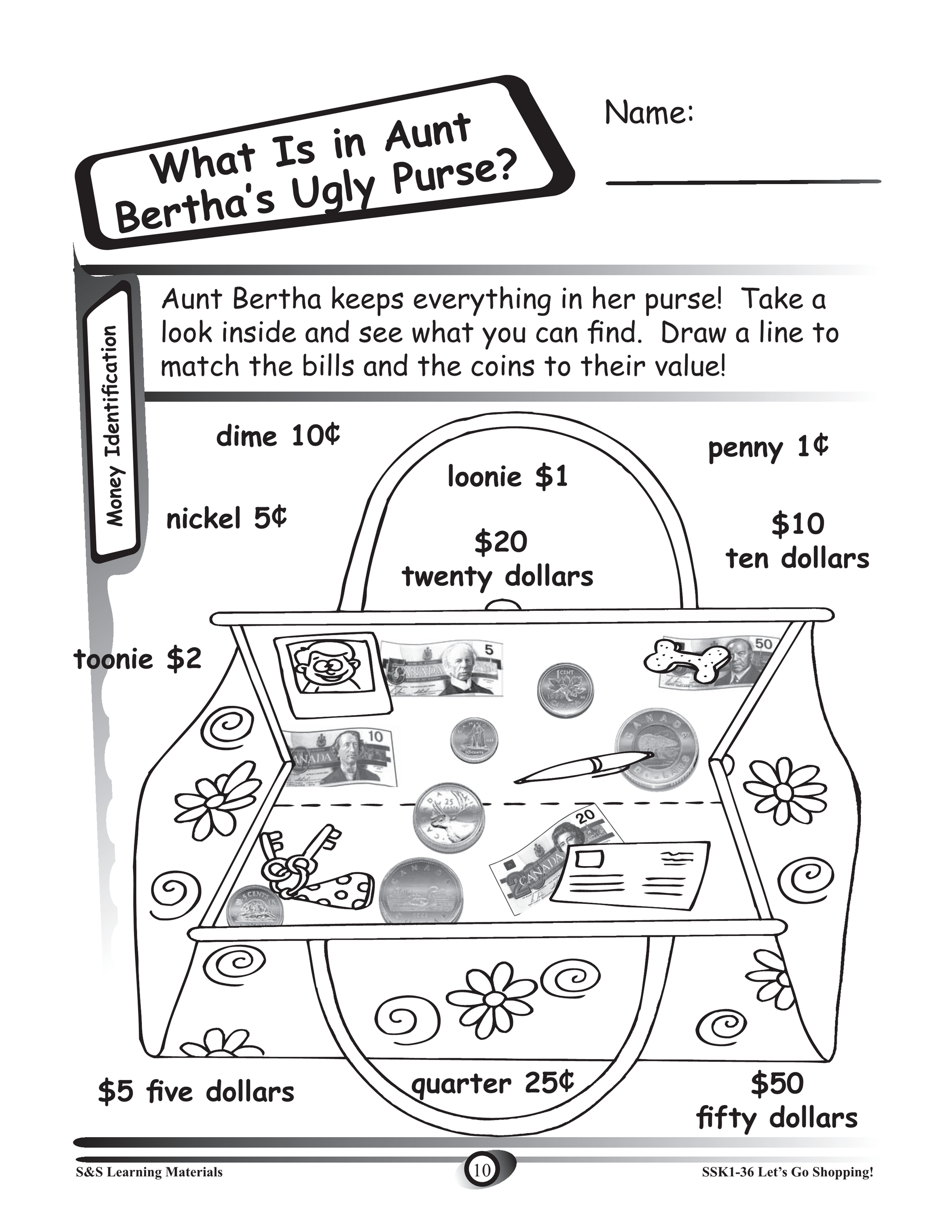
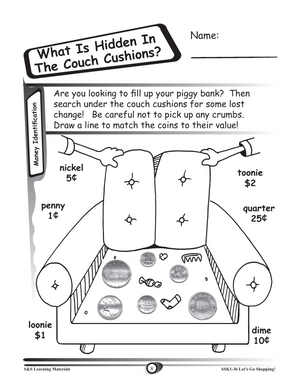
Money Identification
-
Candy Shop
-
Equivalent Sets
-
Mixed Notation
-
Making Money
-
Adding Money
-
Making Change
-
Subtracting Money
-
Shopping Scenarios
-
Fundraising Scenario
-
Class Store Poster
-
Cash Register and Piggy Bank Templates
-
Money Templates
Canadian Curriculum Alignment (Provincial & Territorial)
Ontario – Grade 2 Mathematics (Financial Literacy & Number Sense)
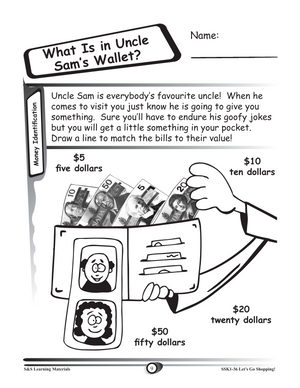
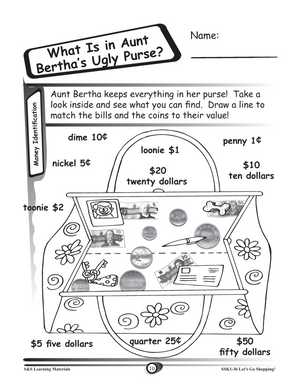
- Identify and describe Canadian coins and bills (Money Identification pages).
- Represent money amounts up to $10 using coins and bills (Candy Shop, Mixed Notation).
- Add and subtract money amounts to $10 (Adding Money, Subtracting Money).
- Make change from $1 and $10 (Making Change).
- Compare and order money amounts (Best Deal, Time for School).
- Solve multi‑step problems involving money (Shopping Scenarios, Fundraising Scenario).
British Columbia – Grade 2 Mathematics (Financial Literacy)
- Identify coins and bills and demonstrate understanding of their value.
- Represent money amounts in multiple ways (Equivalent Sets).
- Add and subtract money amounts in practical contexts (Candy Shop, Making Money).
- Apply financial concepts to real‑life situations (Shopping Scenarios, Fundraising).
Alberta – Grade 2 Mathematics (Number, Patterns & Relations)
- Recognize, describe, and use coins and bills to $20.
- Demonstrate addition/subtraction with money amounts.
- Use problem‑solving strategies in money‑based scenarios.
Saskatchewan – Grade 2 Mathematics
- Identify and use Canadian currency.
- Represent money amounts concretely and symbolically.
- Solve real‑world problems involving money.
Manitoba – Grade 2 Mathematics
- Identify and compare coins and bills.
- Represent money amounts concretely, pictorially, and symbolically.
- Add and subtract money amounts.
- Solve problems involving purchasing and making change.
Quebec – Cycle 1 Mathematics (Competency: Solving Situations)
- Recognize and use Canadian currency in everyday contexts.
- Solve simple and multi‑step problems involving money.
New Brunswick – Grade 2 Mathematics
- Identify coins/bills and their values.
- Represent, compare, and combine money amounts.
- Solve problems involving buying items and making change.
Nova Scotia – Grade 2 Mathematics
- Identify and use coins and bills.
- Add and subtract money amounts.
- Apply money skills in real‑life contexts.
Prince Edward Island – Grade 2 Mathematics
- Identify currency and represent money amounts.
- Add/subtract money amounts and solve simple purchasing problems.
Newfoundland & Labrador – Grade 2 Mathematics
- Identify coins/bills and their values.
- Represent and compare money amounts.
- Solve problems involving purchases and change.
Yukon – Grade 2 Mathematics
- Identify coins/bills, represent money amounts, and solve real‑life money problems.
Northwest Territories – Grade 2 Mathematics
- Identify currency, add/subtract money, and solve money‑based problems.
Nunavut – Grade 2 Mathematics
- Identify coins/bills, represent money amounts, and solve money‑related problems.