
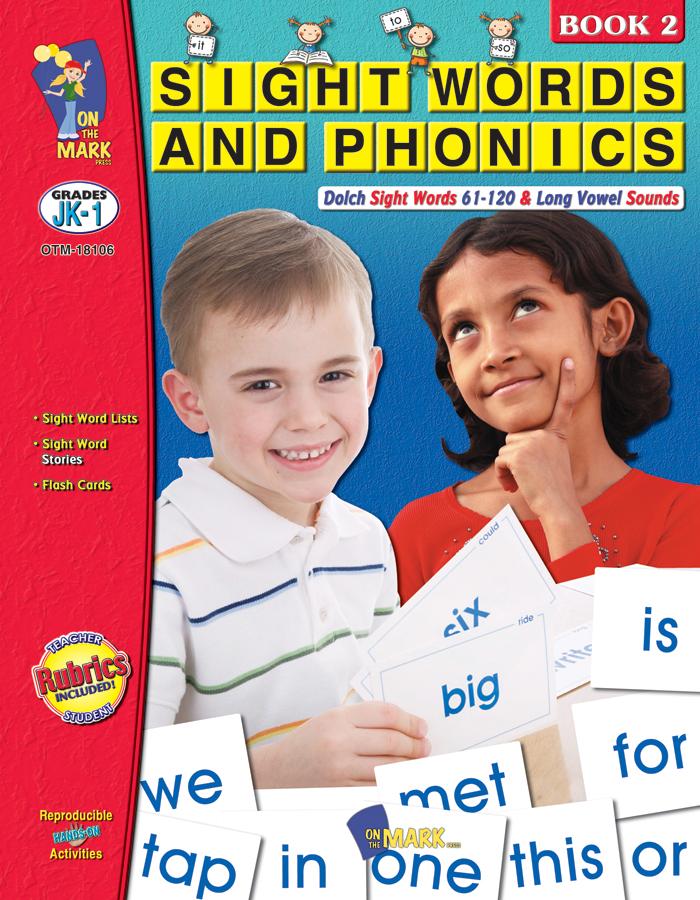
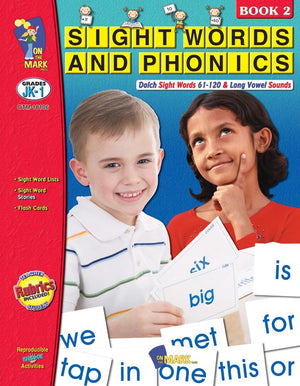
Sight Words & Phonics Book 2 Grades Junior Kindergarten to Grade 1
EBOTM18106
$39.99 CAD
Additional information:
- Author : Fischer, Sandi
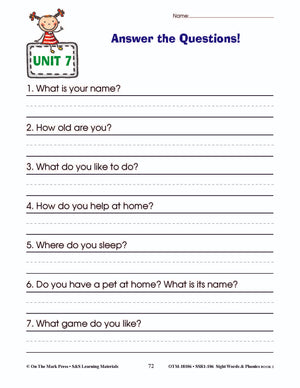
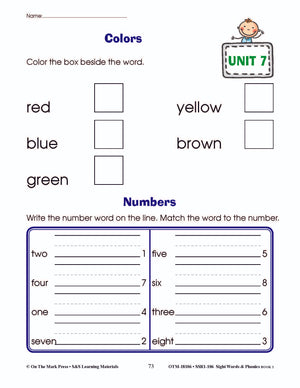
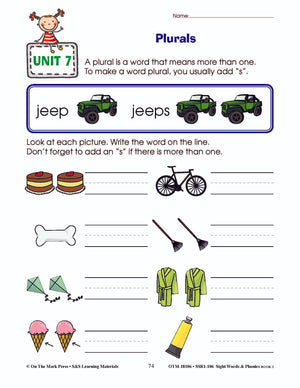
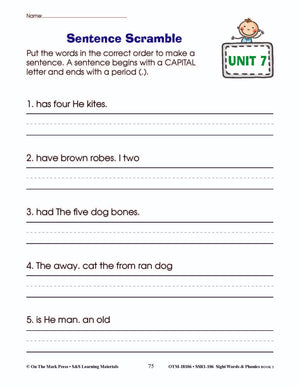
Boost early literacy with Sight Words & Phonics Book 2! This Grade 1 resource teaches Dolch Sight Words 61–120, long‑vowel phonics, spelling, plurals, and sentence writing. Includes matching games, tracing, puzzles, and decodable stories aligned to Canadian provincial standards and U.S. Common Core Grade 1 Foundational Skills (RF.1, L.1). Perfect for classrooms, tutoring, and homeschool.
A unique resource designed for emerging readers and readers having difficulty or requiring review at any level.
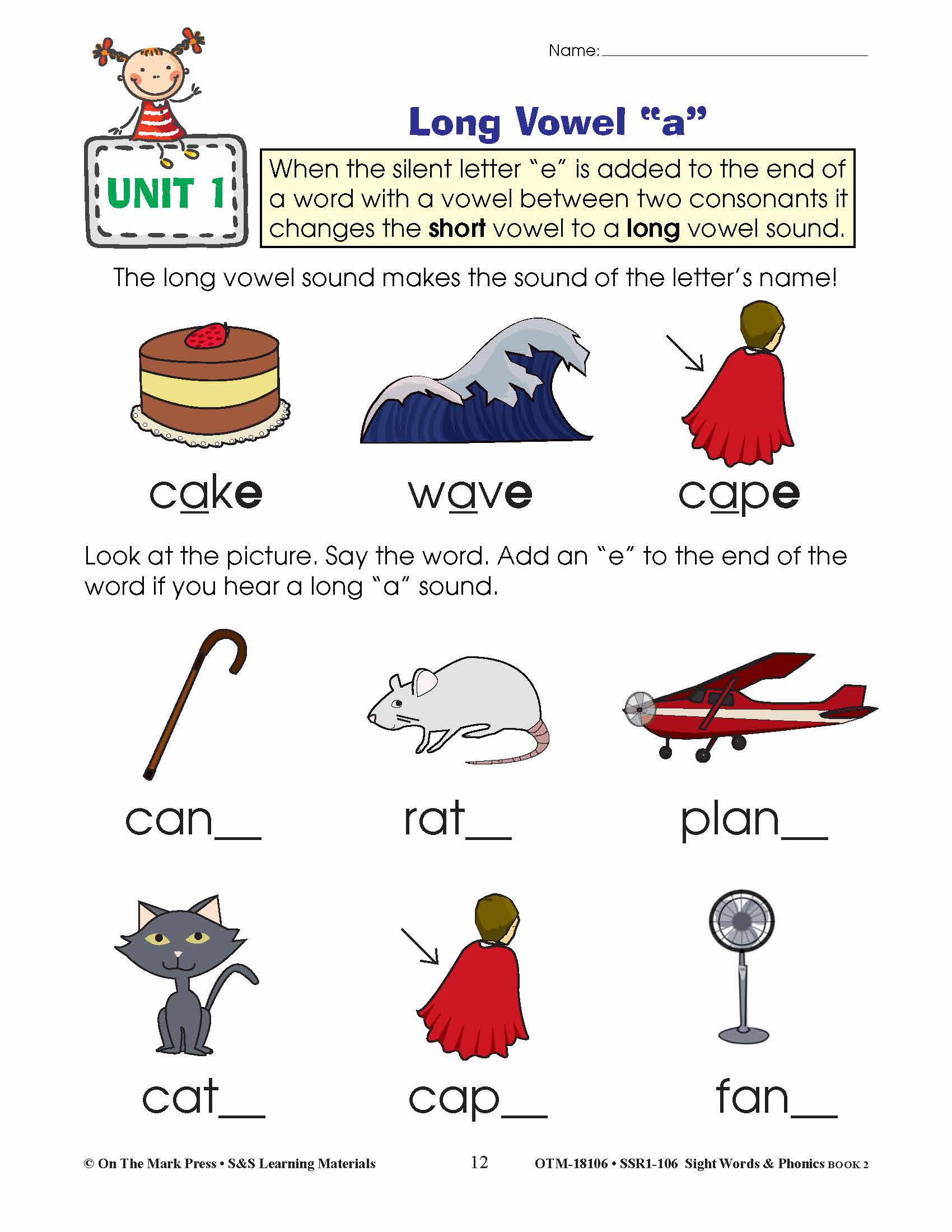
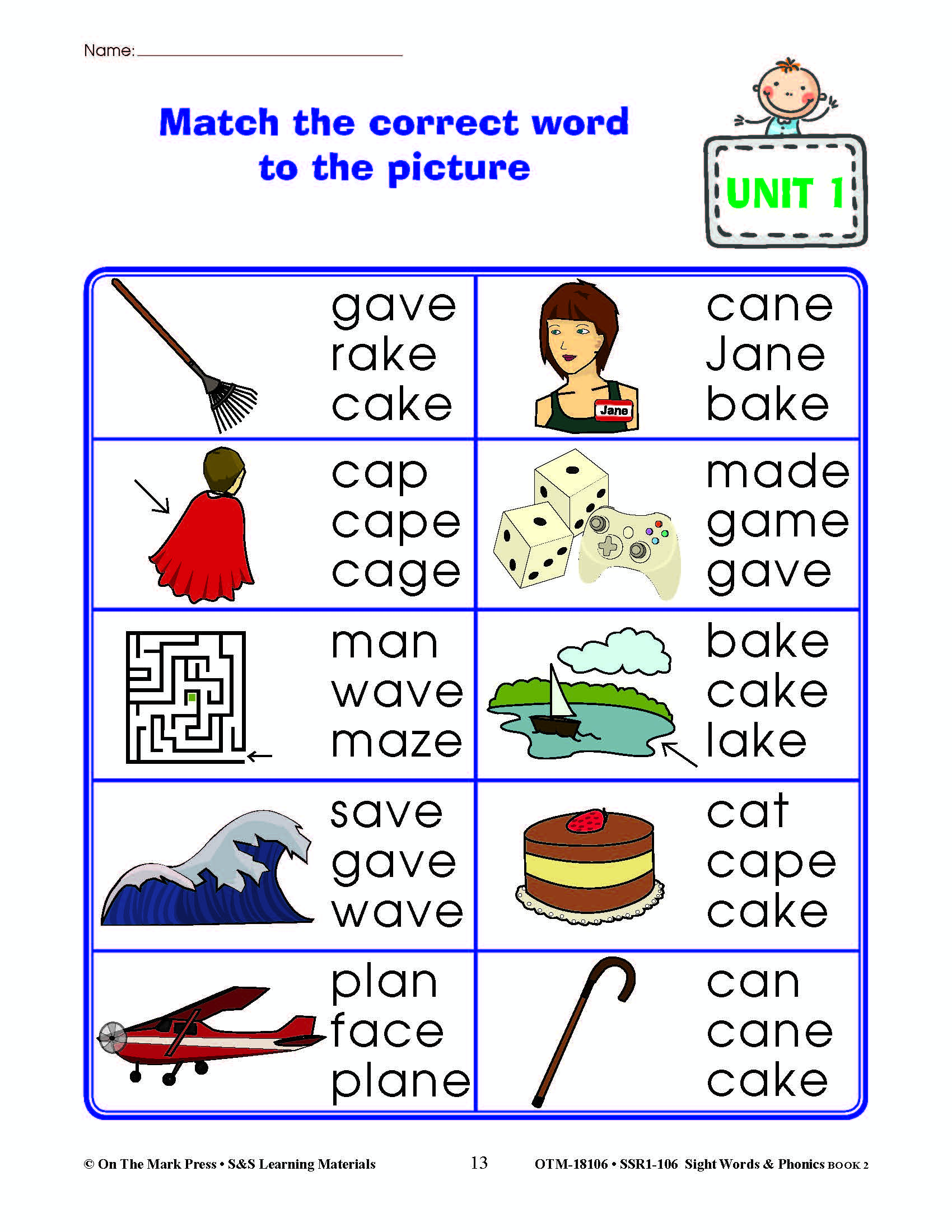
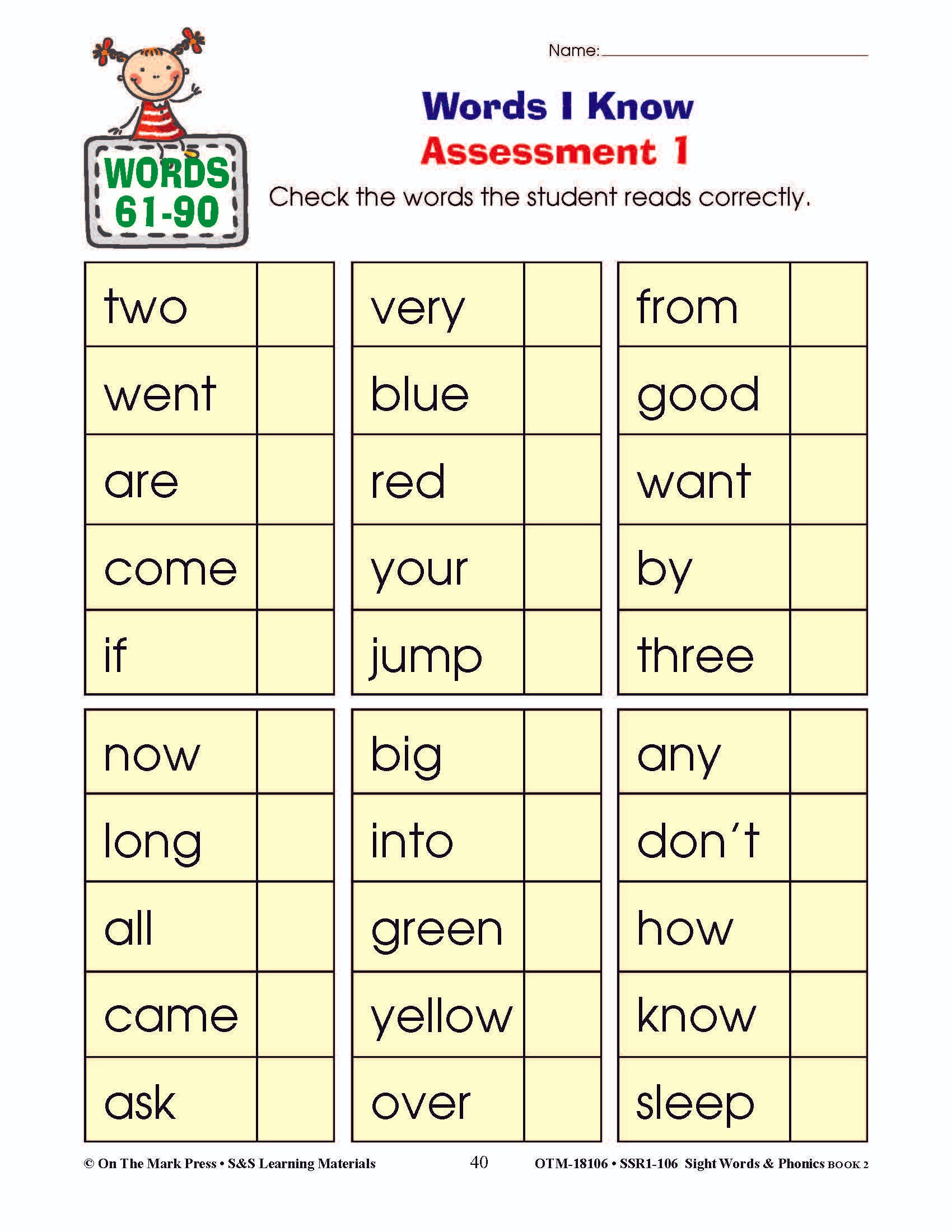
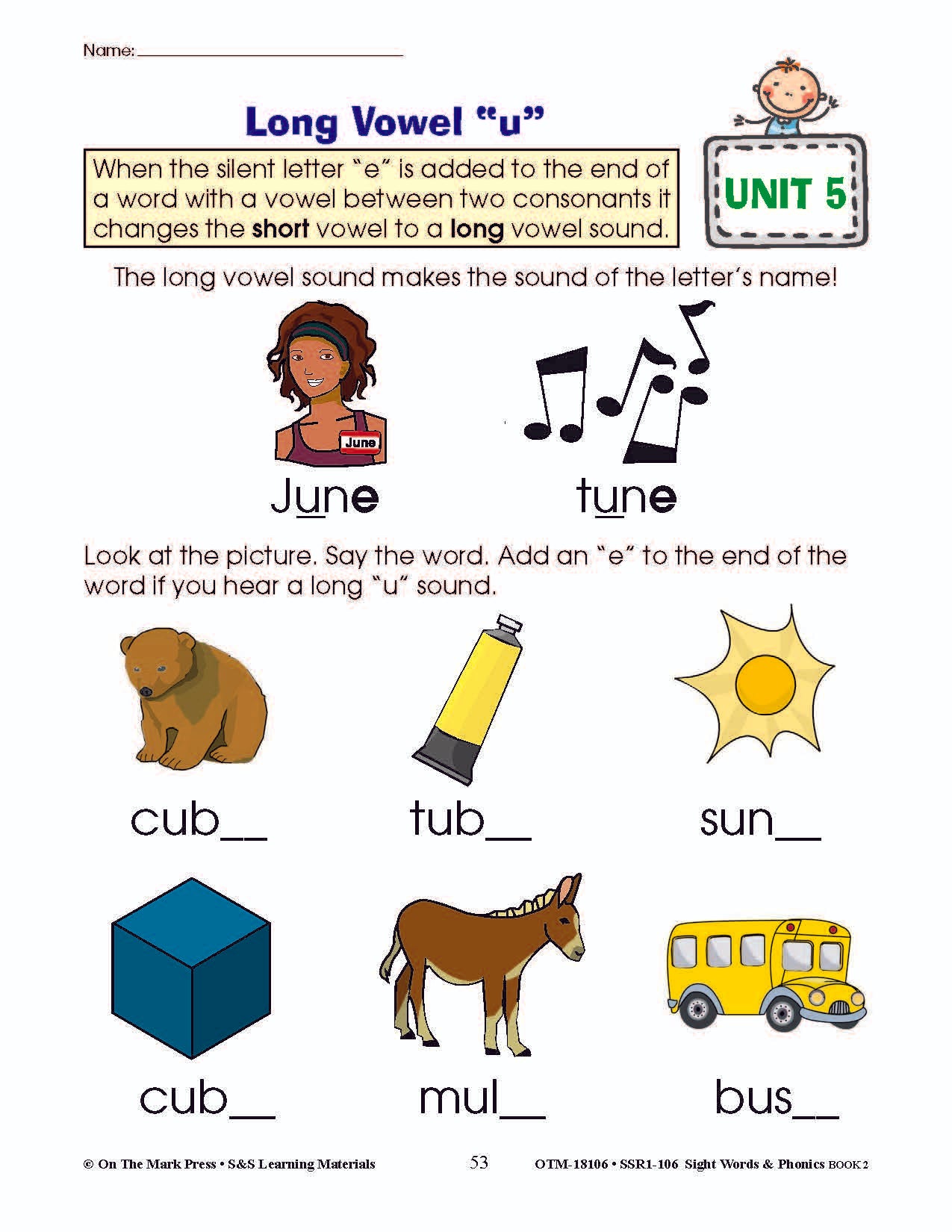
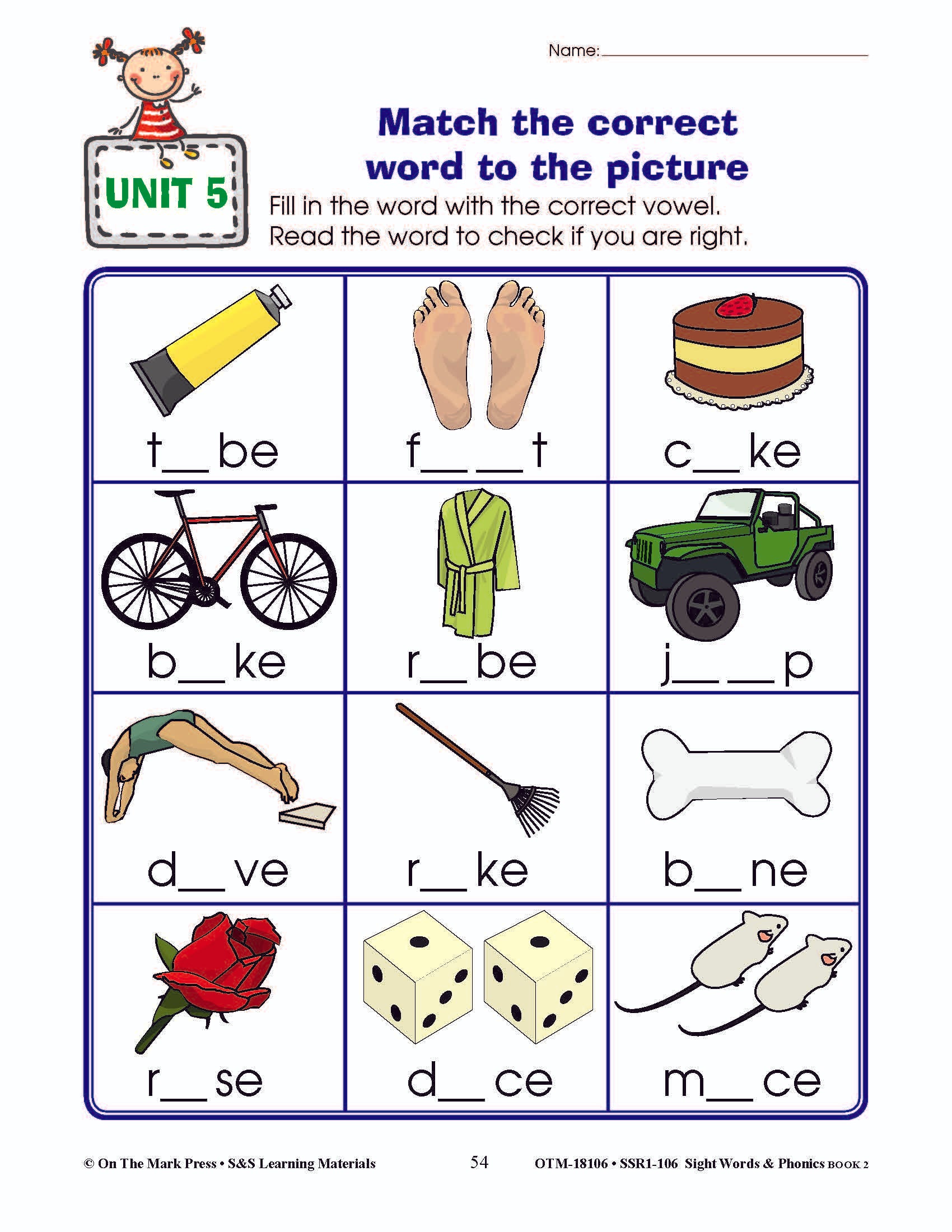
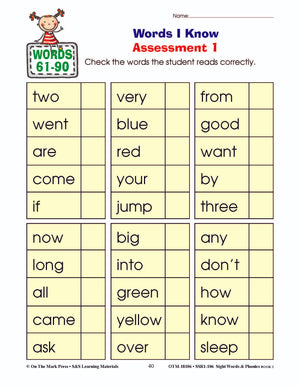
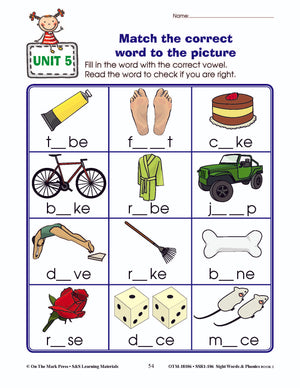
Designed to assist educators and parents to build and improve reading skills through the introduction of 61-120 Dolch Sight Words and the reinforcement of important Phonics skills. At the same time, long vowel sounds are introduced and reinforced.
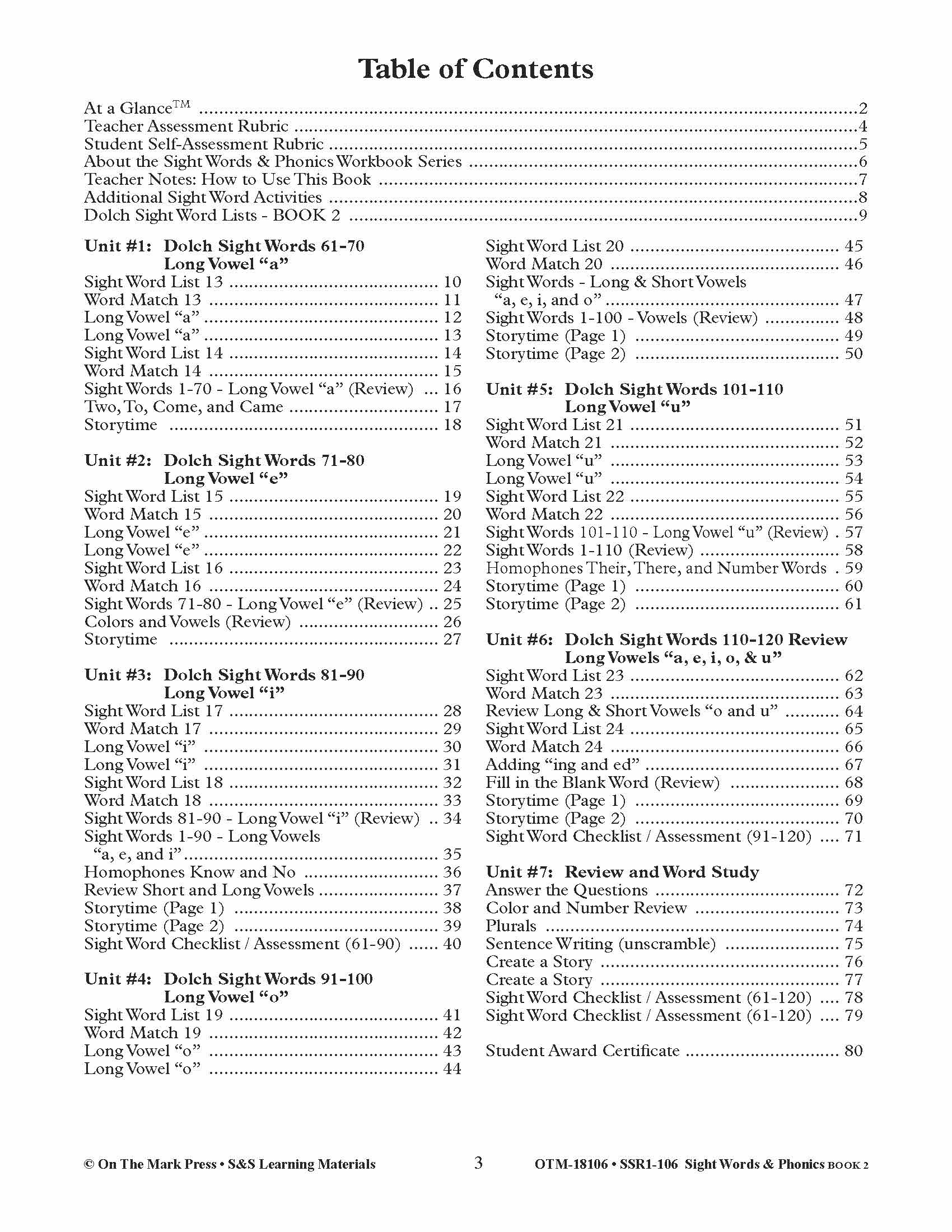
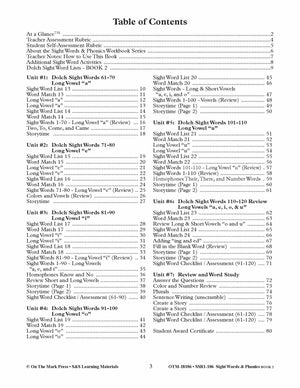
There are six units in the workbook. It is easy to use and a proven method for improved reading!
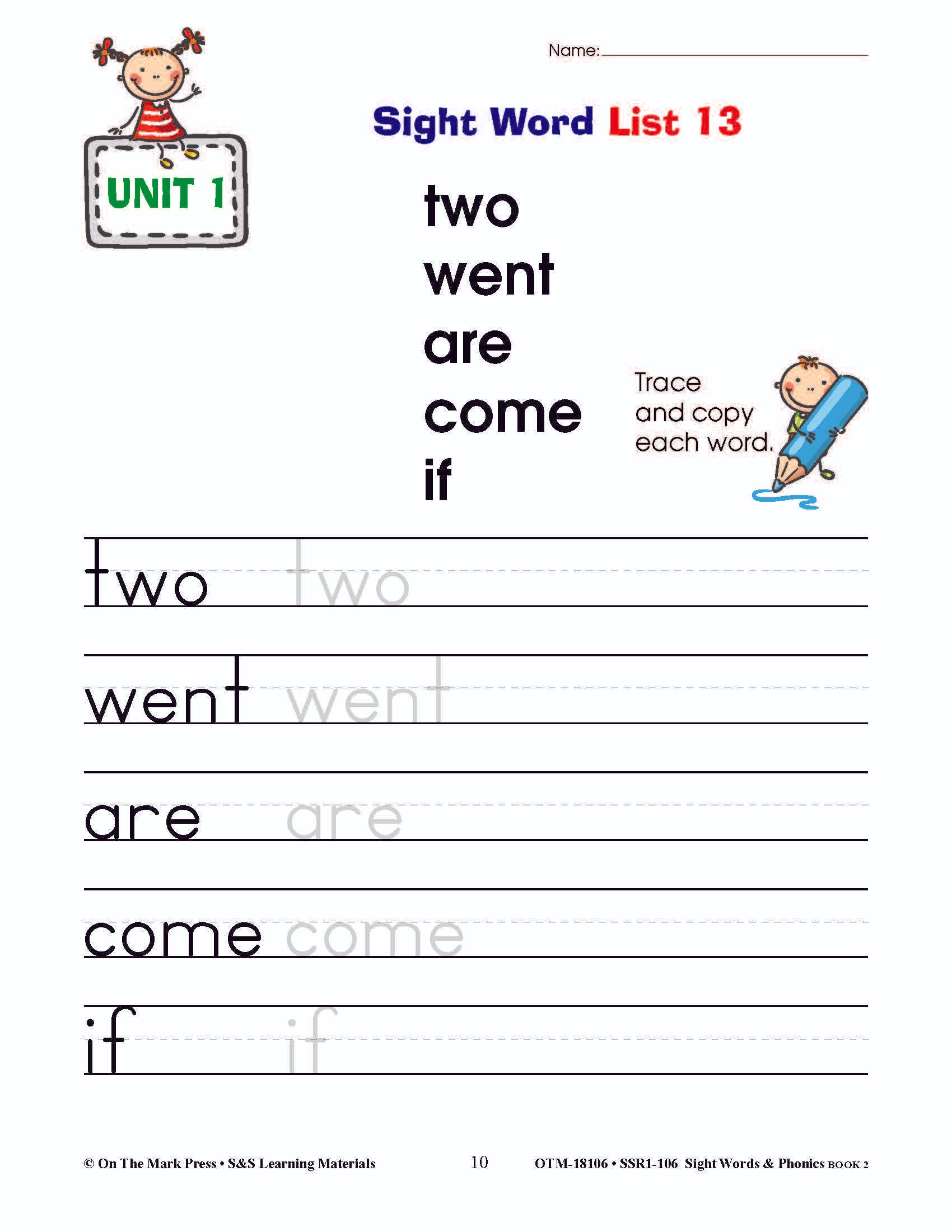
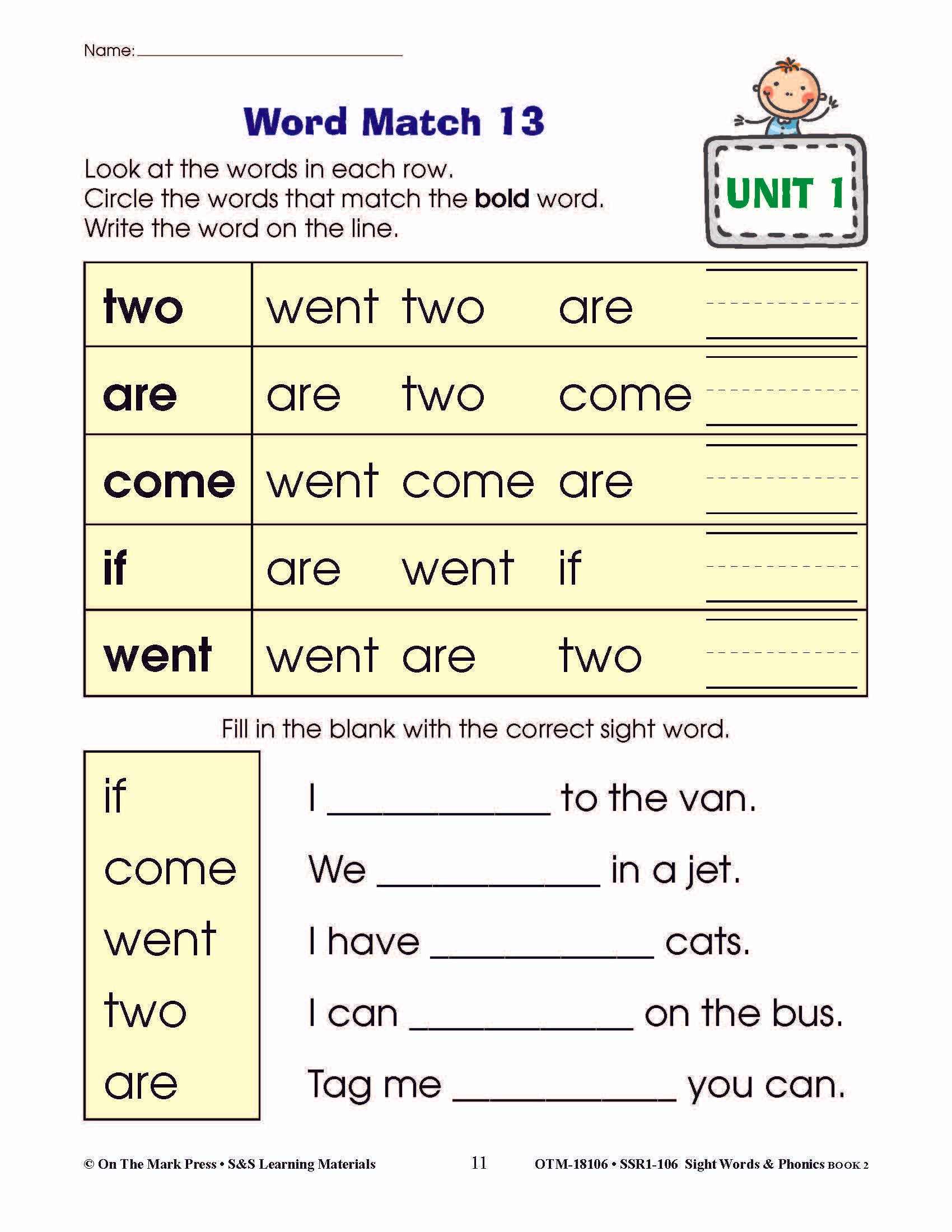
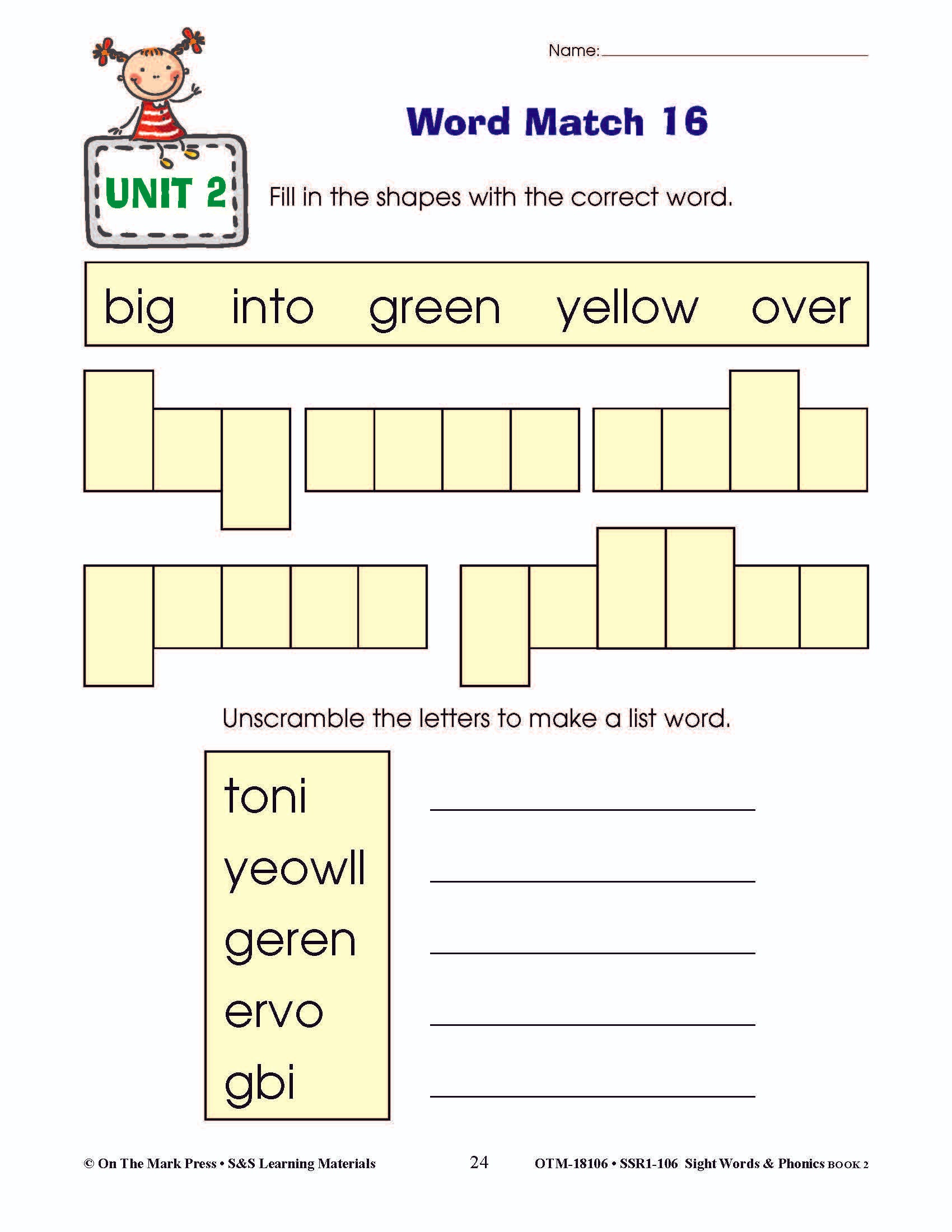
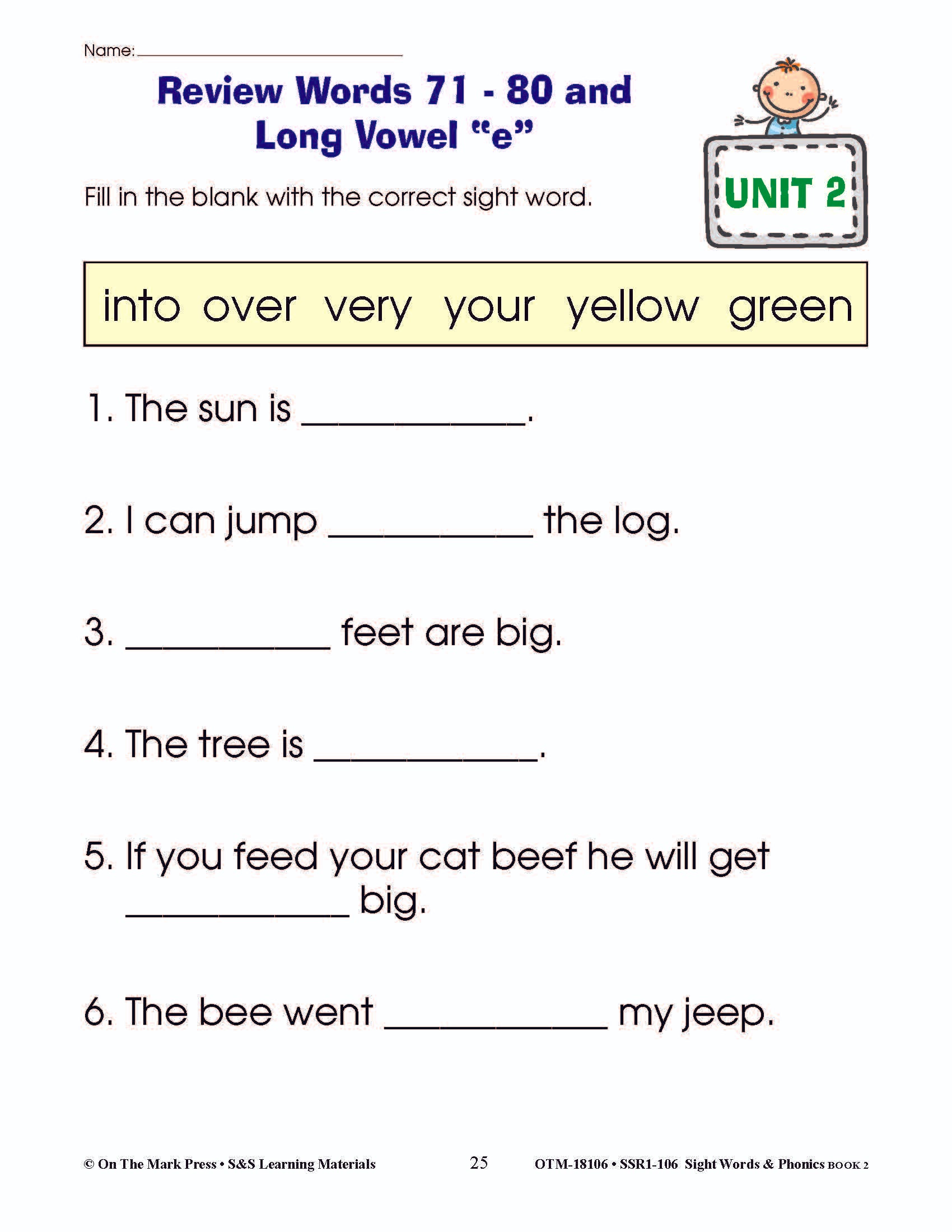
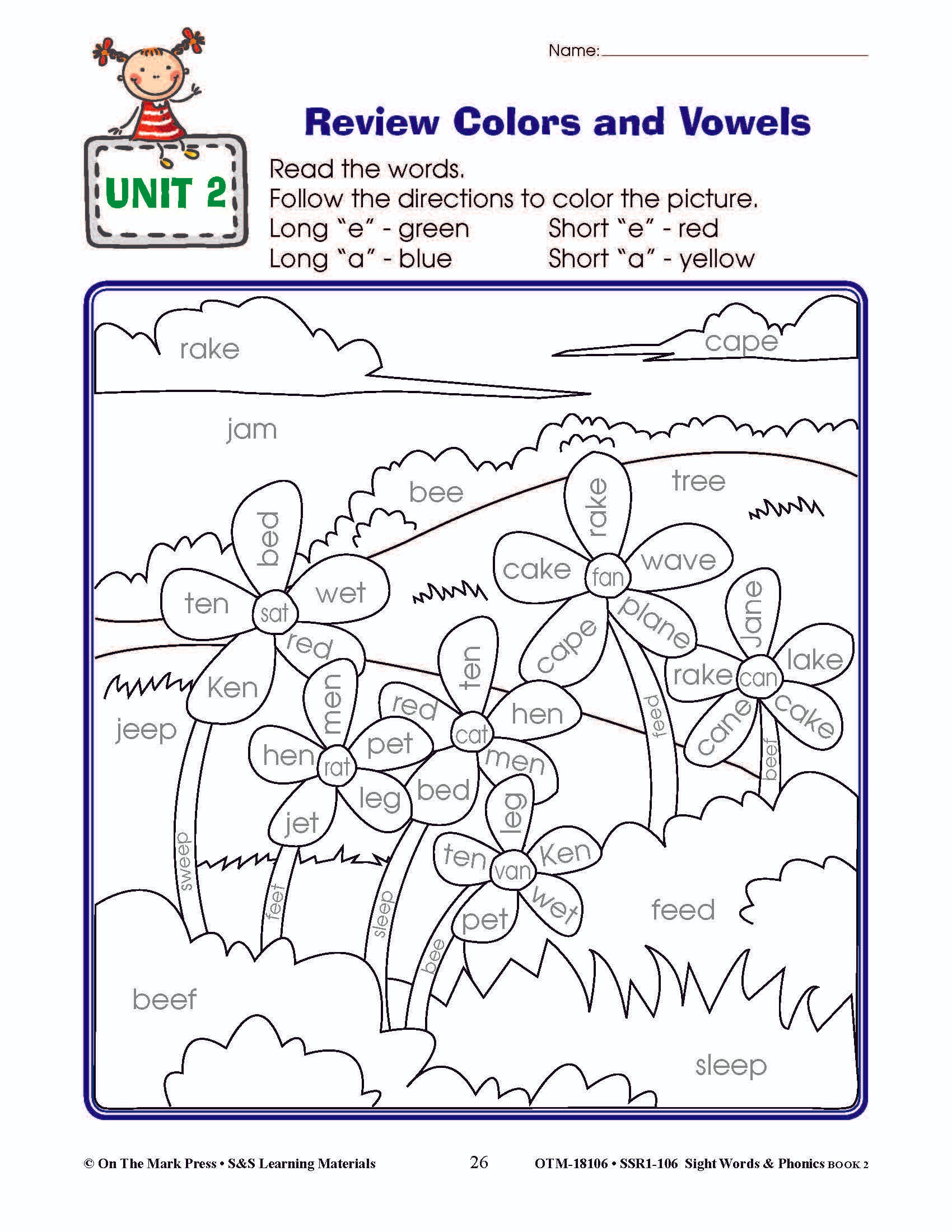
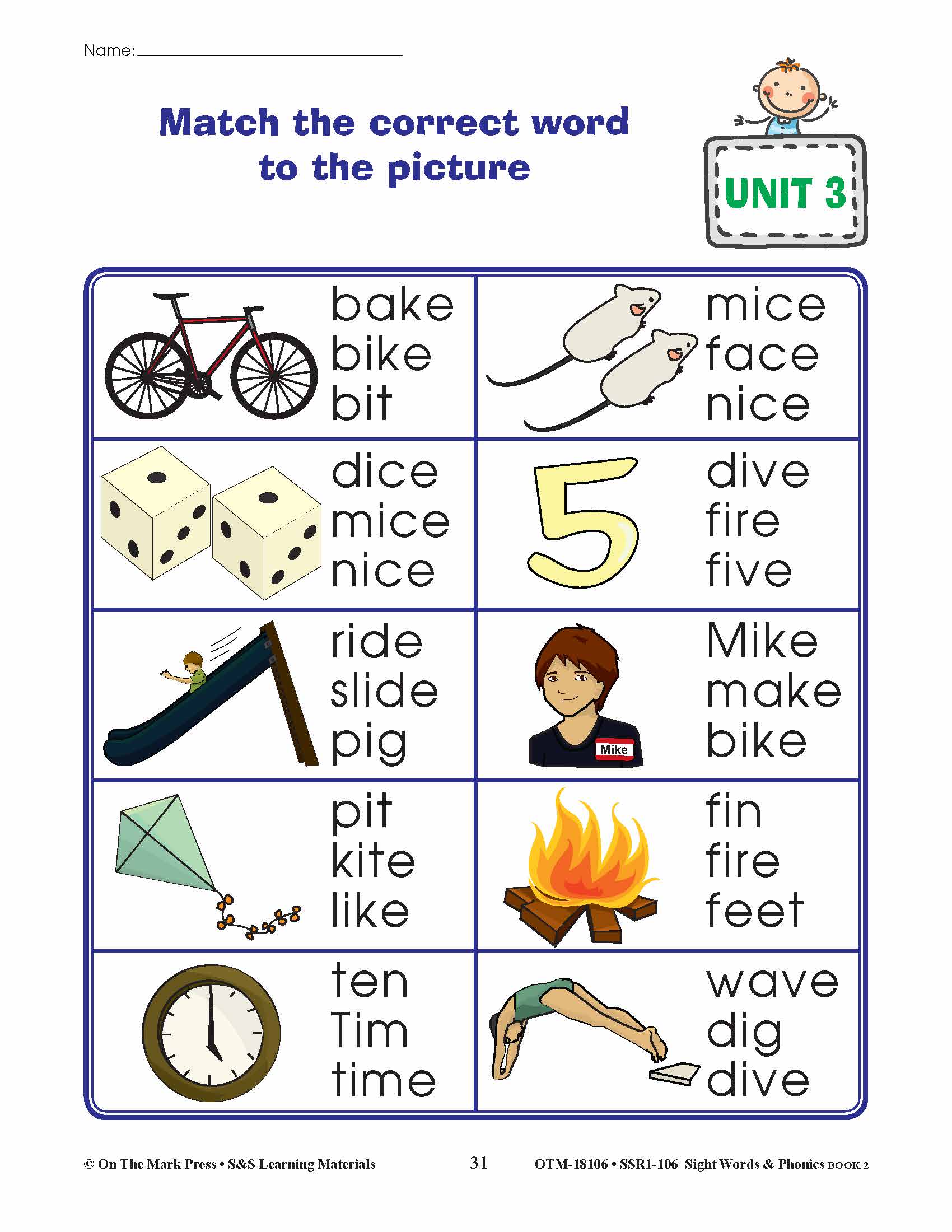
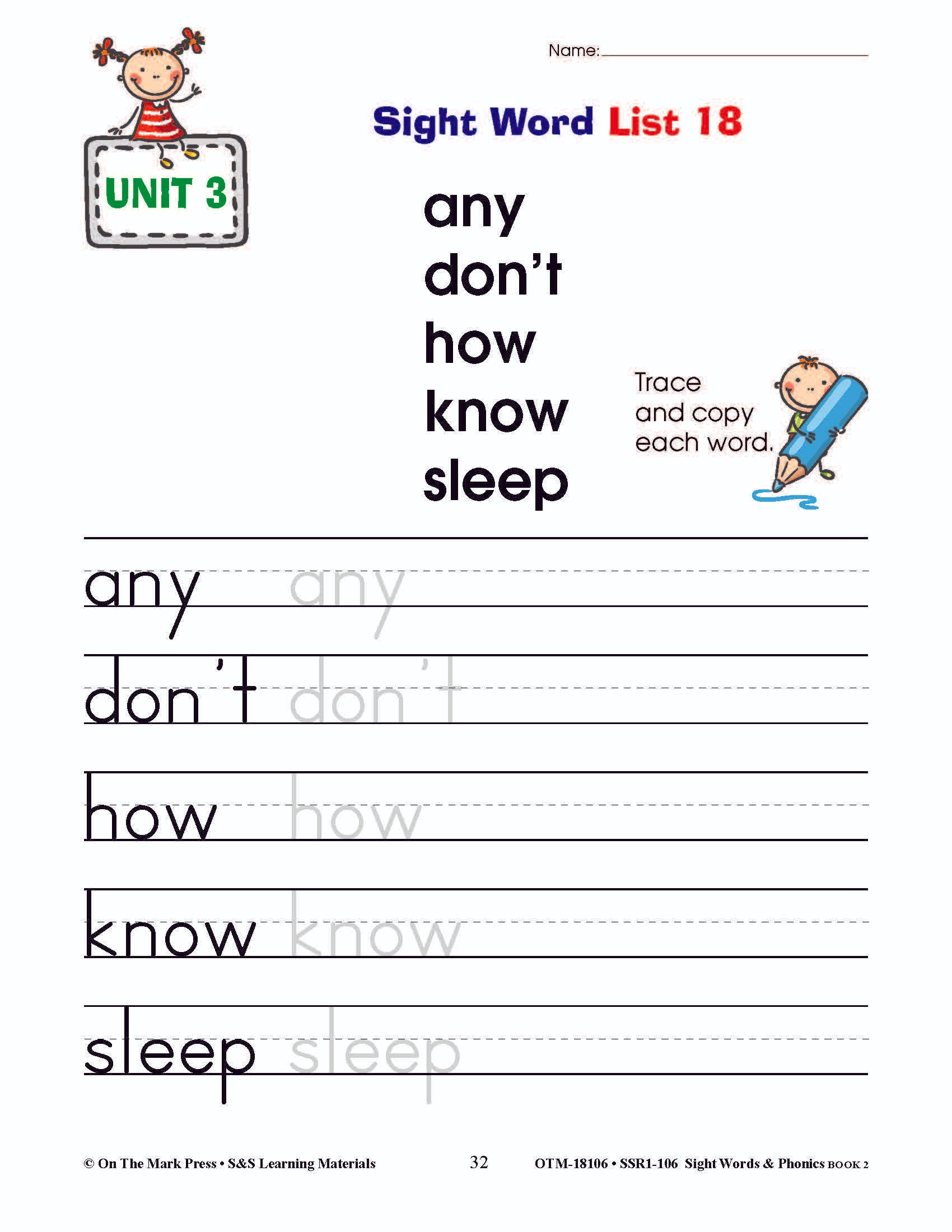
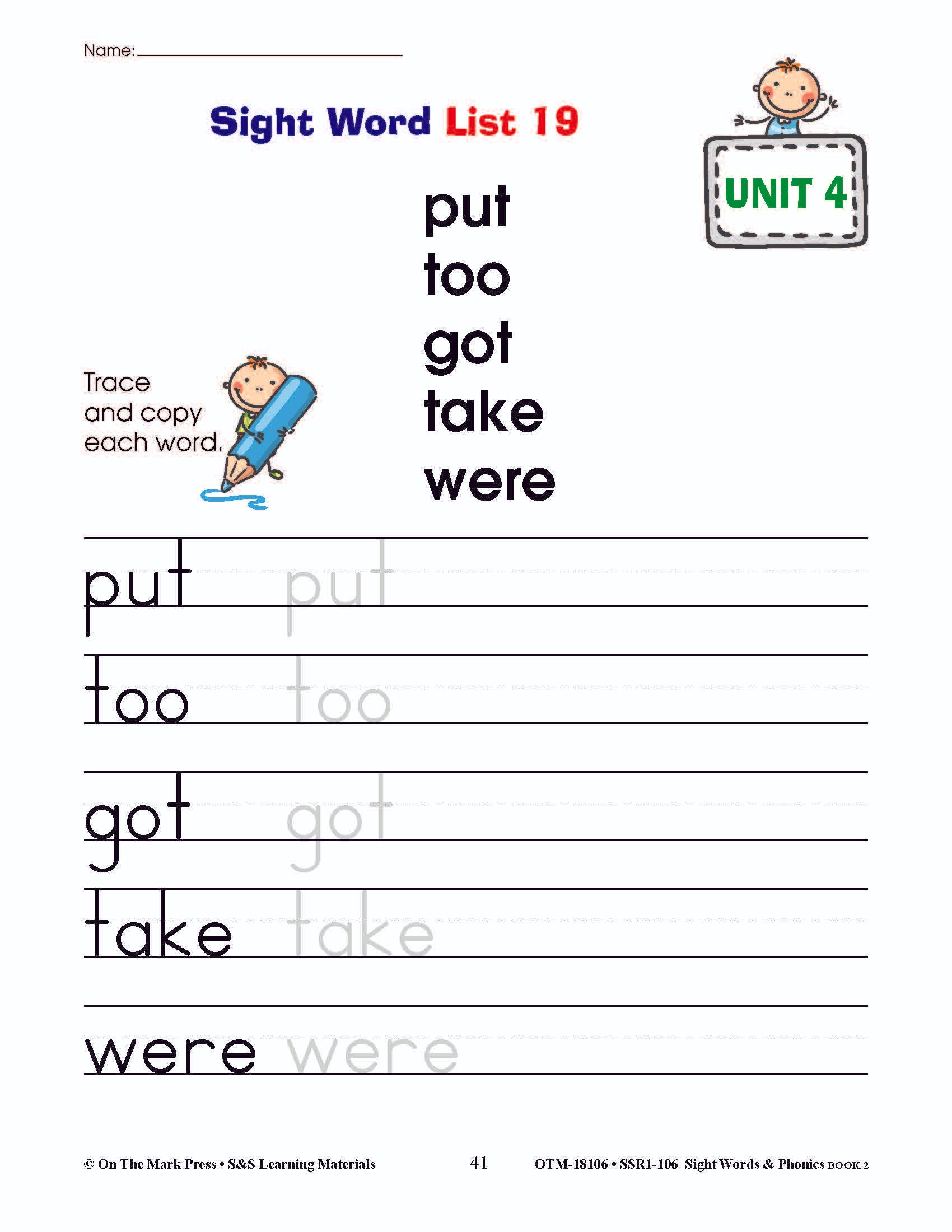
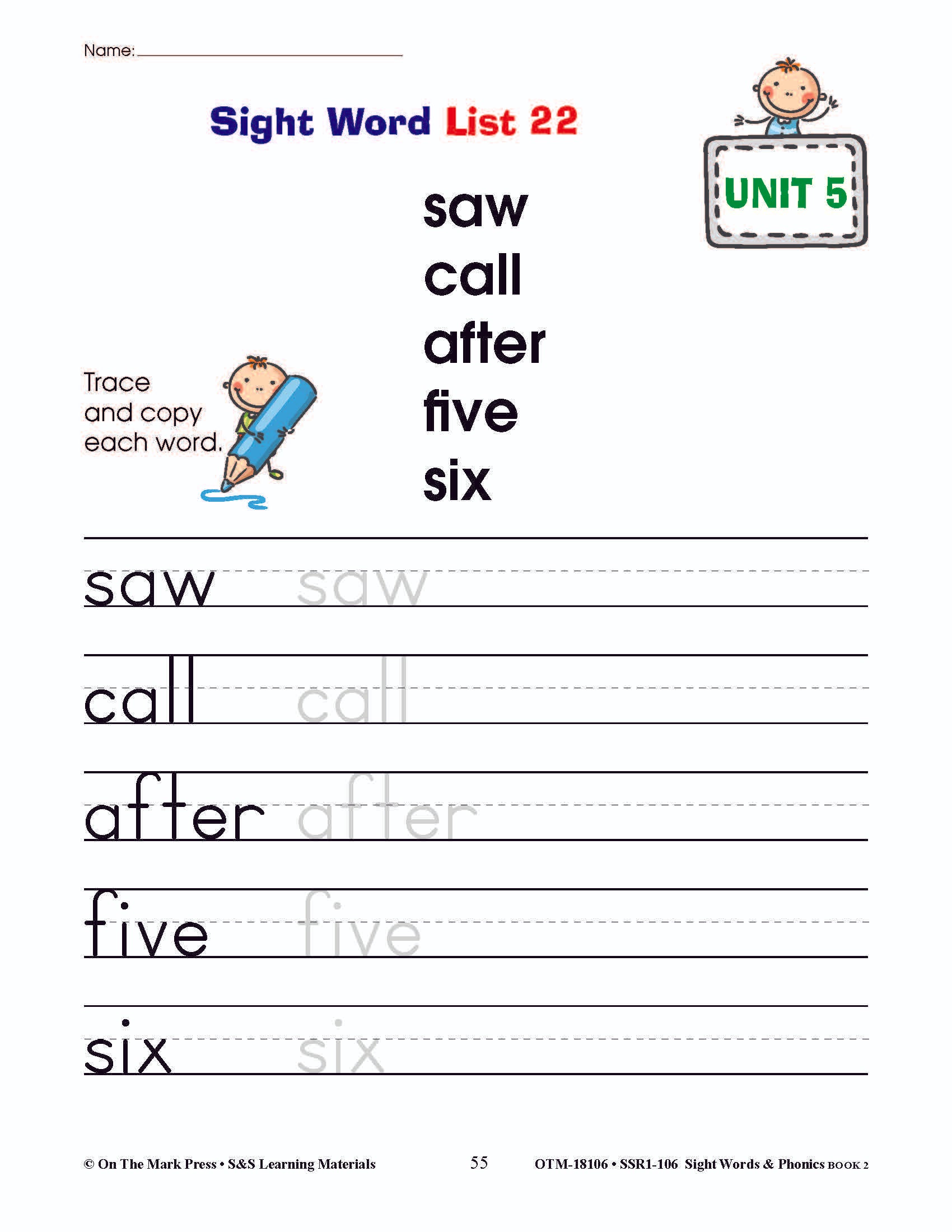
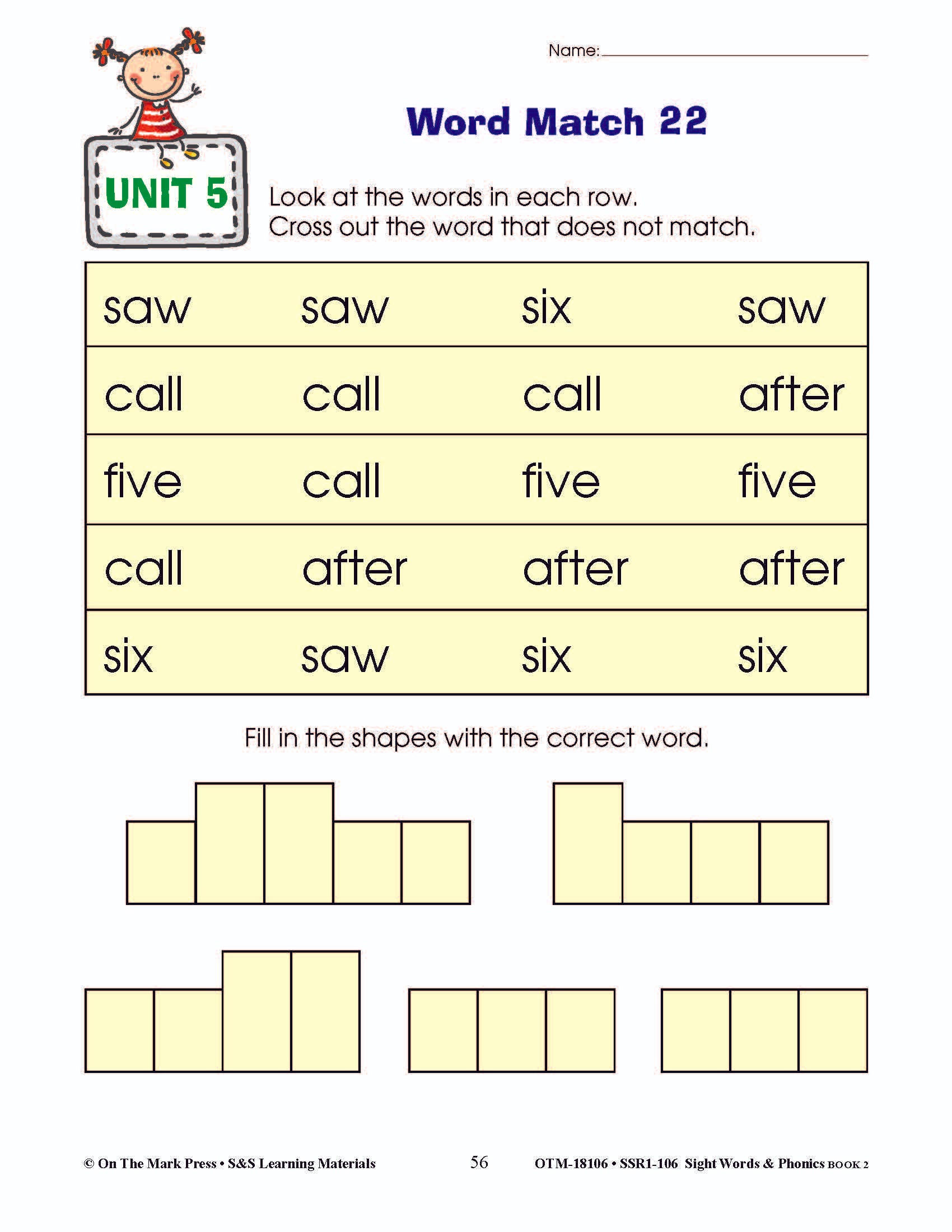
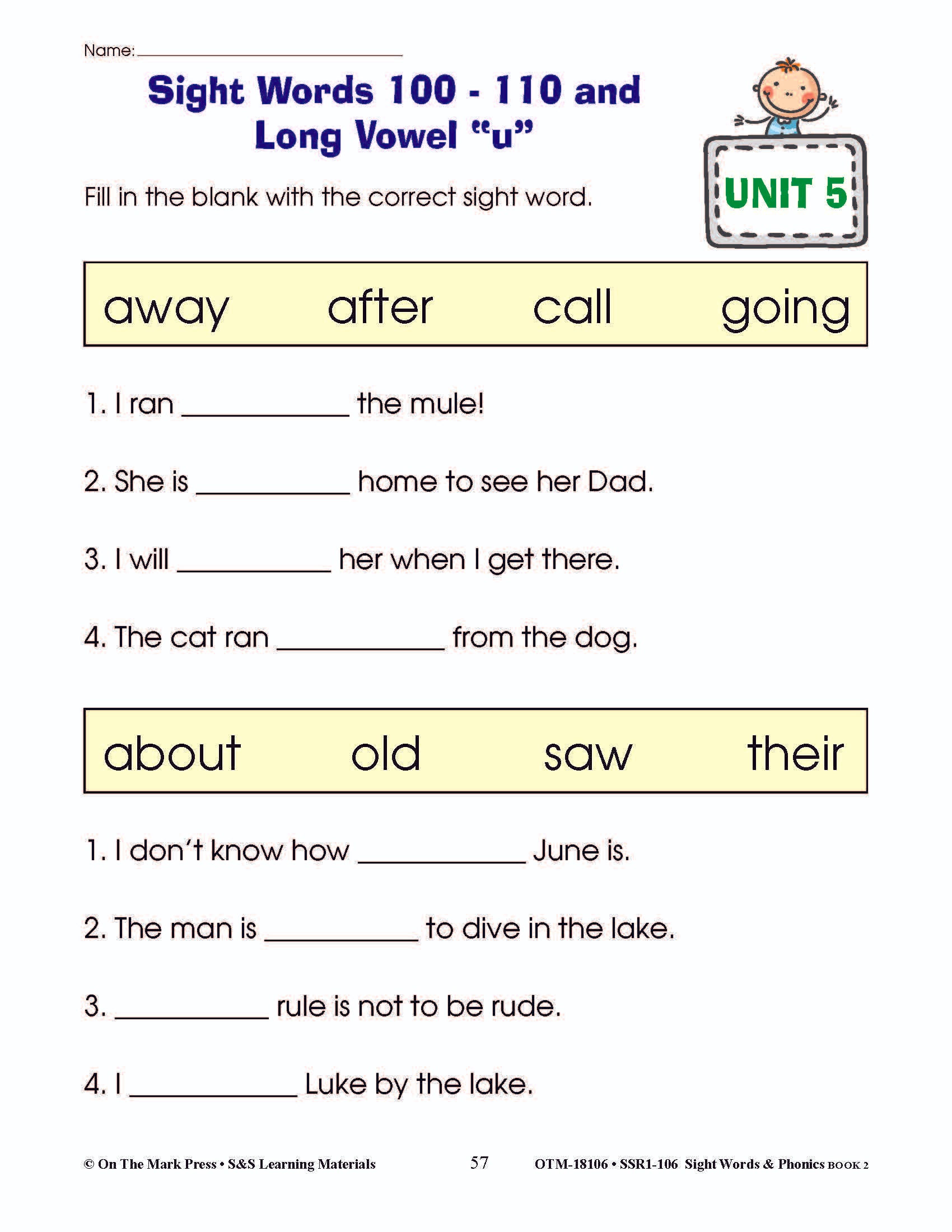
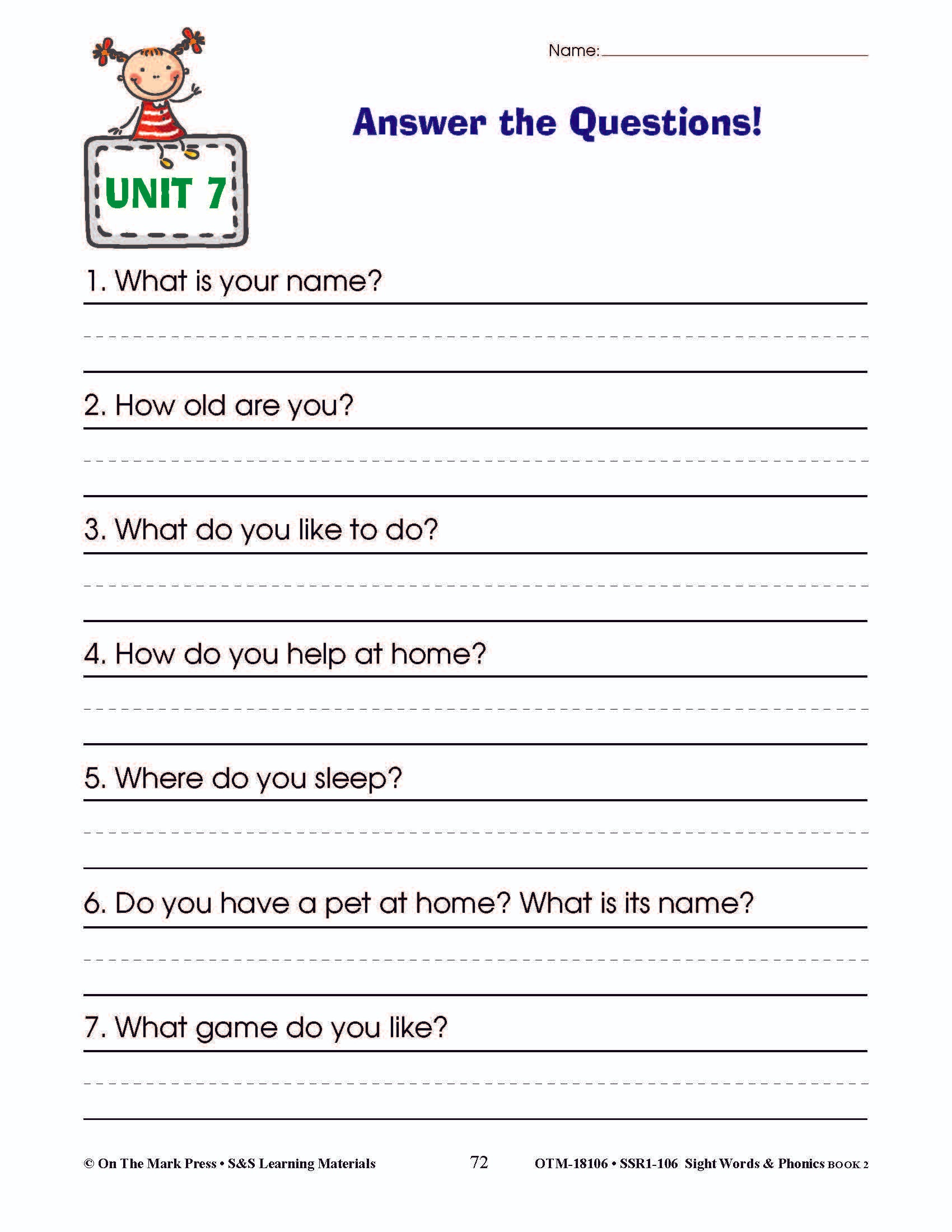
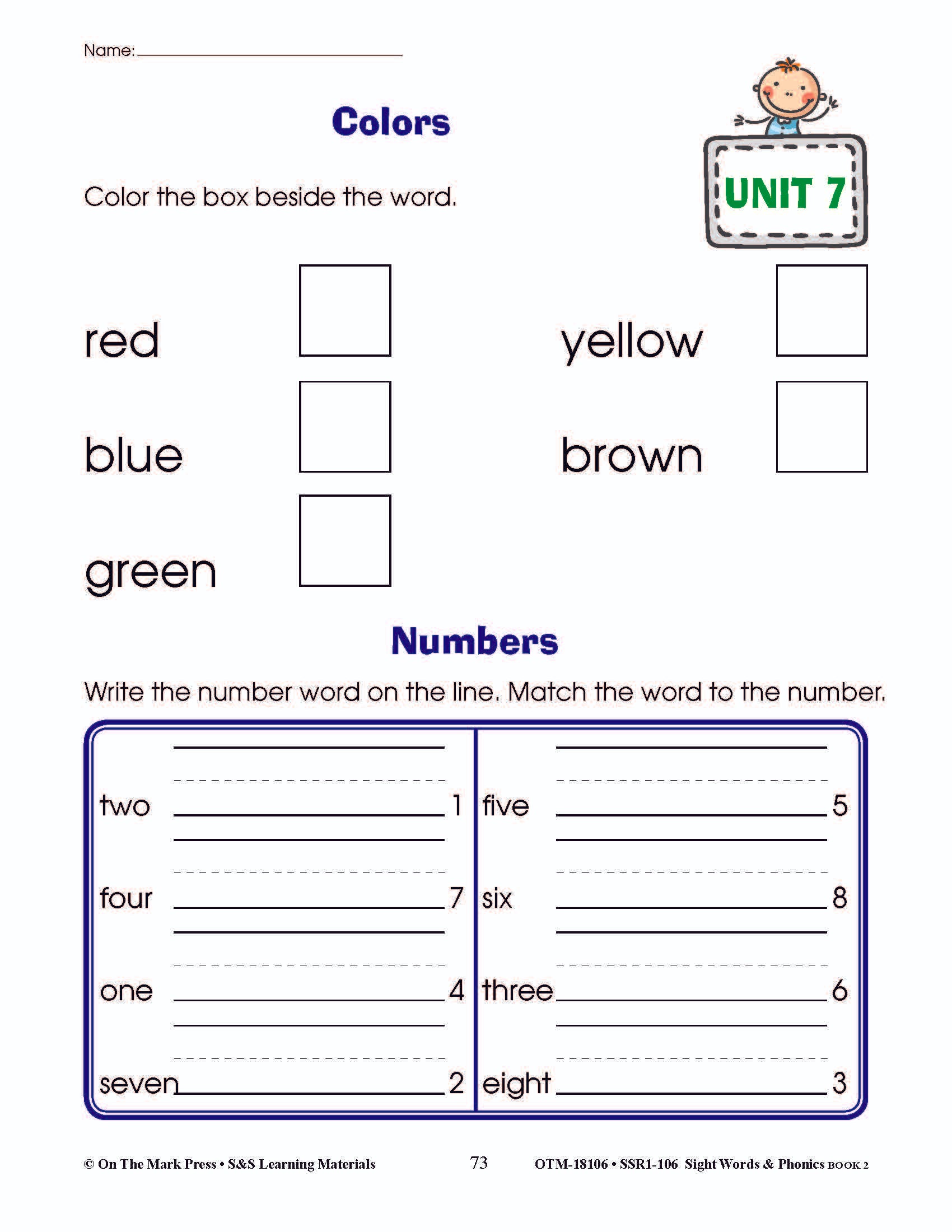
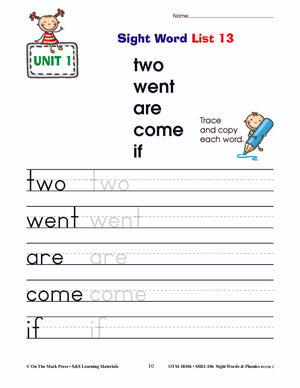
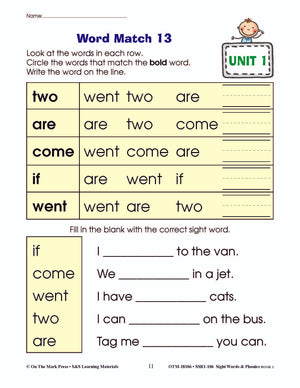
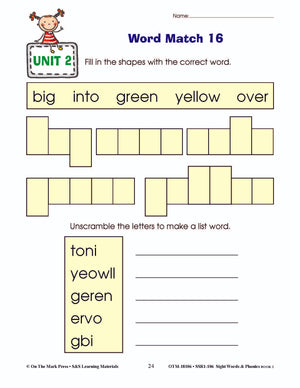
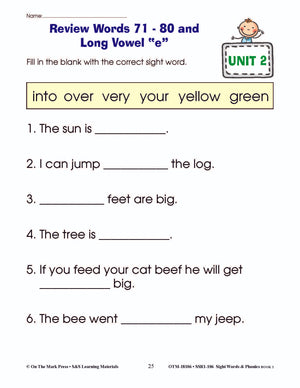
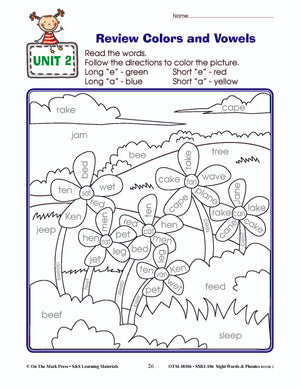
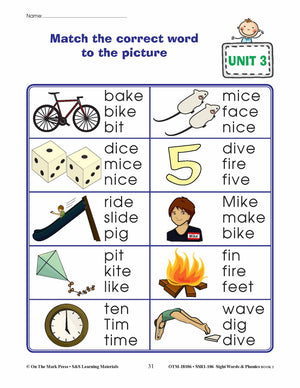
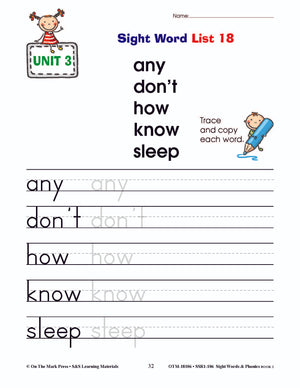
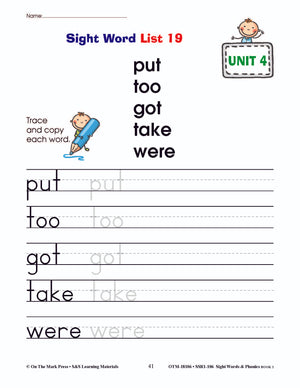
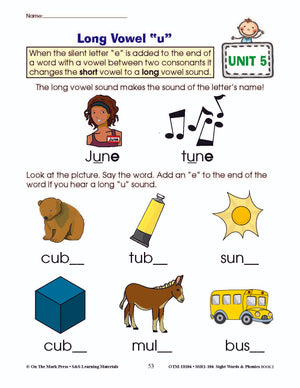
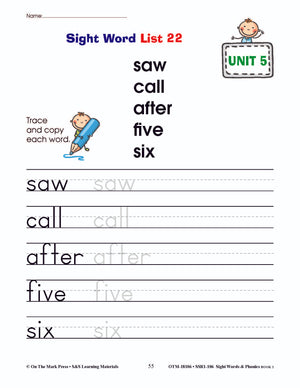
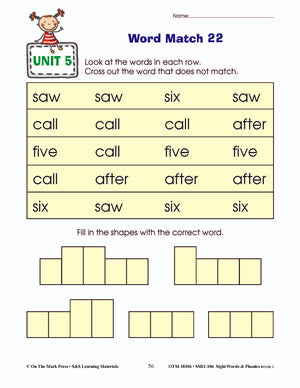
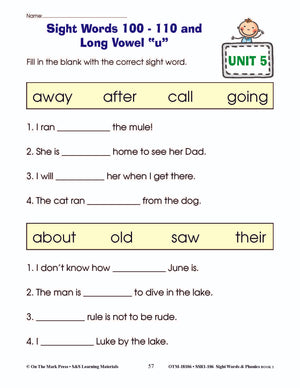
Each unit introduces 10 sight words that are broken up into 2 lists of 5. In between each list, a short vowel is introduced. Sight Words and vowels are then reinforced through short sentences and revision activities that follow.
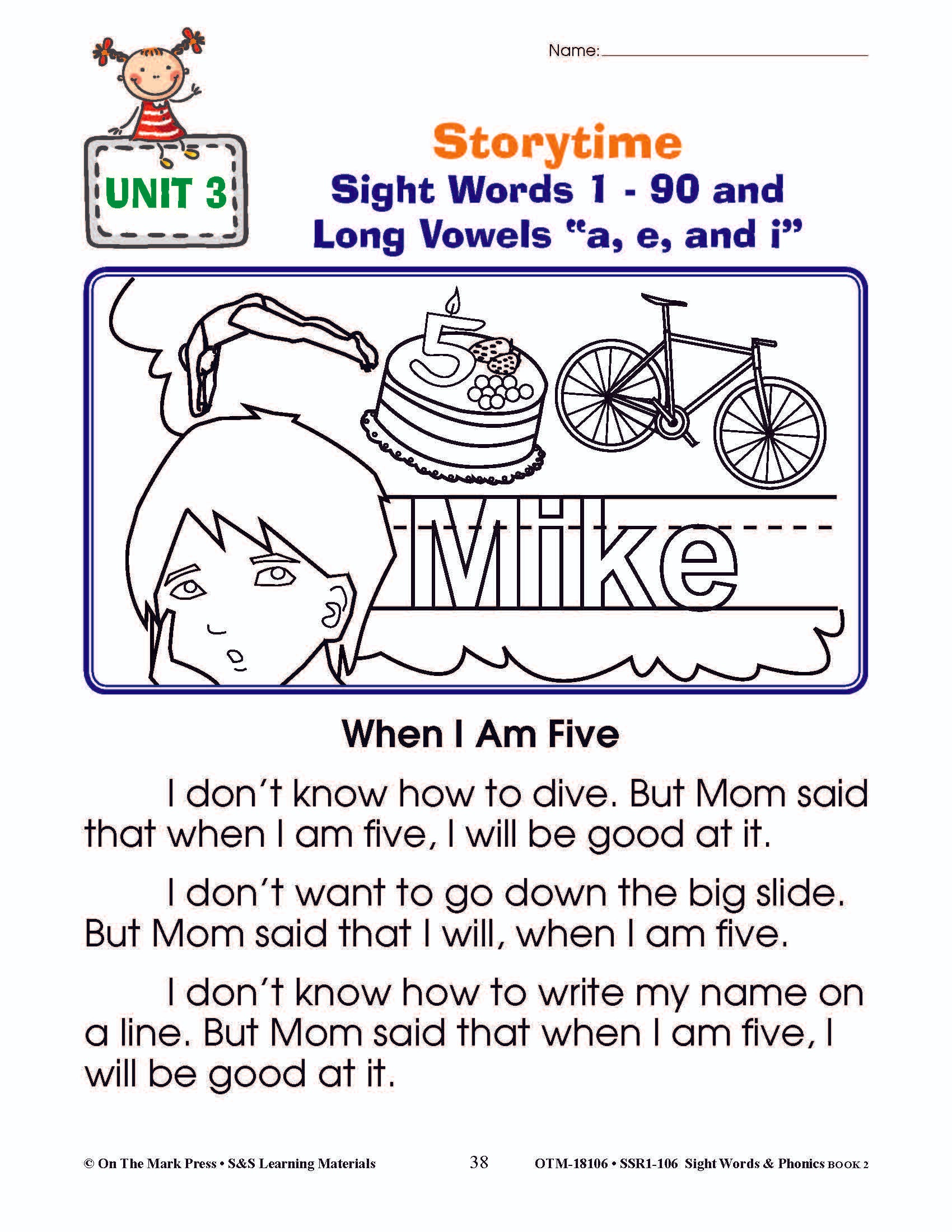
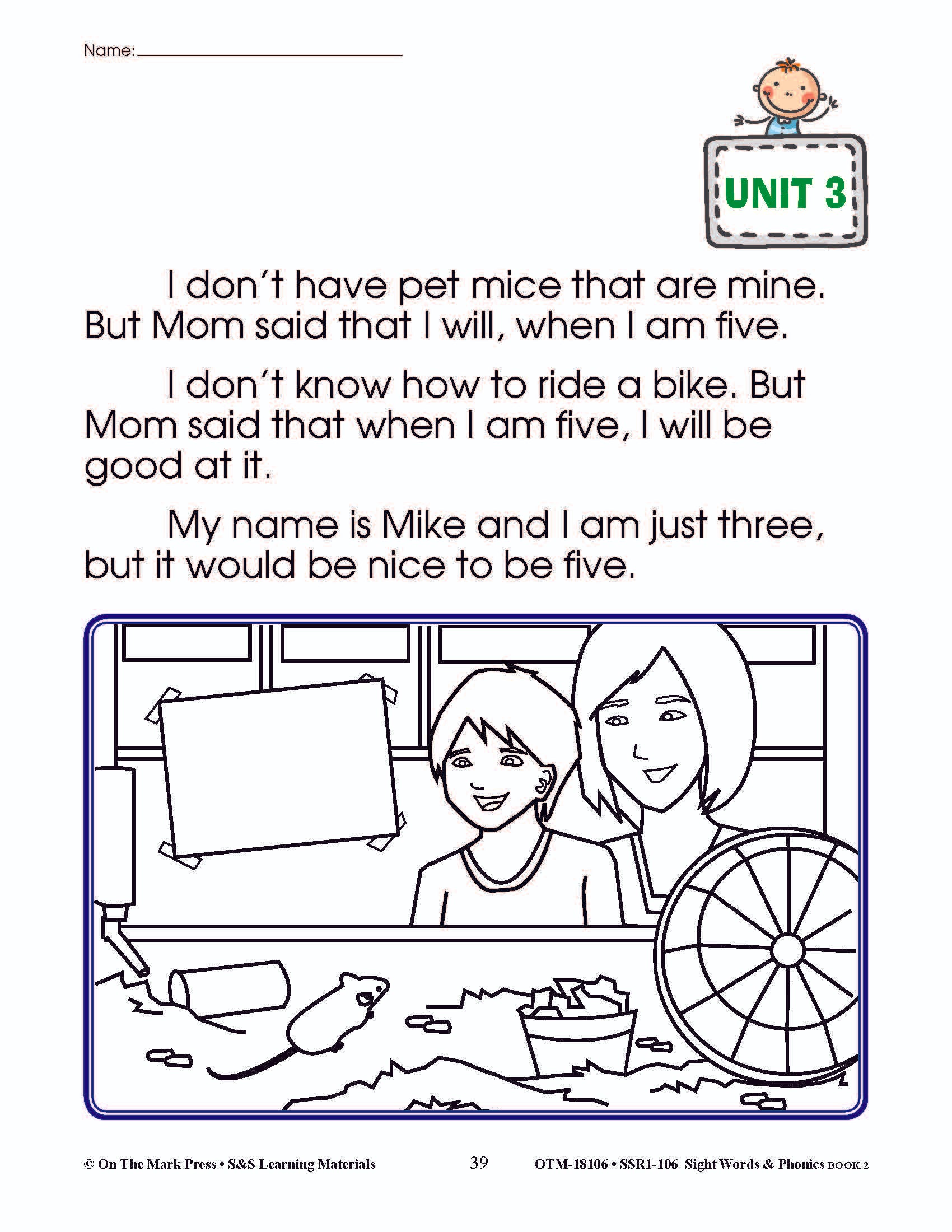
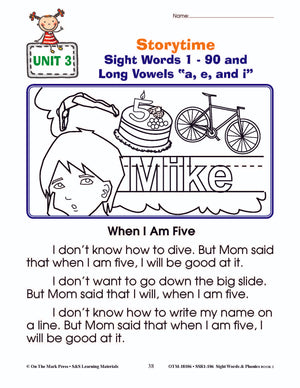
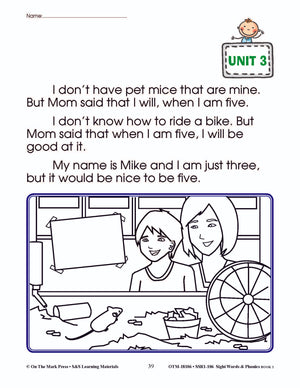
To end the unit the student reads a short story that only contains words they have learned and practiced.
Flashcards for Dolch Sight Words taught are included on card stock. Simply cut and use!
Curriculum Standards Met
U.S. Common Core Standards
FOUNDATIONAL SKILLS (RF.1)
RF.1.1 – Print Concepts
- Understand basic features of print (left‑to‑right, word spacing). (Supported through tracing, copying, sentence building.)
RF.1.2 – Phonological Awareness
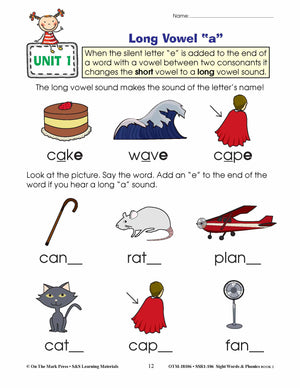
- Distinguish long vs. short vowel sounds.
- Blend and segment sounds. (Book 2 teaches long vowels a/e/i/o/u explicitly.)
RF.1.3 – Phonics and Word Recognition
- RF.1.3.A – Consonant digraphs
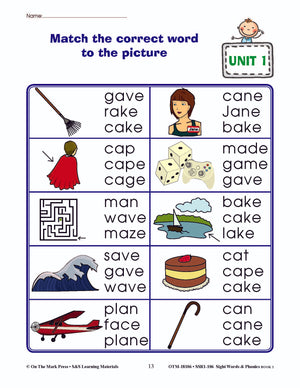
- RF.1.3.B – Long vowel sounds with silent e
- RF.1.3.C – Final‑e conventions
- RF.1.3.D – Vowel teams (ee)
- RF.1.3.F – Decode regularly spelled one‑syllable words
- RF.1.3.G – Read grade‑appropriate irregularly spelled words (Dolch sight words 61–120 are irregular high‑frequency words.)
RF.1.4 – Fluency
- RF.1.4.A – Read with purpose and understanding
- RF.1.4.B – Read with accuracy and fluency
- RF.1.4.C – Use context to confirm or self‑correct (Book 2 includes fill‑in‑the‑blank, story reading, context clues.)
LANGUAGE (L.1)
L.1.1 – Grammar and Usage
- Use nouns, verbs, adjectives, pronouns. (Sight word sentences and writing tasks support this.)
L.1.2 – Conventions of Standard English
- L.1.2.B – Use end punctuation
- L.1.2.C – Capitalize dates and names
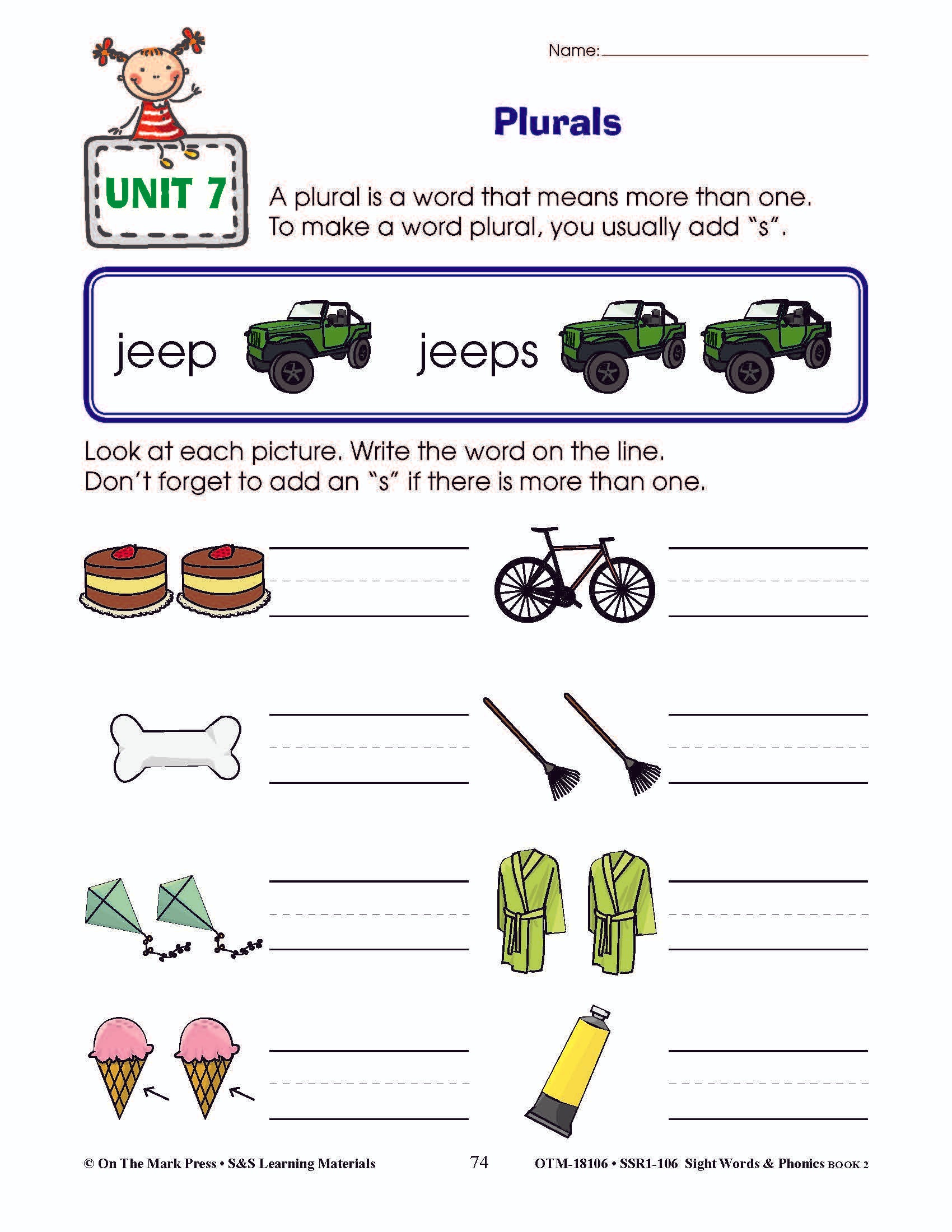
- L.1.2.D – Spell words with common patterns (Book 2 includes spelling, plurals, suffixes, letter ordering.)
L.1.4 – Vocabulary Acquisition
- L.1.4.A – Use sentence‑level context clues (Book 2 explicitly teaches context clues.)
L.1.5 – Word Relationships
- L.1.5.C – Real‑life connections between words and their use (Sight words used in meaningful sentences and stories.)
WRITING (W.1)
W.1.1 – Write opinion pieces (Supported indirectly through sentence writing.)
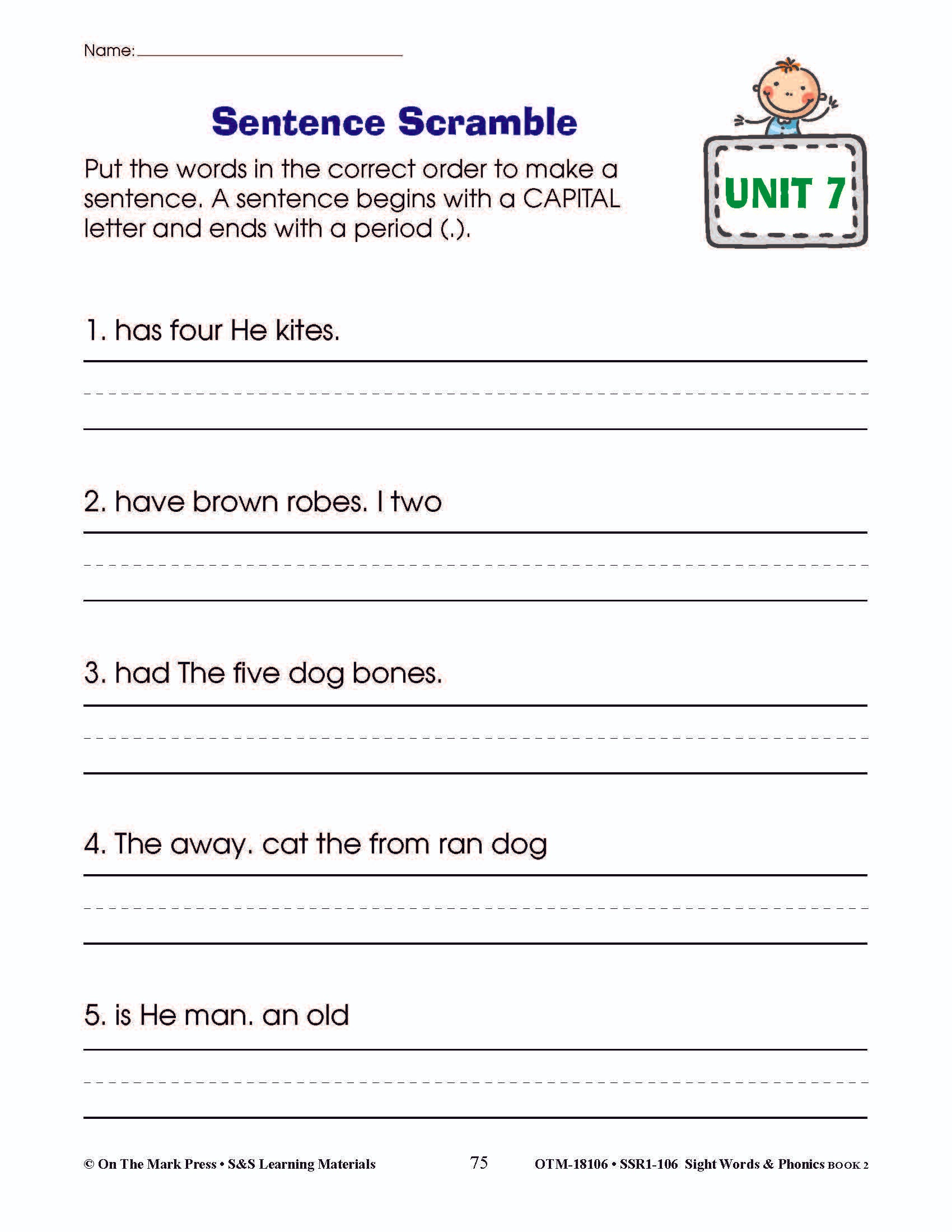
W.1.2 – Write informative/explanatory texts (Students write simple sentences using sight words.)
W.1.3 – Write narratives with two or more sequenced events (Book 2 includes “Story Writing” pages.)
W.1.5 – With guidance, strengthen writing (Tracing, copying, sentence building support this.)
READING LITERATURE & INFORMATIONAL TEXT (RL.1 & RI.1)
RL.1.1 / RI.1.1 – Ask and answer questions about key details RL.1.2 – Retell stories RL.1.4 – Identify words and phrases that suggest feelings or senses (Book 2’s Storytime pages support these.)
Canadian Curriculum Expectations Met
Ontario – Language, Grade 1 (2023 Curriculum)
Strand B – Foundations of Language
- B2.1 – High-Frequency Words
- B2.2 – Vocabulary Development
- B2.3 – Phonics and Word Recognition
- B2.4 – Spelling Patterns and Conventions
- B2.5 – Morphology (suffixes, plurals)
- B2.6 – Context Clues
Strand B – Comprehension
- B3.1 – Reading and Understanding Texts
- B3.2 – Making Meaning from Texts
Strand C – Writing
- C1.1 – Developing Ideas for Writing
- C1.2 – Organizing Ideas
- C1.3 – Creating Sentences and Short Texts
- C1.4 – Revising and Editing
Strand C – Language Conventions
- C2.1 – Spelling and Word Formation
- C2.2 – Grammar and Usage
Strand A – Oral Communication
- A1.2 – Following Instructions
- A1.4 – Speaking Clearly
British Columbia – ELA K–3 (Curricular Competencies)
- ELA-K-CC-L1 – Recognize high-frequency words
- ELA1-CC-L1 – Apply phonics and word patterns
- ELA1-CC-L2 – Decode long/short vowels
- ELA1-CC-L3 – Use strategies to read unfamiliar words
- ELA1-CC-L4 – Build vocabulary
- ELA1-CC-C1 – Read and comprehend simple texts
- ELA1-CC-C3 – Create simple sentences
- ELA1-CC-C4 – Write short personal or imaginative texts
Alberta – ELAL K–3 (Learning Outcomes)
- 1.1 – Phonological Awareness
- 1.2 – Phonics and Word Recognition
- 1.2(2) – Sight Word Fluency
- 1.2(3) – Decoding Long Vowels
- 1.3 – Vocabulary Growth
- 2.1 – Reading Comprehension
- 2.2 – Reading Familiar Texts
- 3.1 – Writing Simple Sentences
- 3.2 – Spelling and Conventions
- 3.2(2) – Plurals and Suffixes
Saskatchewan – ELA Primary (Outcomes & Indicators)
- CR1.1 – Comprehend and Respond to Texts
- CR1.2 – Read Independently
- CR1.4 – Use Phonics and Word Patterns
- CC1.2 – Compose and Create Stories
- CC1.4 – Write Simple Sentences
Manitoba – ELA K–4 (SLO Codes)
- 1.1.1 – Sight Word Recognition
- 1.1.2 – Vocabulary Development
- 1.1.3 – Word Meaning Strategies
- 1.2.1 – Phonics
- 1.2.2 – Decoding Skills
- 2.1.1 – Reading and Understanding Texts
- 4.1.2 – Writing Simple Sentences
New Brunswick – ELA K–2 (Outcomes)
- 1.1 – Sight Word Recognition
- 1.2 – Vocabulary
- 1.3 – Phonics
- 2.1 – Reading Comprehension
- 2.2 – Reading Simple Texts
- 3.1 – Writing Simple Sentences
Nova Scotia – ELA Primary–3 (Outcomes)
- R1.1 – Recognize High-Frequency Words
- R1.2 – Decode Using Phonics
- R1.3 – Use Word-Solving Strategies
- R1.4 – Read Simple Texts
- W1.1 – Write Simple Sentences
- W1.2 – Write Short Stories
Prince Edward Island – ELA K–3 (Outcomes)
- 1.1 – Sight Words
- 1.2 – Vocabulary
- 1.3 – Phonics
- 2.1 – Reading Comprehension
- 3.1 – Writing Sentences
Newfoundland & Labrador – ELA Primary (Outcomes)
- 1.1.1 – Sight Word Recognition
- 1.1.2 – Vocabulary
- 1.2.1 – Phonics and Decoding
- 2.1.1 – Reading Simple Texts
- 3.1.1 – Writing Simple Sentences
Yukon: Uses BC curriculum codes.
Northwest Territories: Uses Alberta curriculum codes.
Nunavut – ELA K–3 (Outcomes)
- 1.1 – Sight Words
- 1.2 – Vocabulary
- 1.3 – Phonics
- 2.1 – Reading Simple Texts
- 3.1 – Writing Simple Sentences