
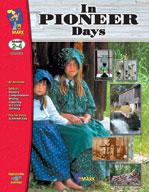
In Pioneer Days Grades 2-4
EBOTM606
$26.99 CAD
Additional information:
- Author : Solski, Ruth
Step into the world of early settlers with In Pioneer Days, a classroom‑ready resource for Grades 2–4. Through short informational texts, stories, and engaging activities, students explore daily life in pioneer communities—homes, schools, chores, work, transportation, and more—while practicing key literacy skills like reading for detail, sequencing events, and comparing past and present.
This resource aligns with Canadian social studies expectations on communities past and present and supports Common Core ELA standards for Grades 2–3. Use it for social studies units, language arts integration, or project‑based learning. Just print, copy, and teach.
The students will:
- develop an appreciation of the past and the resourcefulness of our ancestors.
- examine the basic conditions under which a community starts and grows.
- understand the relationship between the environment and family life by learning about ways pioneers utilized the environment for food, clothing, housing and equipment.
- compare a pioneer community to our modern community by observing and learning about farm buildings, family life, a village, ways of earning a living, communication, transportation, government, recreation.
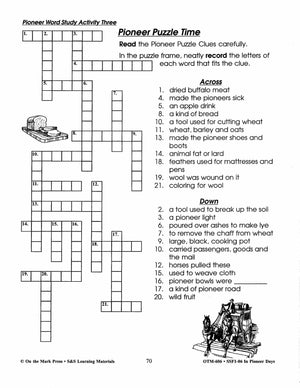
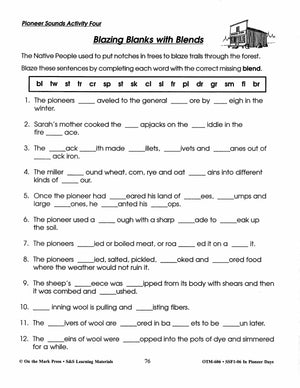
Information and follow-up worksheets on these topics:
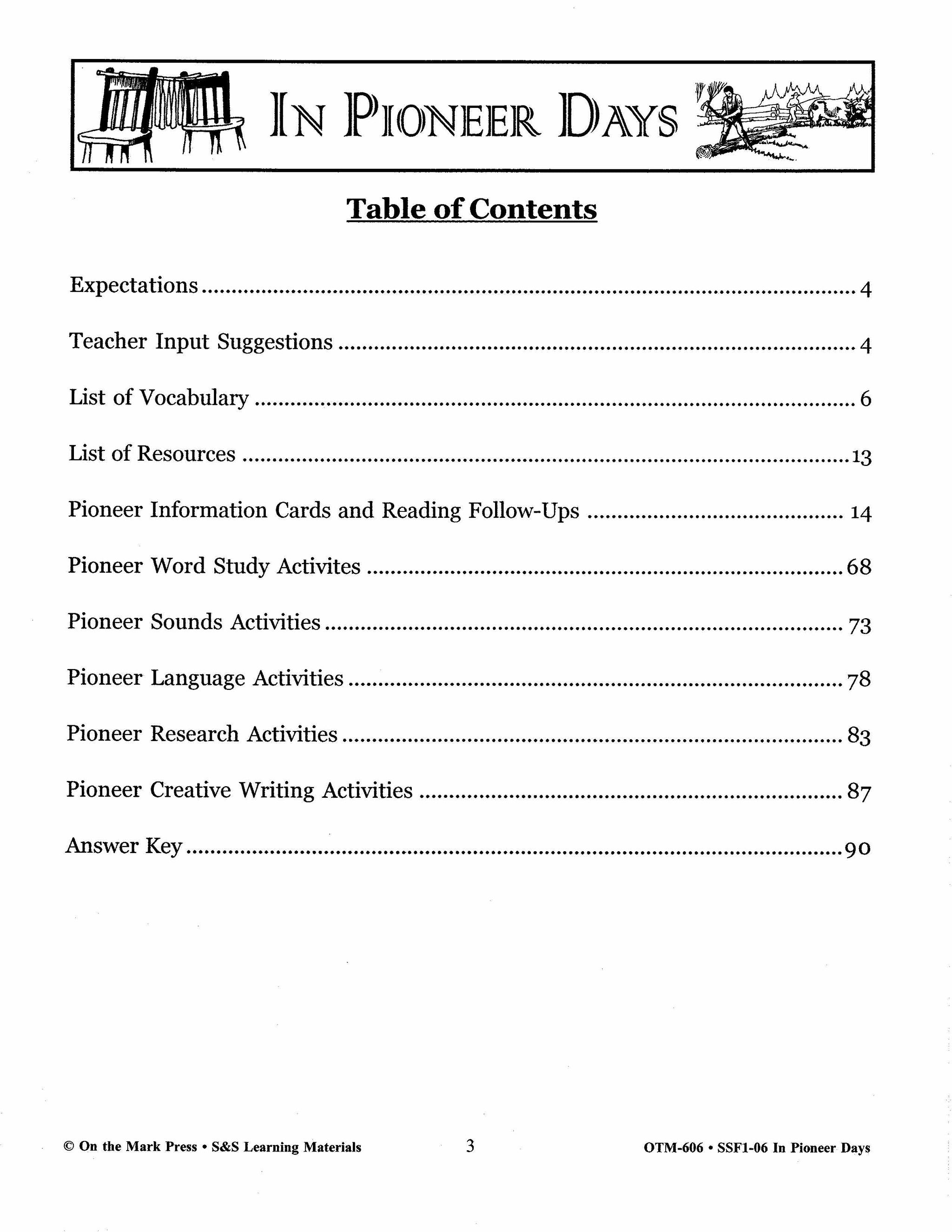
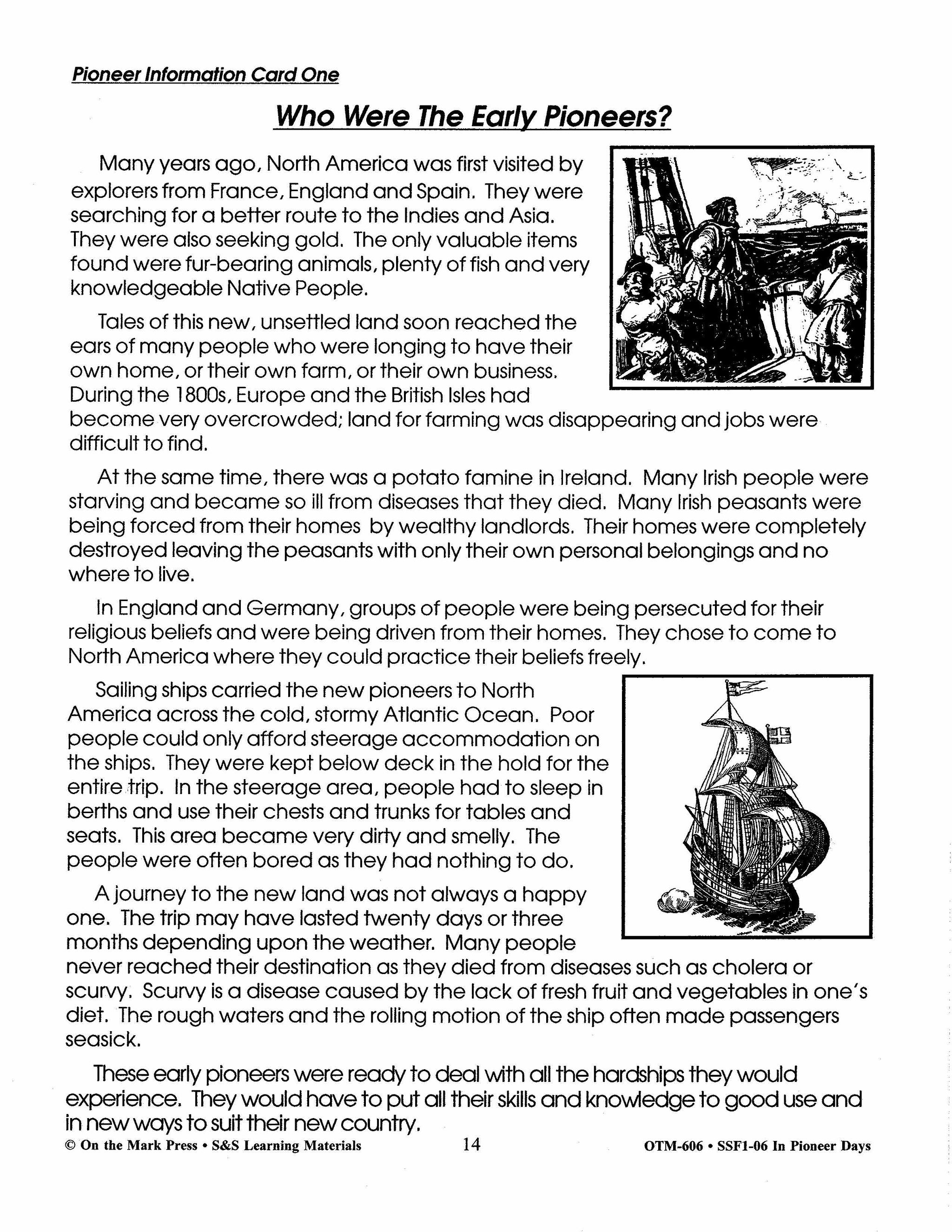
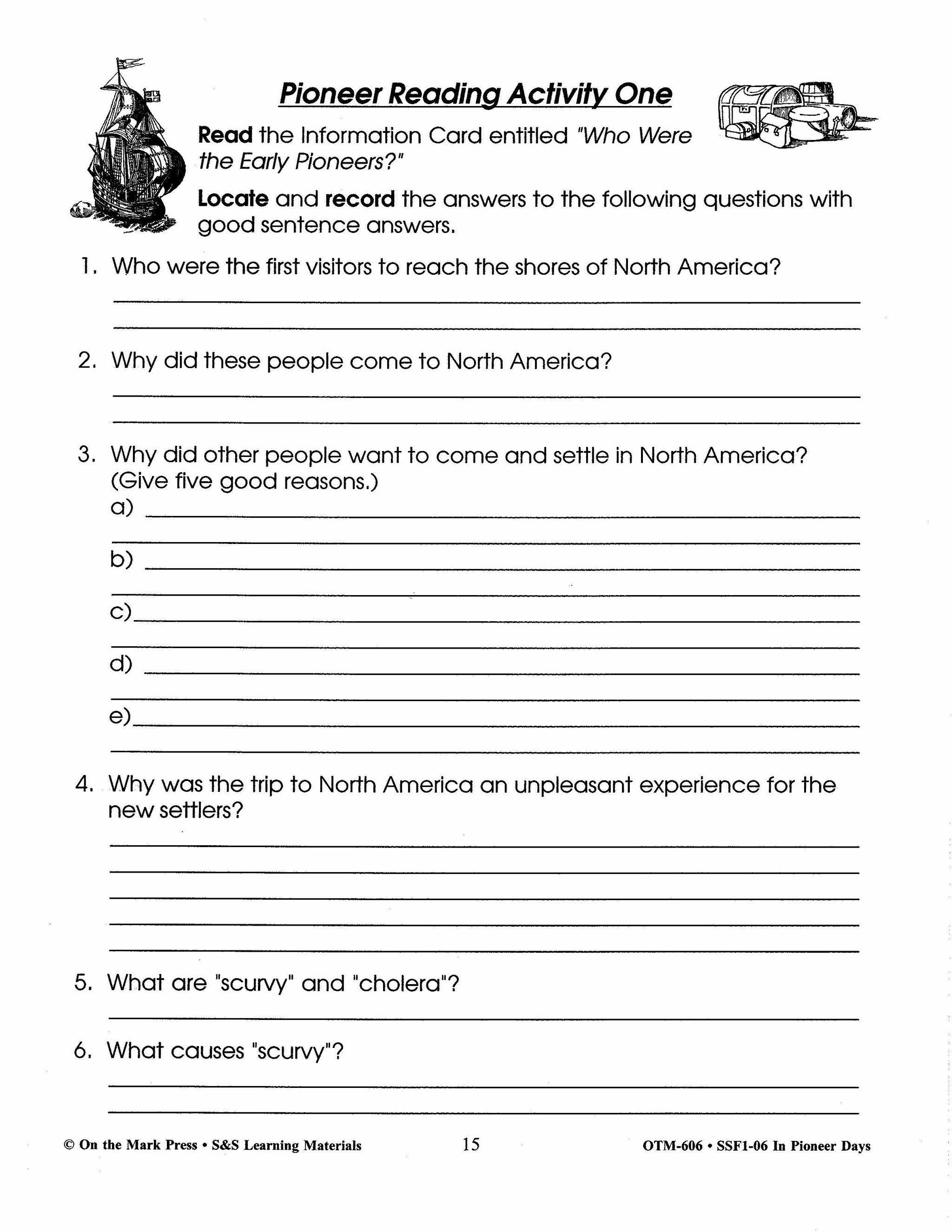
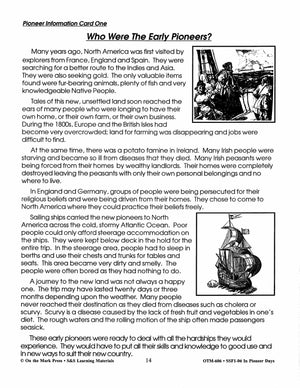
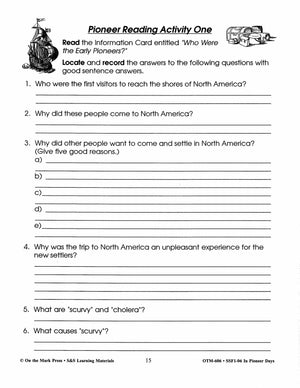
- Who Were the Early Pioneers?
- Clearing the Land
- Early Pioneer Homes
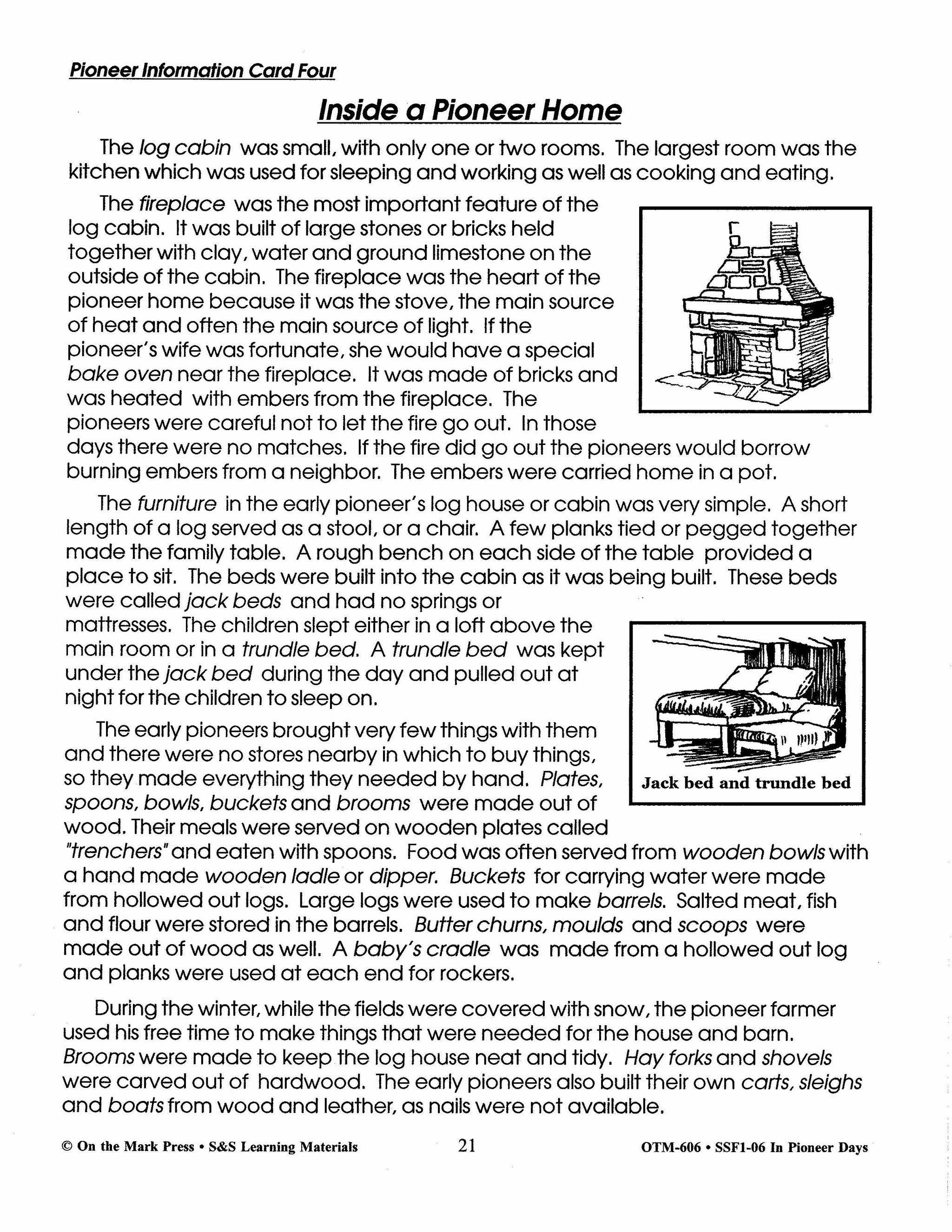
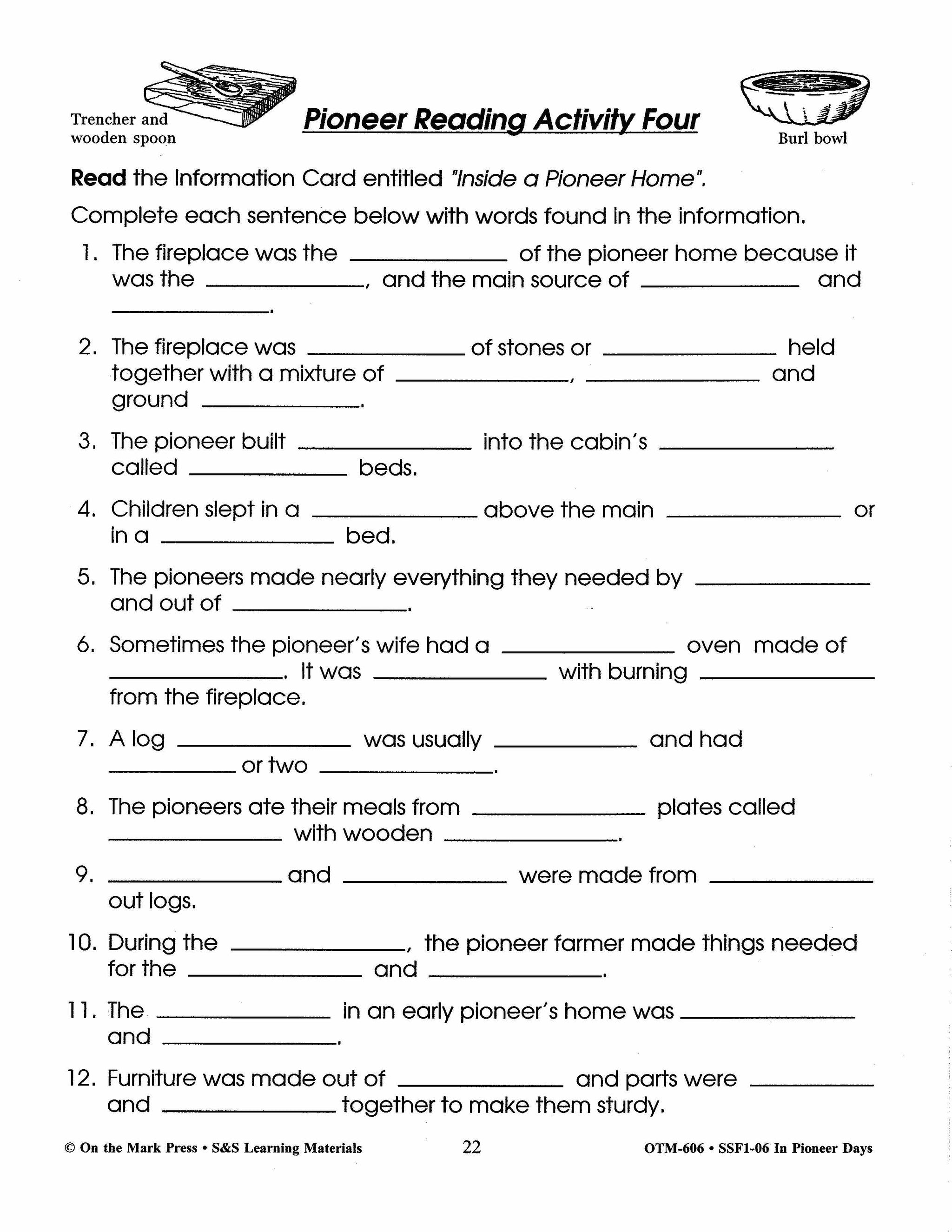
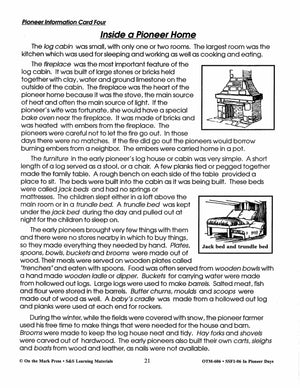
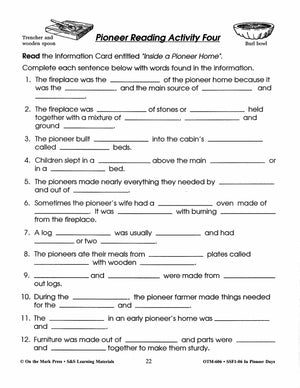
- Inside a Pioneer Home
- Planting the Crops
- Harvesting and Milling the Crops
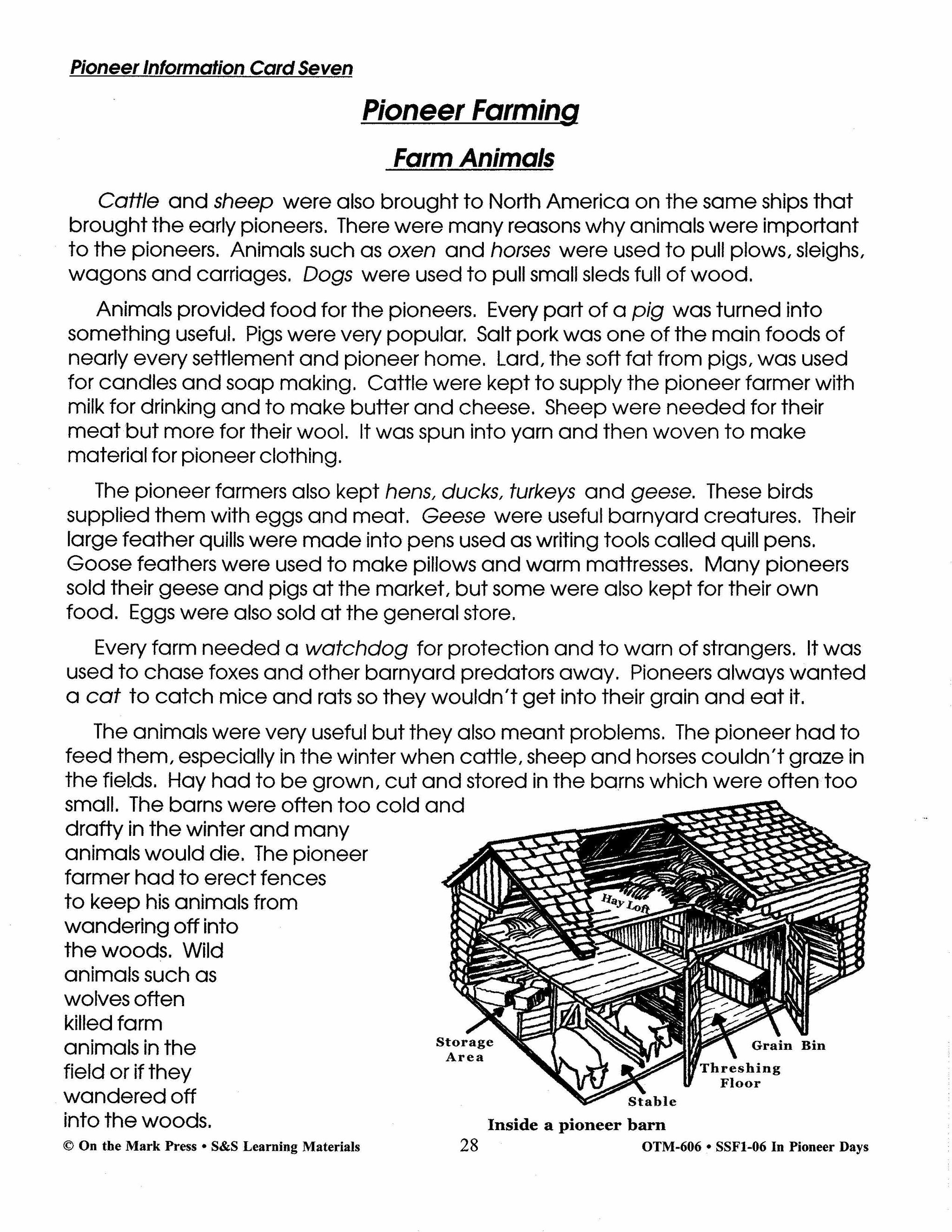
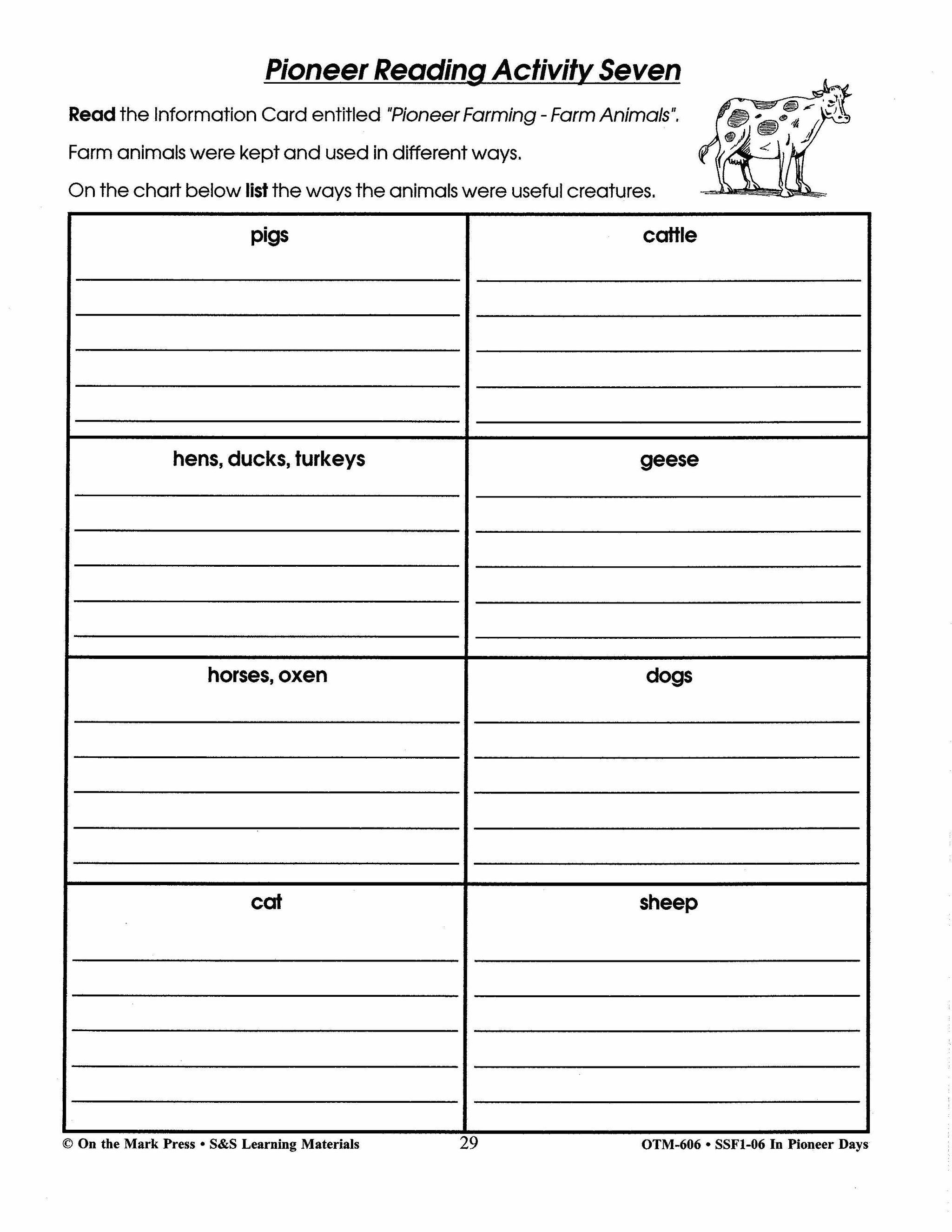
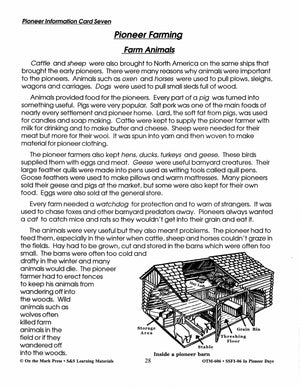
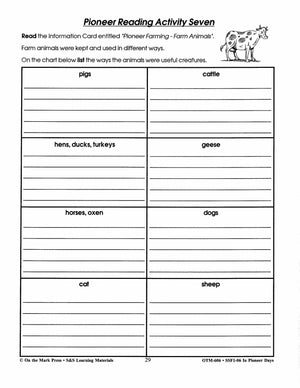
- Farm Animals
- Early Pioneer Food
- Pioneer Cooking and Preserving
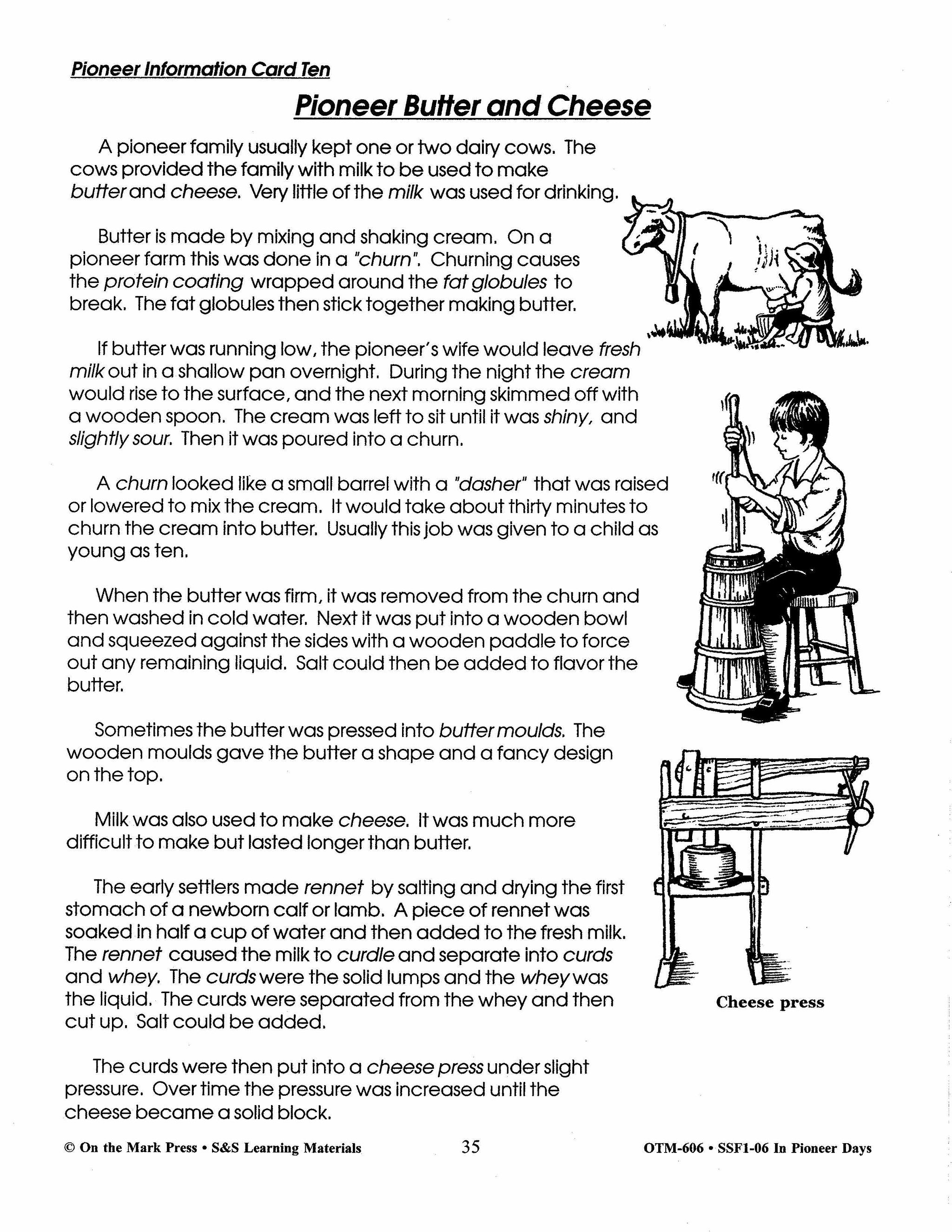
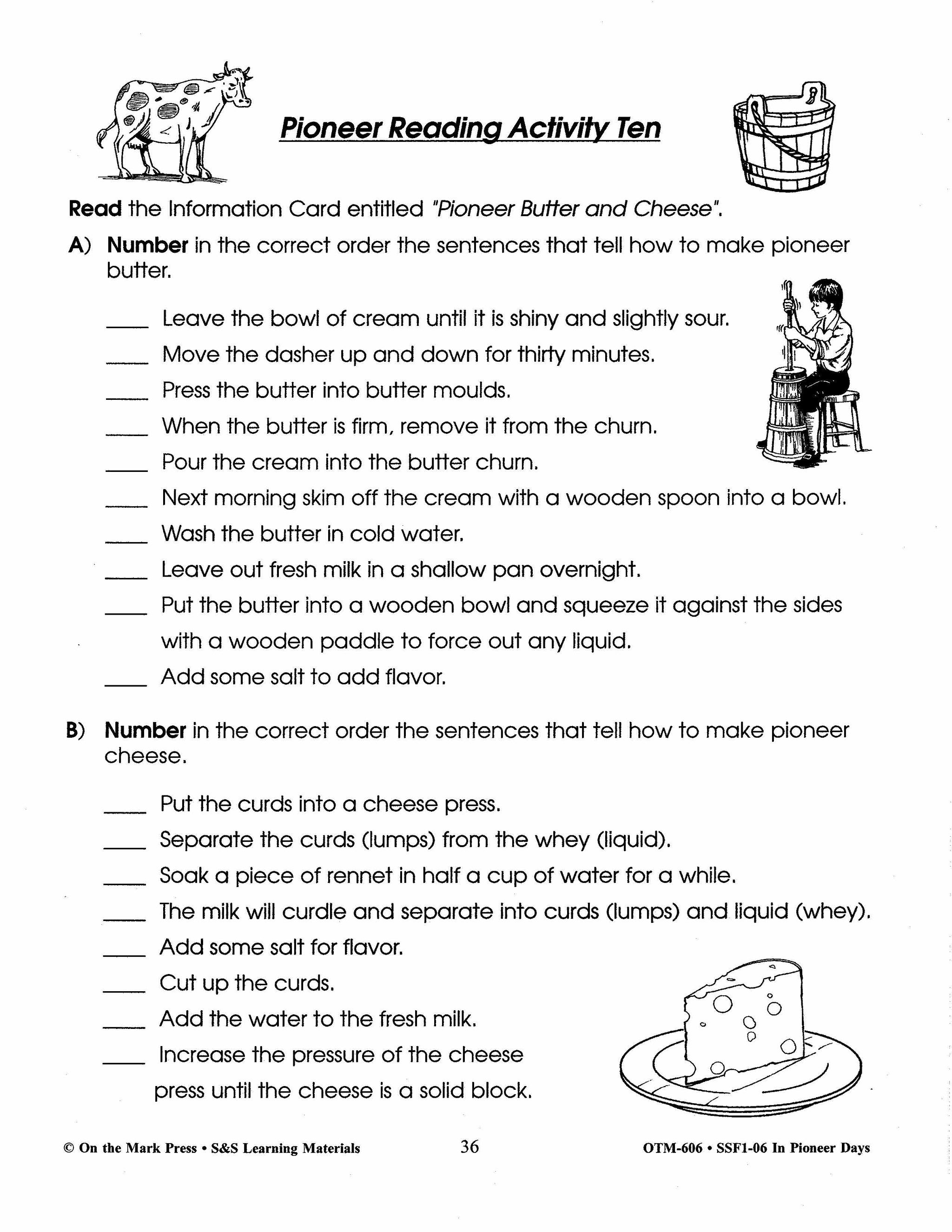
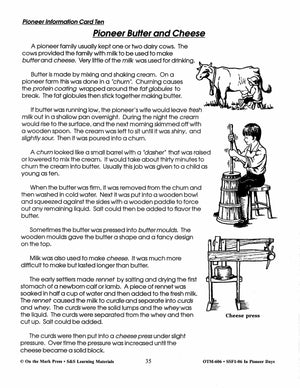
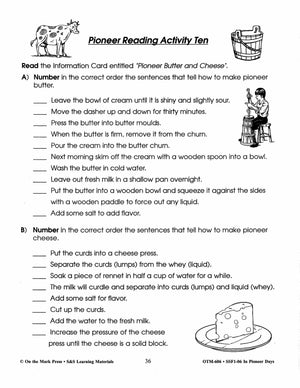
- Pioneer Butter and Cheese
- How the Native People Helped the Early Pioneers
- Pioneer Sugar and Spice
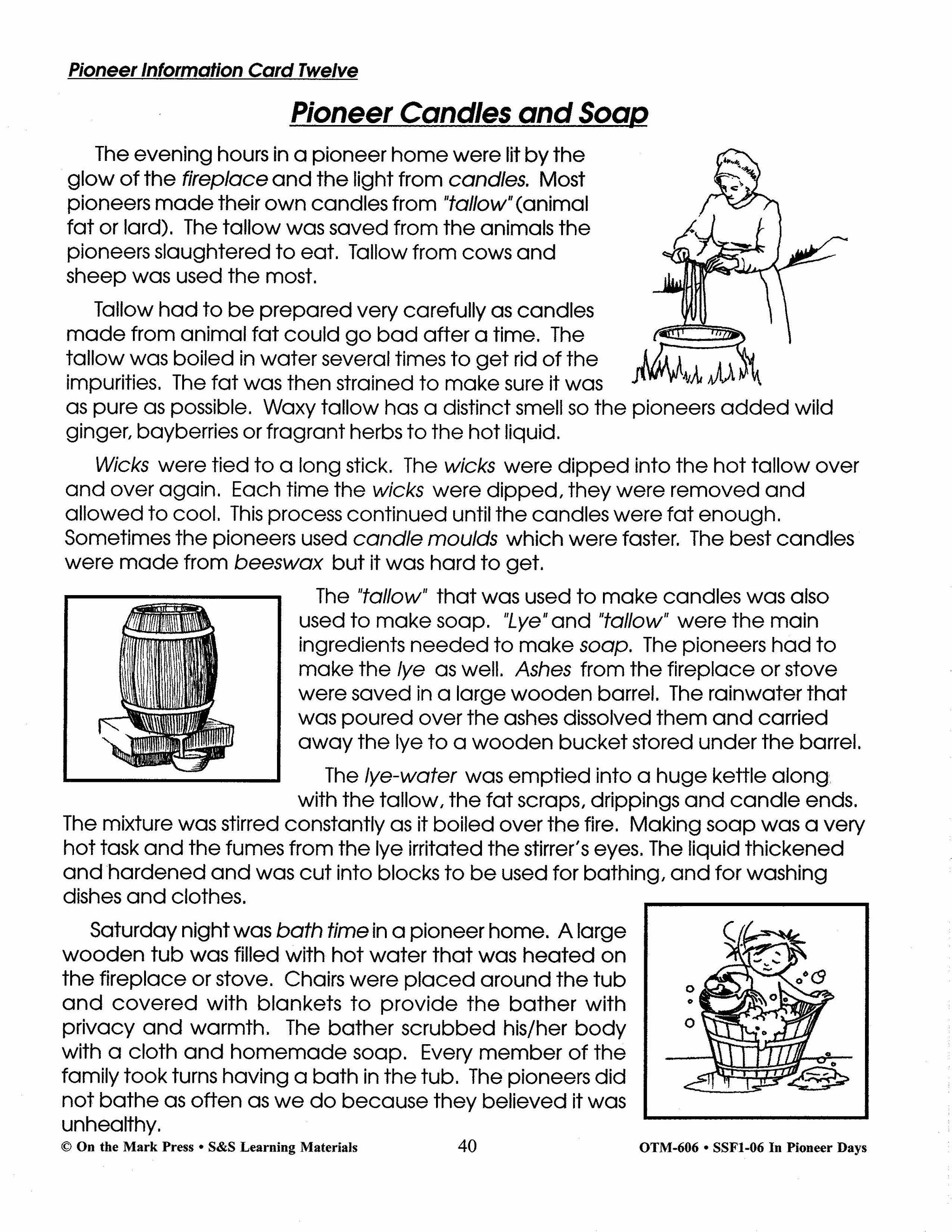
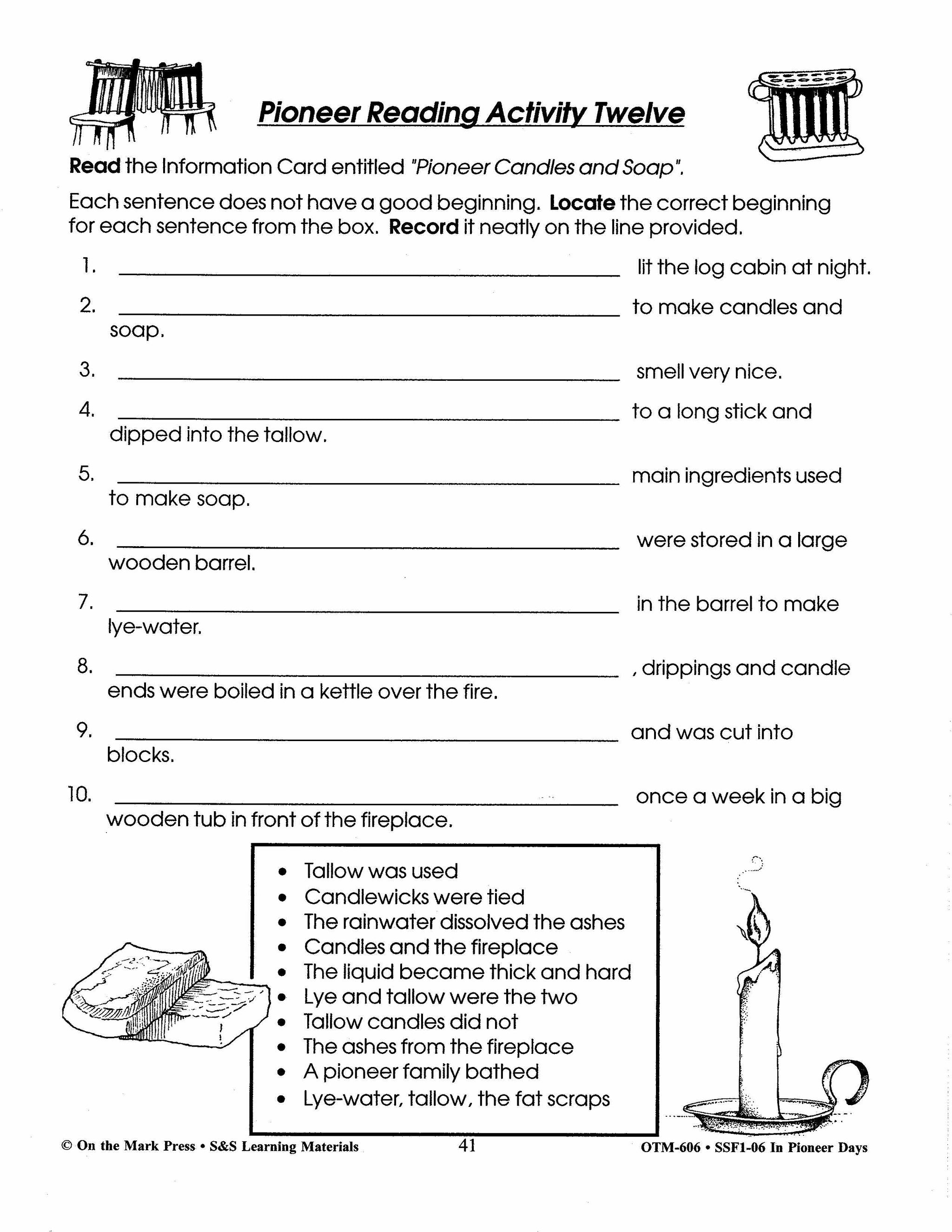
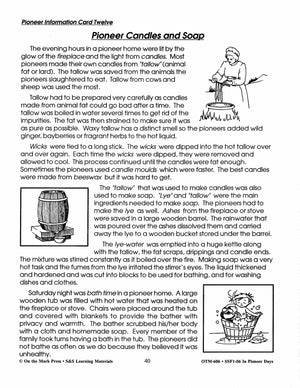
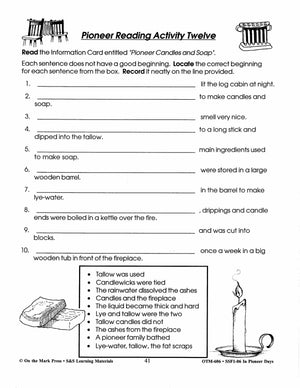
- Pioneer Candles and Soap
- Pioneer Hunting, Fishing and Trapping
- Pioneer Clothing
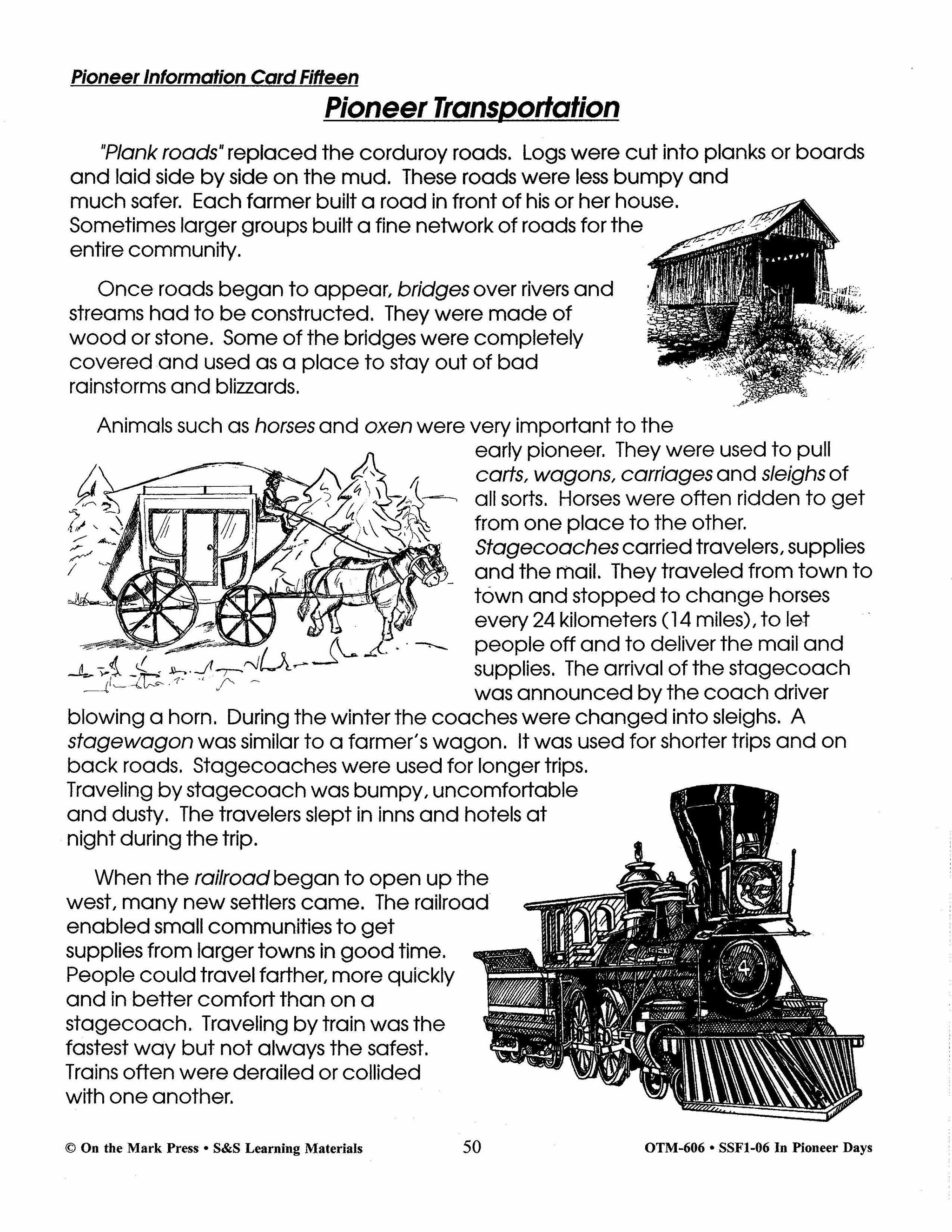
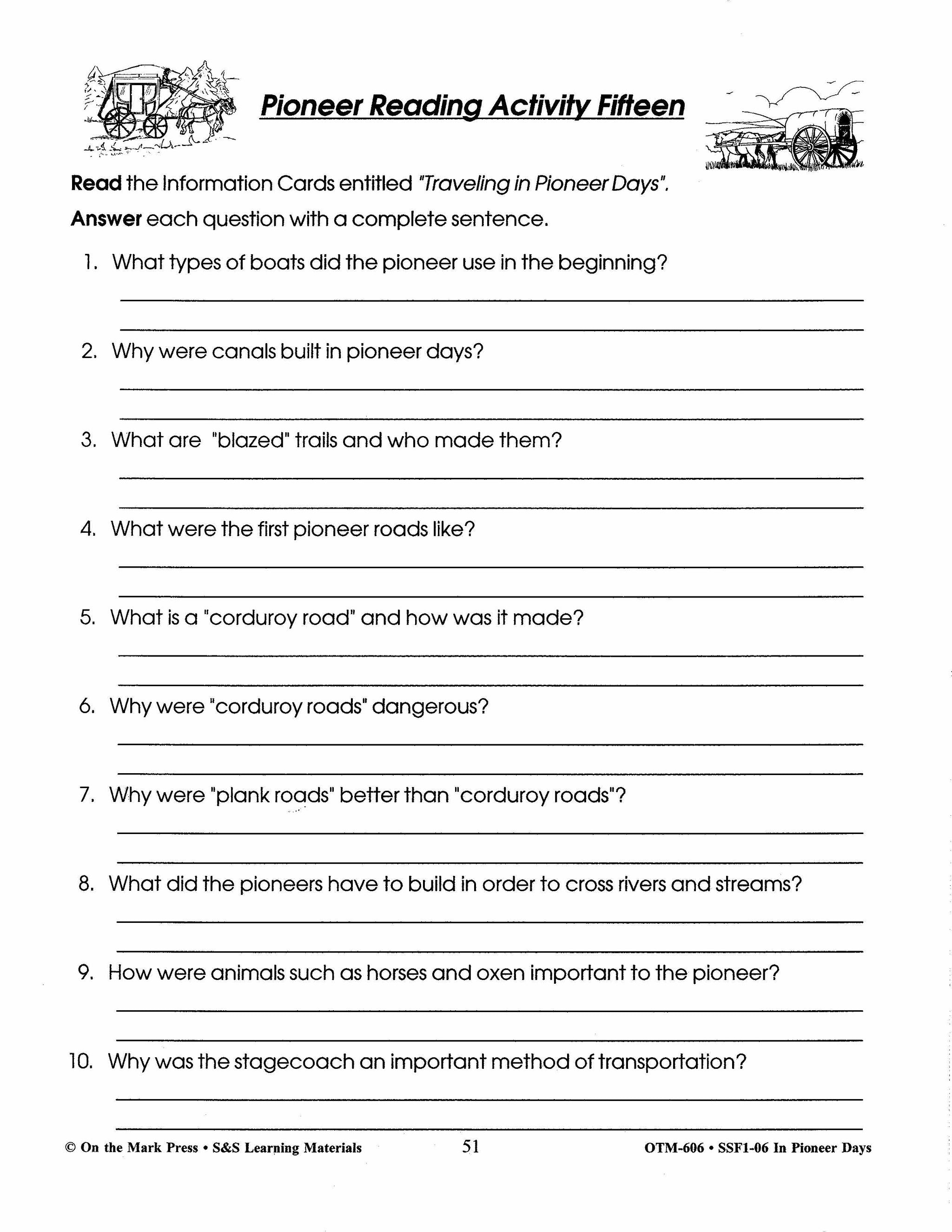
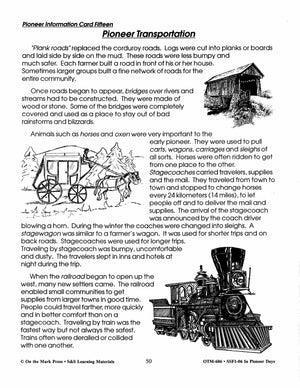
- Traveling in Pioneer Days
- Early Pioneer Children
- Pioneer Village Life
- Early Pioneer Schools
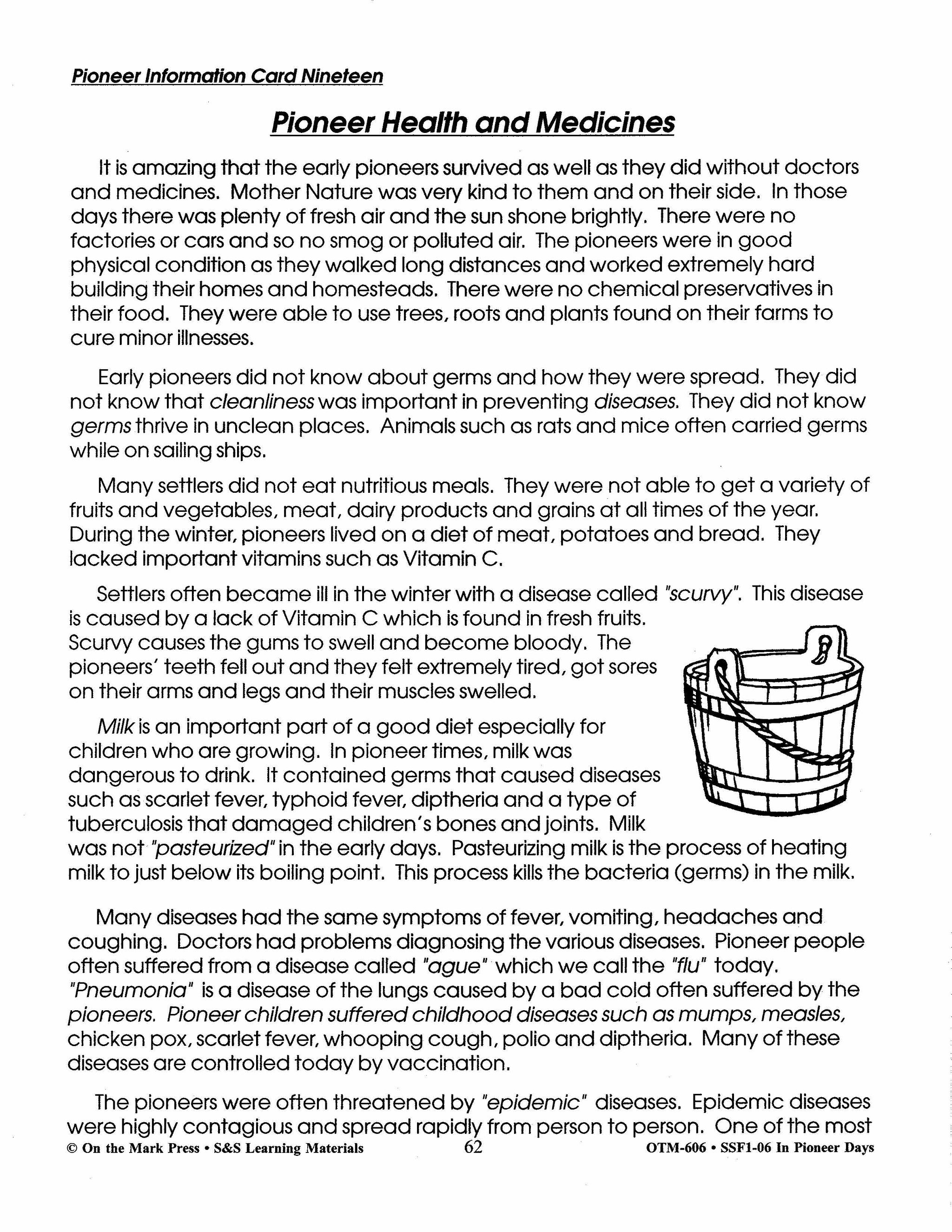
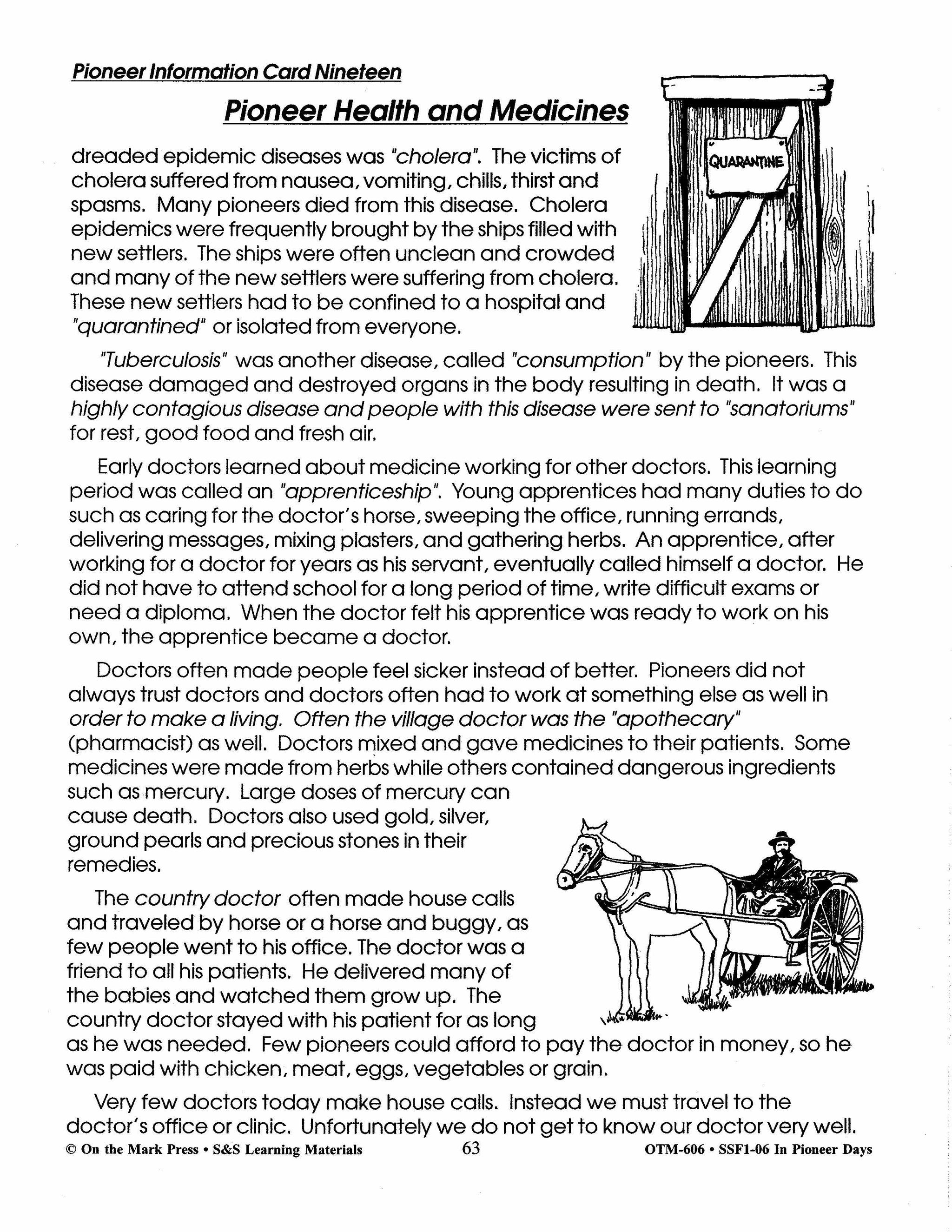
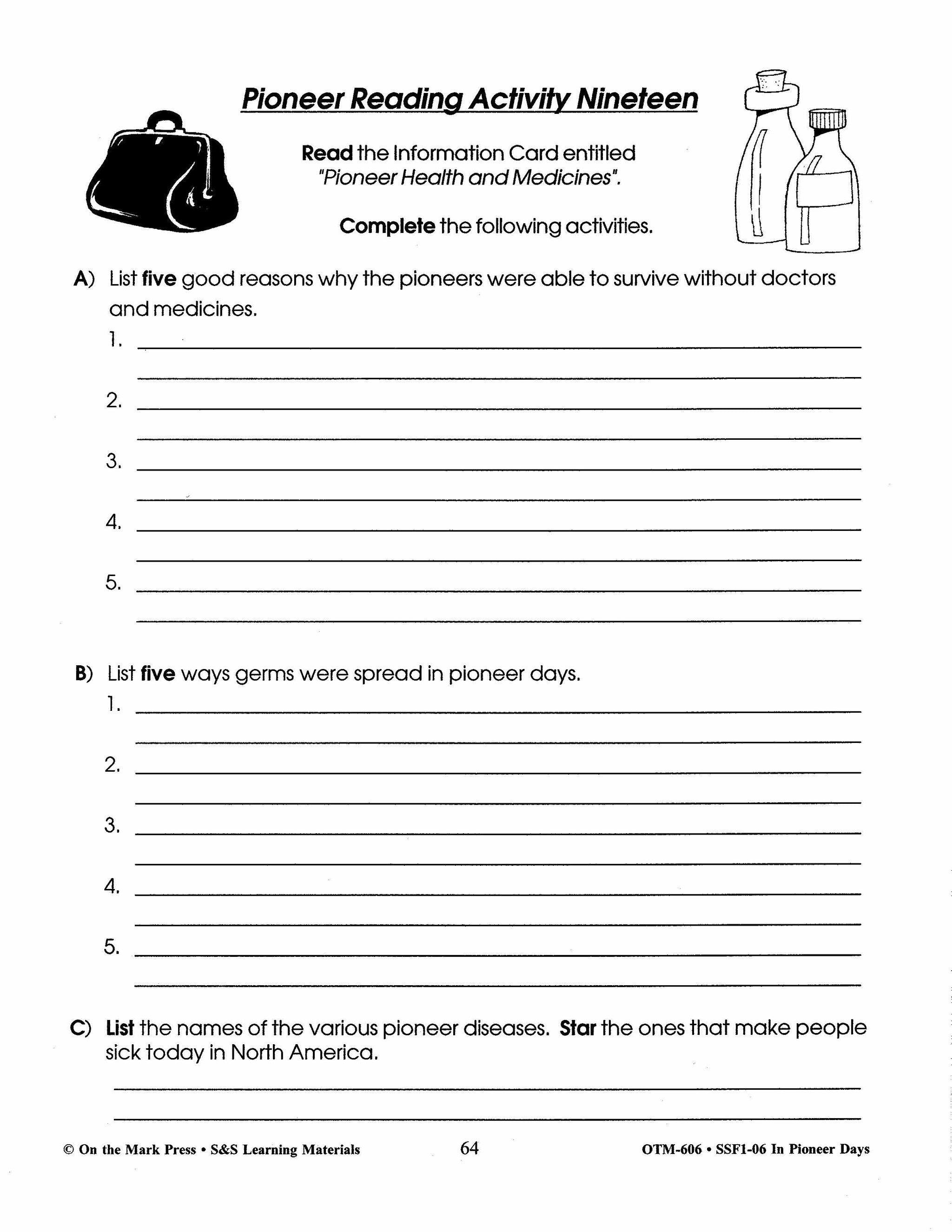
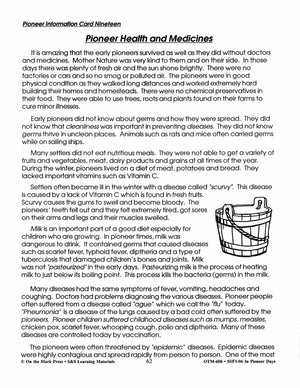
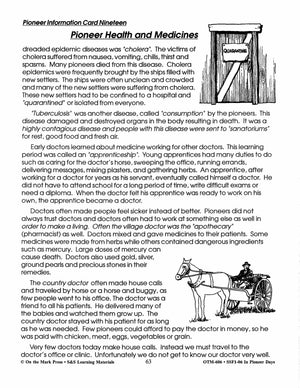
- Pioneer Health and Medicines
Curriculum Alignment
|
Area |
Grades |
Skills & Themes Supported |
Sample Standards / Codes |
|
Canada – Social Studies |
2–3 |
Communities past & present; daily life of pioneers; change over time; roles & responsibilities; basic map/diagram use |
ON: Social Studies Gr. 2–3 A1, A2, B2; similar “heritage & identity / communities” outcomes across BC, AB, SK, MB, Atlantic provinces, and territories. |
|
Canada – Language Arts |
2–3 |
Reading for detail; using text features; sequencing events; comparing texts; writing short narratives and reports |
Provincial ELA outcomes for reading comprehension, text features, and narrative/informative writing (e.g., ON Language Gr. 2–3 Reading/Writing overall expectations). |
|
US – Common Core ELA |
2–3 |
RI/RL: main idea, details, connections, story elements; W: narrative & informative writing; basic research |
RI.2–3.1–3, RI.2–3.7; RL.2–3.1–3, RL.2–3.5; W.2–3.2–3, W.2–3.8. |
|
US – Social Studies (state) |
2–3 |
History of communities; daily life past vs. present; geography of communities; citizenship |
State standards on “communities long ago and today,” “roles in families and communities,” and “maps and environments” (wording varies by state). |
US alignment (Common Core ELA & Social Studies, Grades 2–3)
In Pioneer Days supports these themes by having students examine pioneer homes, work, transportation, and community roles, then compare them to their own lives.
Common Core ELA (Grades 2–3) The readings, questions, and writing tasks in In Pioneer Days align well with:
- Reading Informational Text (RI)
- RI.2.1 / RI.3.1: Ask and answer questions to demonstrate understanding of a text.
- RI.2.2 / RI.3.2: Identify main topic and key details; recount key details and determine main idea.
- RI.2.3 / RI.3.3: Describe connections between events, ideas, or steps in a text (e.g., pioneer chores vs. modern chores).
- RI.2.7 / RI.3.7: Use information from illustrations and words to demonstrate understanding (maps, diagrams of homes, etc.).
- Reading Literature (RL)
- RL.2.1 / RL.3.1: Ask and answer questions about stories featuring pioneer children.
- RL.2.3 / RL.3.3: Describe characters, settings, and major events; explain how characters respond to events.
- RL.2.5 / RL.3.5: Understand story structure (beginning, middle, end; sequencing pioneer day).
- Writing (W)
- W.2.3 / W.3.3: Write narratives recounting events with details and sequence (diary of a pioneer child).
- W.2.2 / W.3.2: Write informative/explanatory texts about pioneer life using facts from readings.
- W.2.8 / W.3.8: Recall information from experiences or gather information from provided sources.
Social Studies (state standards, Grades 2–3) Most state social studies standards include:
- History / Change Over Time: Compare daily life in the past and present; describe how communities have changed.
- Community & Citizenship: Identify roles and responsibilities in families and communities; understand how people work together.
- Geography: Use simple maps and visuals to locate communities and understand environment’s impact on life.
You may also like:
Ontario Science Grade 3 Bundle

Canadian Daily Language Activities
Canadian Math Google Slide Activities
Subscribe to our Fan List!: Our FANlist newsletter is full of tips on ways to save time with our resources, exclusive sales, new product info and free monthly downloads – you won’t want to miss out!
Follow us on:

