
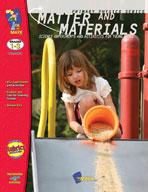
Matter and Materials Lessons and Experiments Grades 1-3
EBOTM2129
$26.99 CAD
Additional information:
- Author : Wearing, Judith/Deslauriers, I
Give your Grade 1–3 students a strong foundation in physical science with Matter and Materials. This hands‑on, inquiry‑rich resource teaches students how to classify materials, explore properties, investigate solids, liquids, and gases, and understand changes in matter. Activities build scientific thinking through prediction, observation, and conclusion.
This resource aligns with all Canadian provincial and territorial science standards, NGSS Grades 1–3 (2‑PS1, 1‑PS4, 3‑PS1), and Common Core literacy and math skills. Includes teacher notes, rubrics, safety guidance, and student worksheets. Perfect for classrooms, science centers, and STEM programs.
What is the world made of? Through hands-on activities and experiments, students will enjoy exploring the world around them as they practice science skills like observing and concluding.
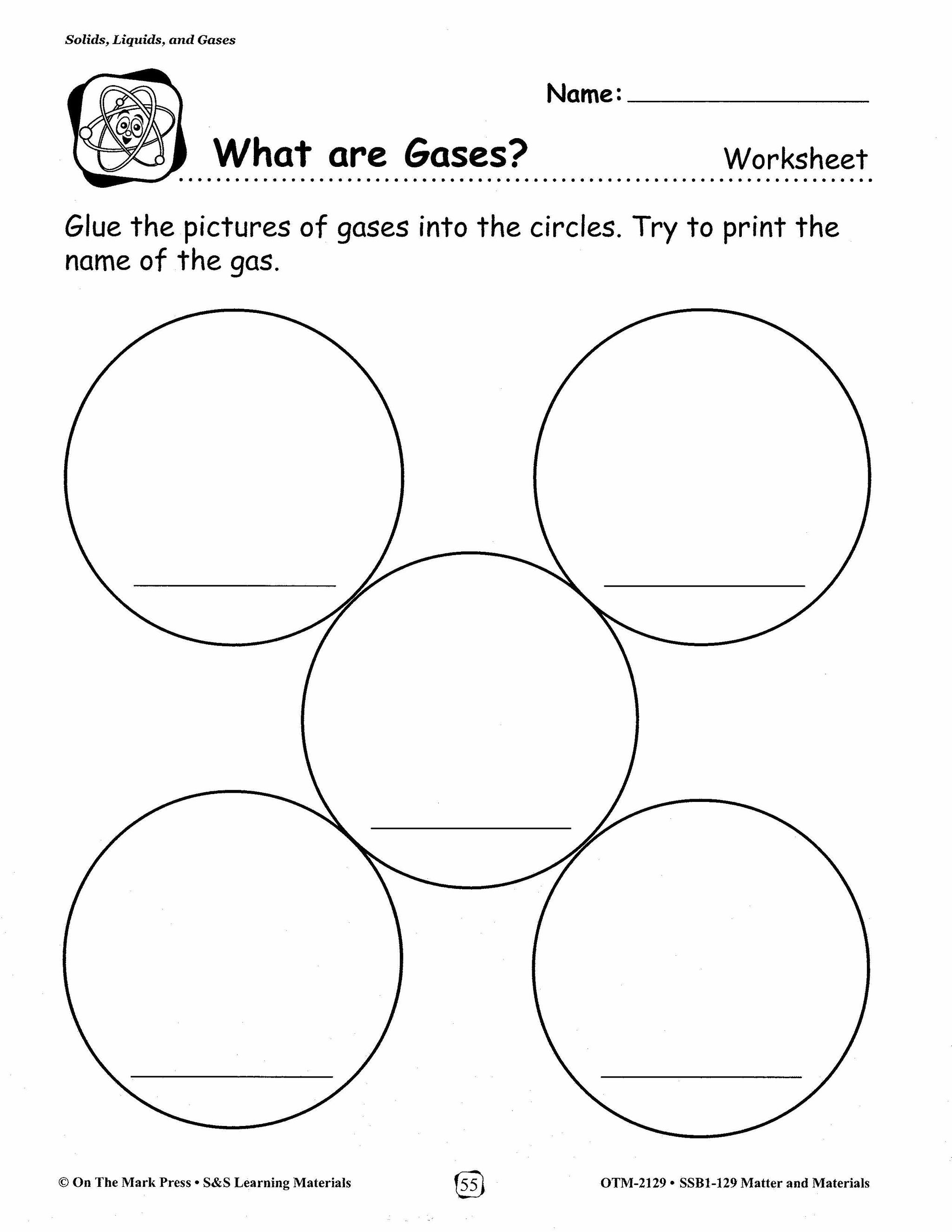
Games like "Simon Says" bring the realm of atoms and particles to life, as well as demonstrating solids, liquids, and gases. Your classroom will buzz with curiosity as students learn to explain the magic of ice sculptures, gas-powered rockets, and invention.
Each section contains visual, kinesthetic, and auditory activities. Each section ends
with an activity that may easily be used to assess learning of the material.
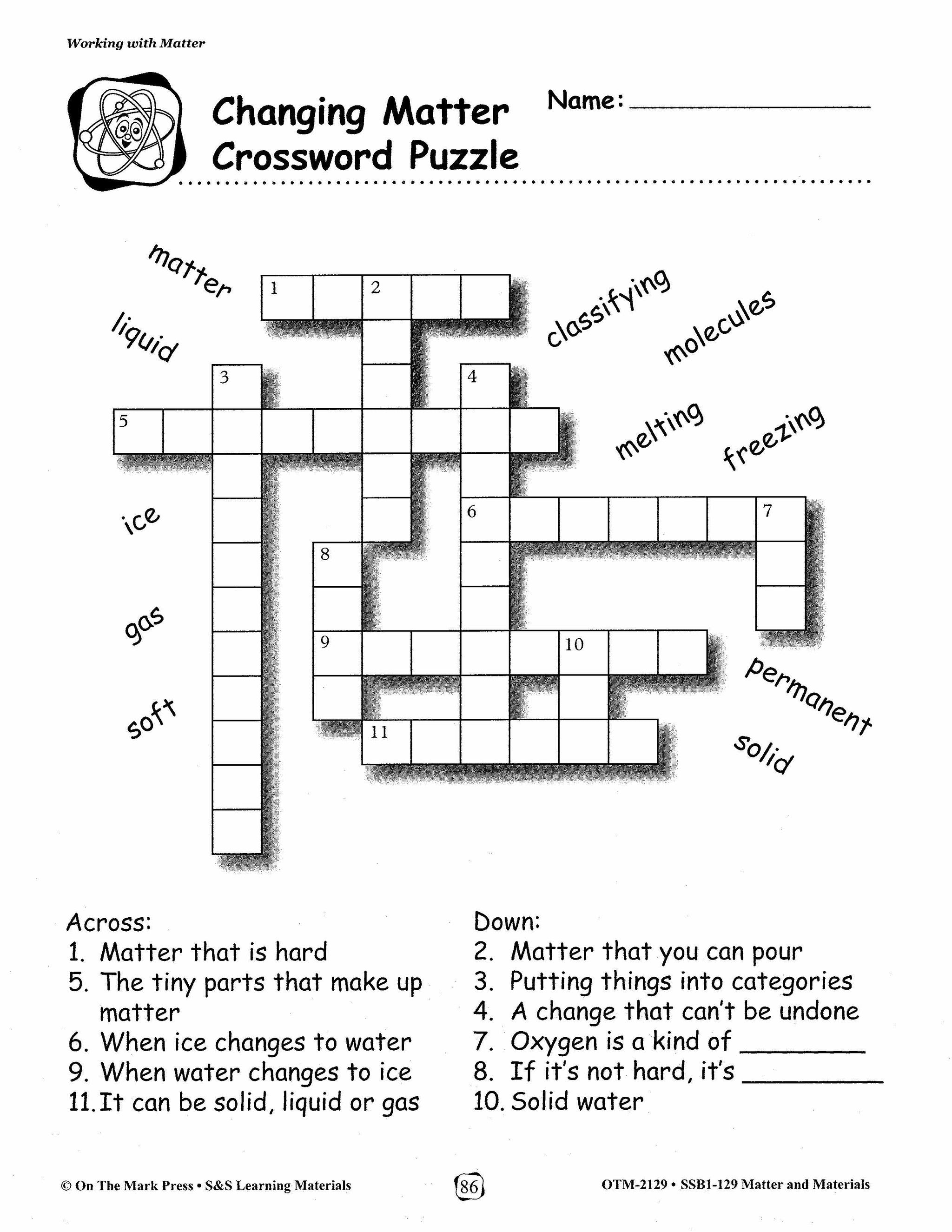
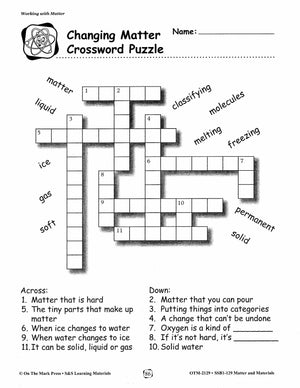
A vocabulary exercise is also included to ensure that terminology becomes
familiar and understood. Students are encouraged to keep a glossary of terms
that they do not understand or find particularly interesting. 96 pages
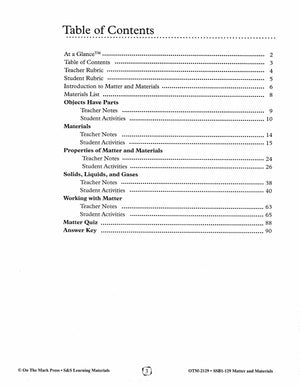
Lesson and Experiment Topics Include:
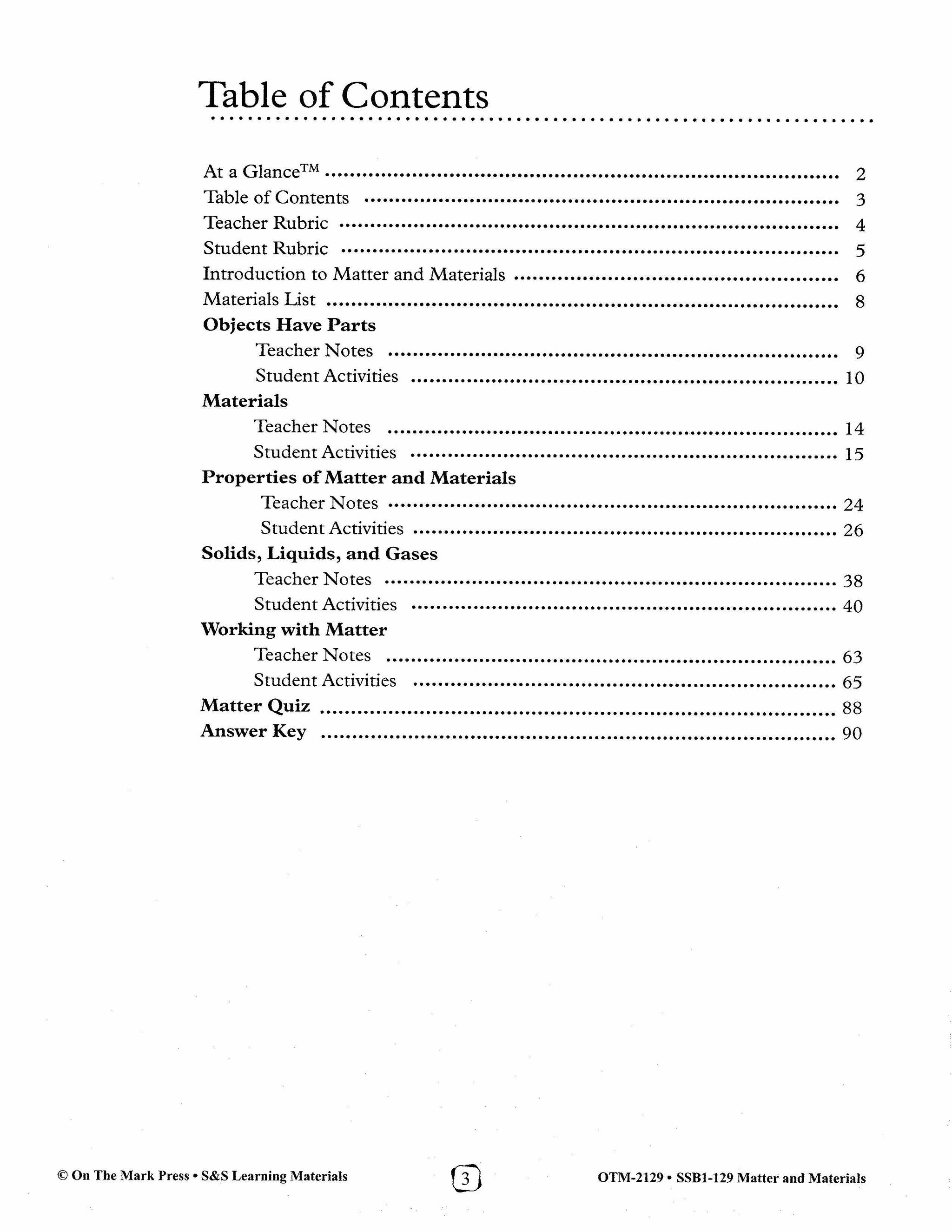
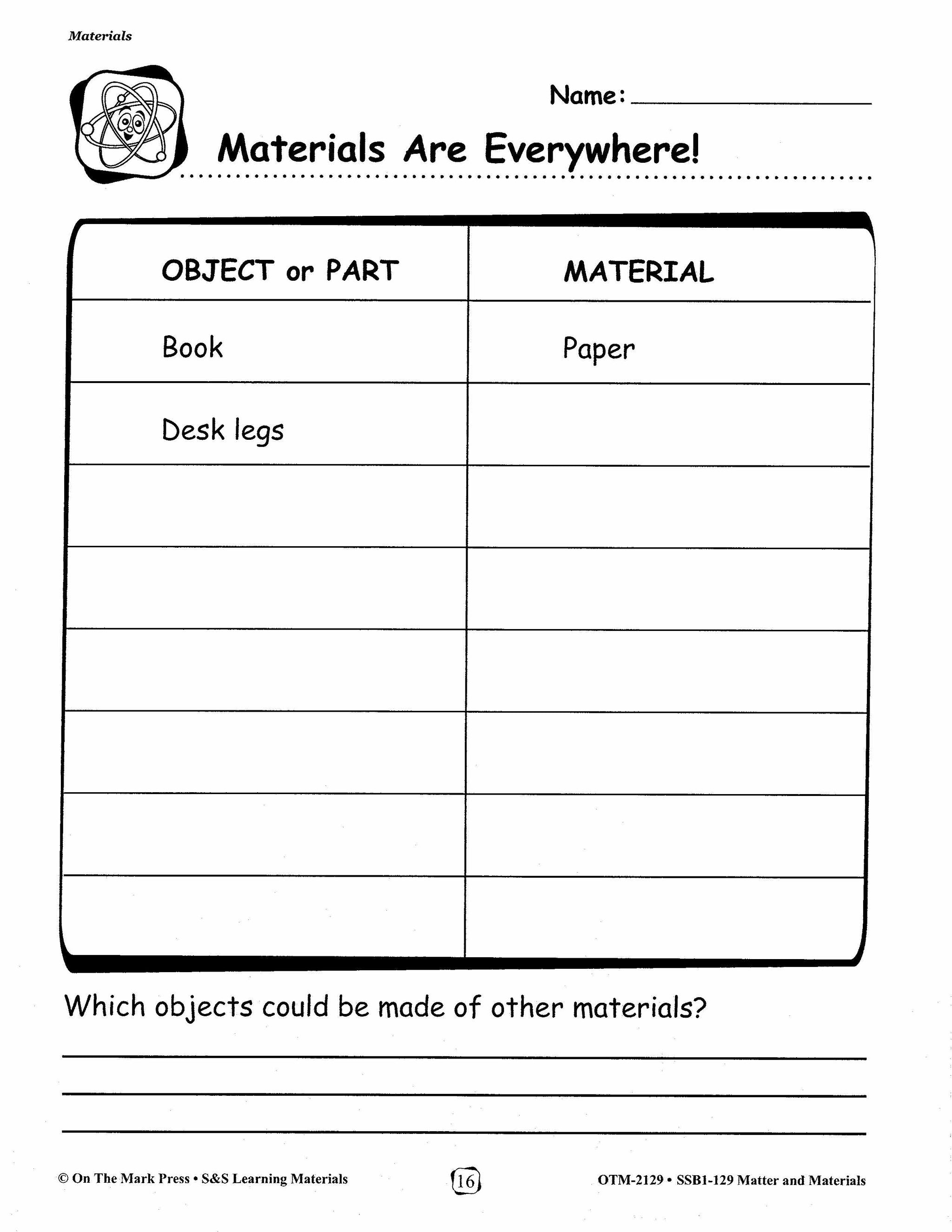
- Objects Have Parts
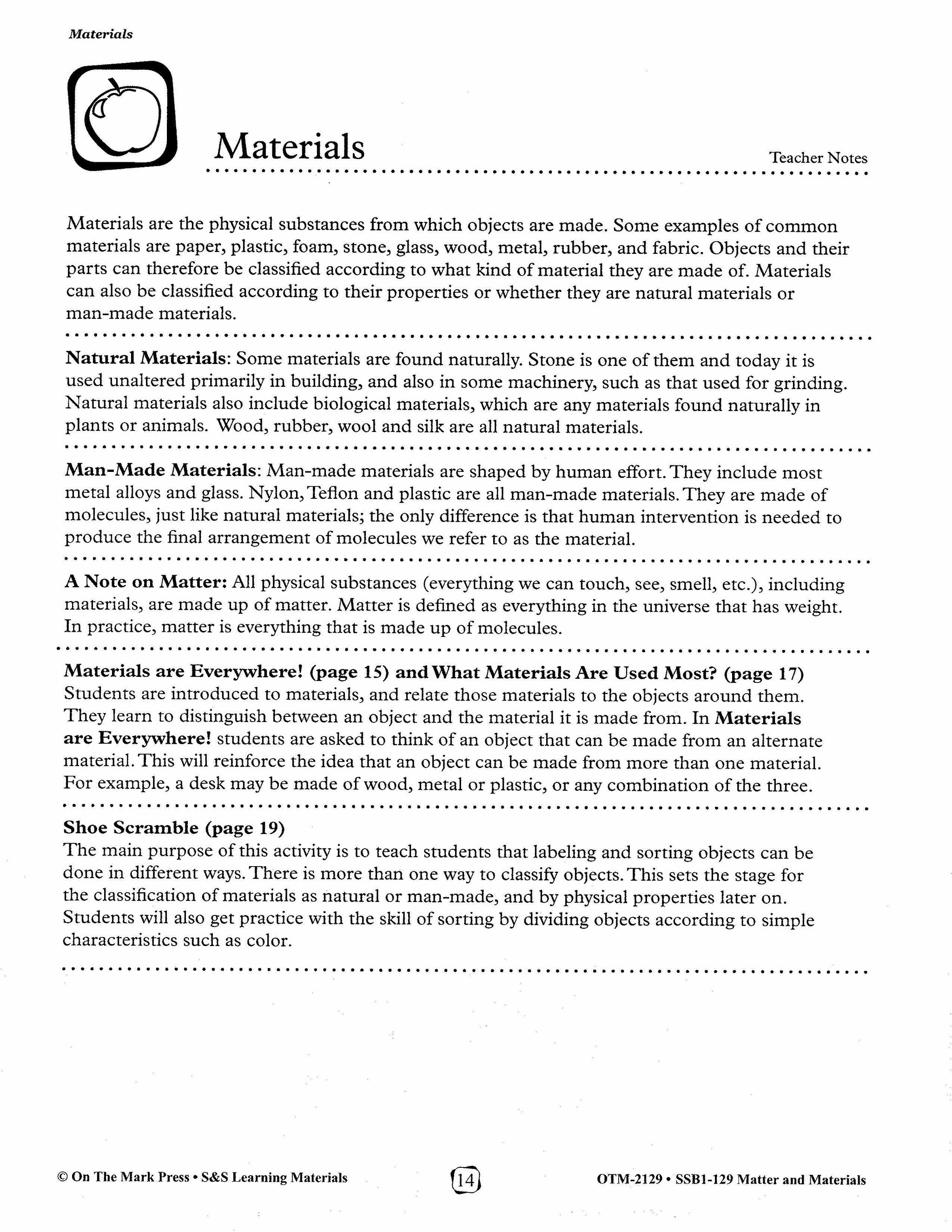
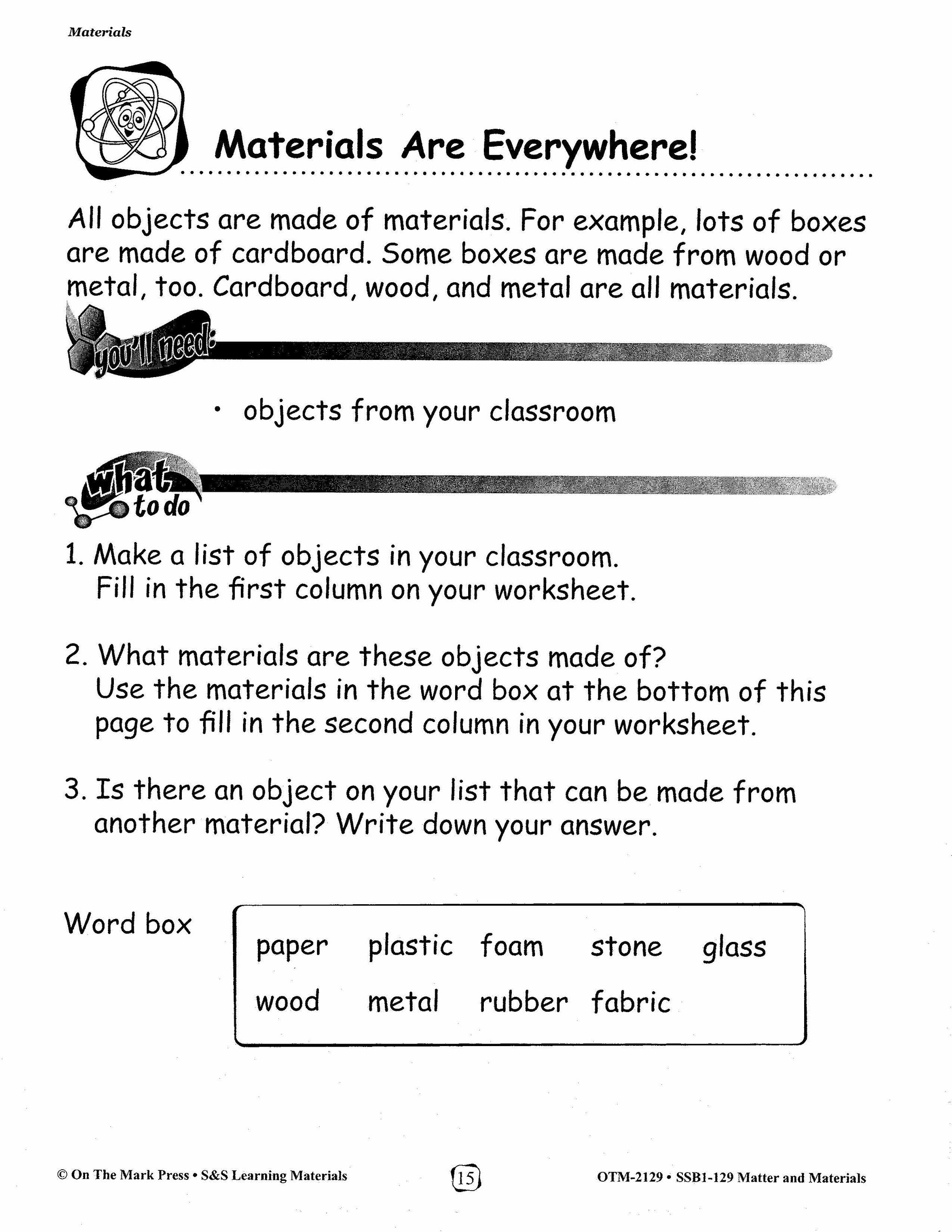
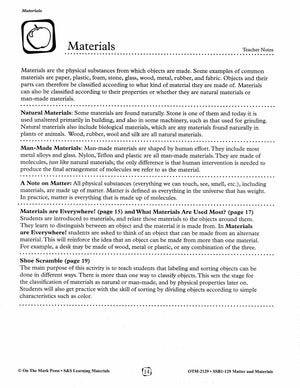
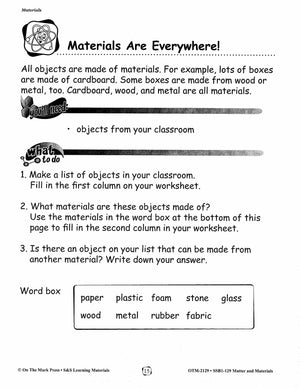
- Materials
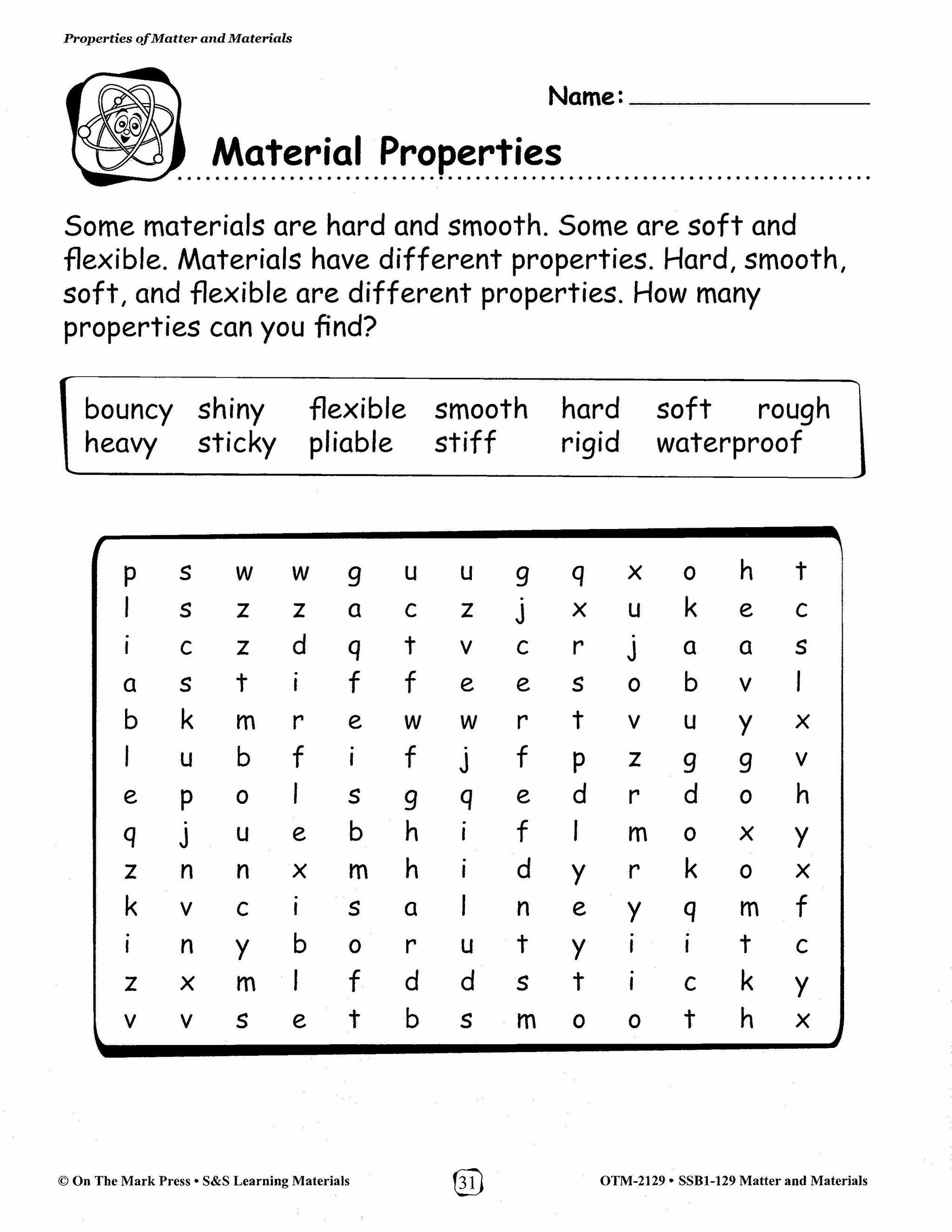
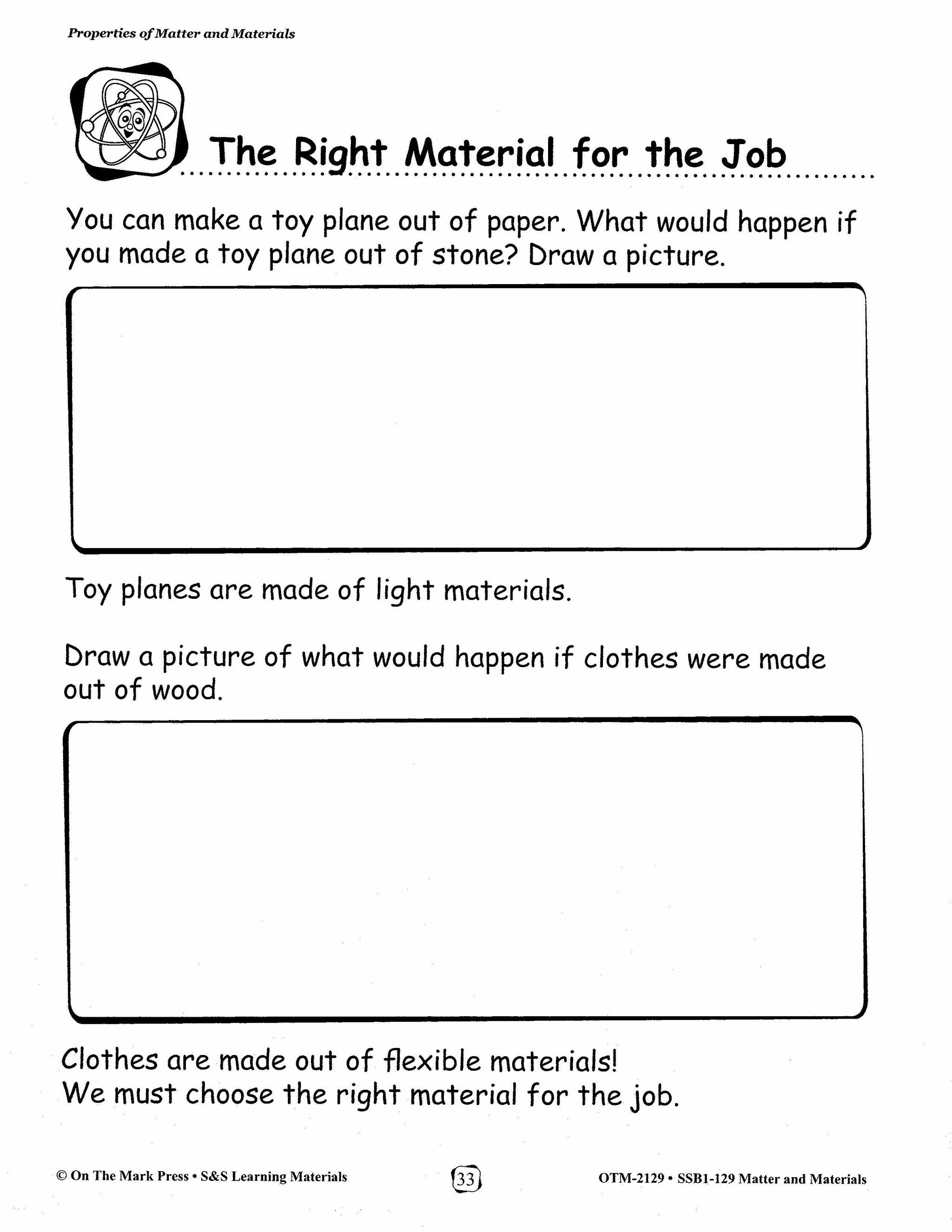
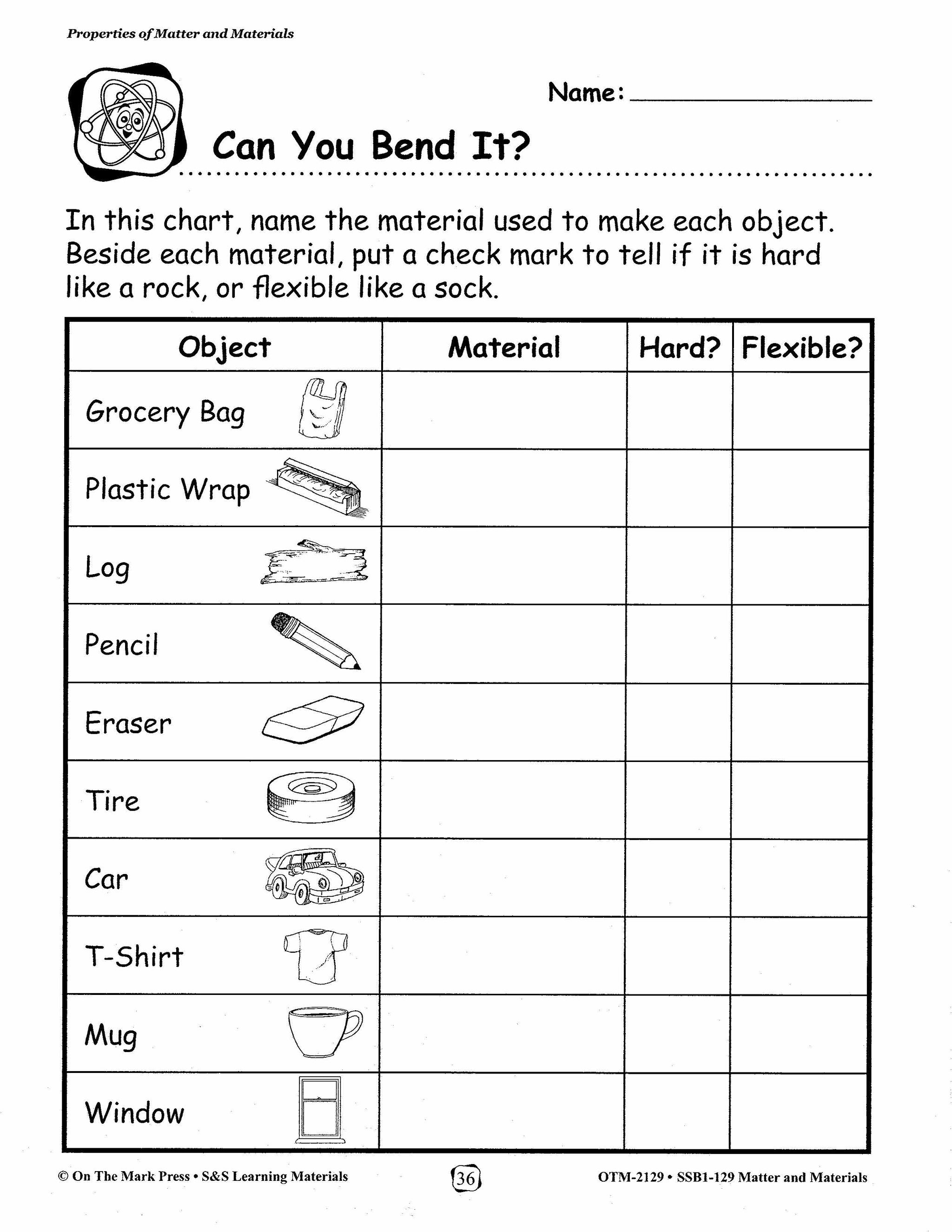
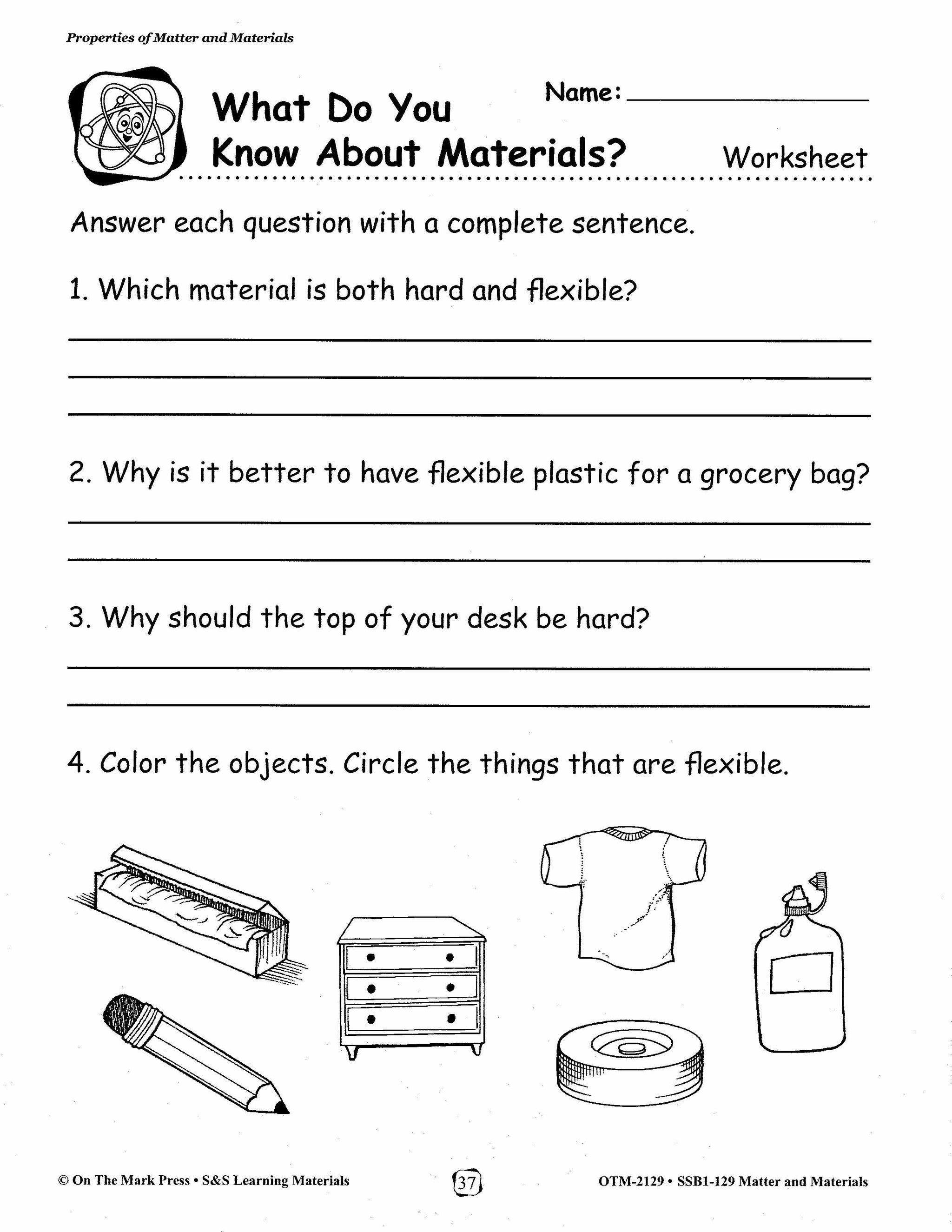
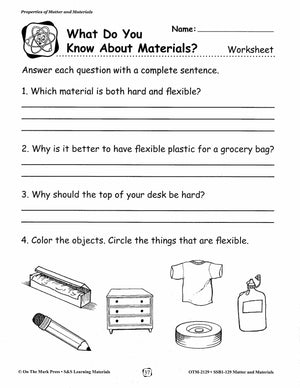
- Properties of Matter and Materials
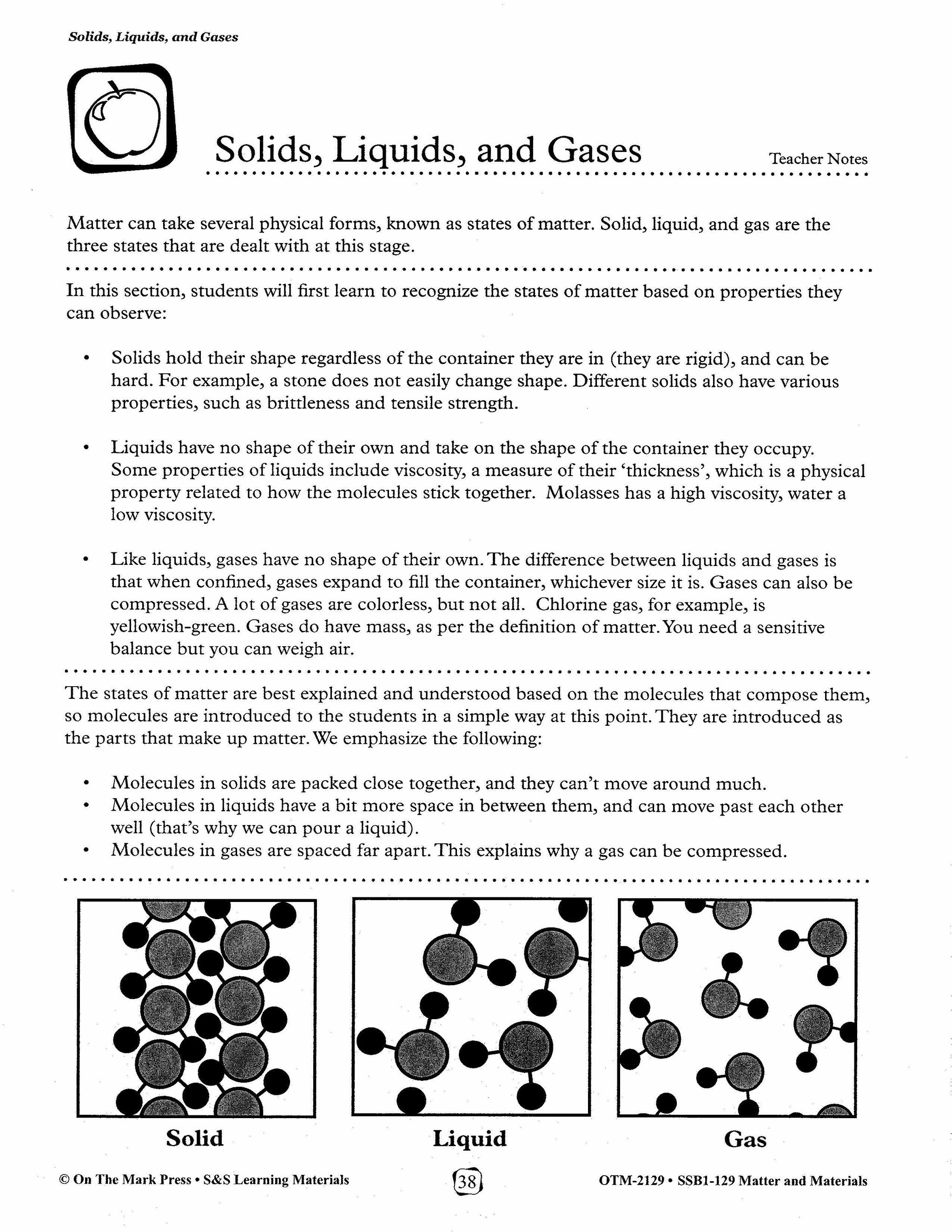
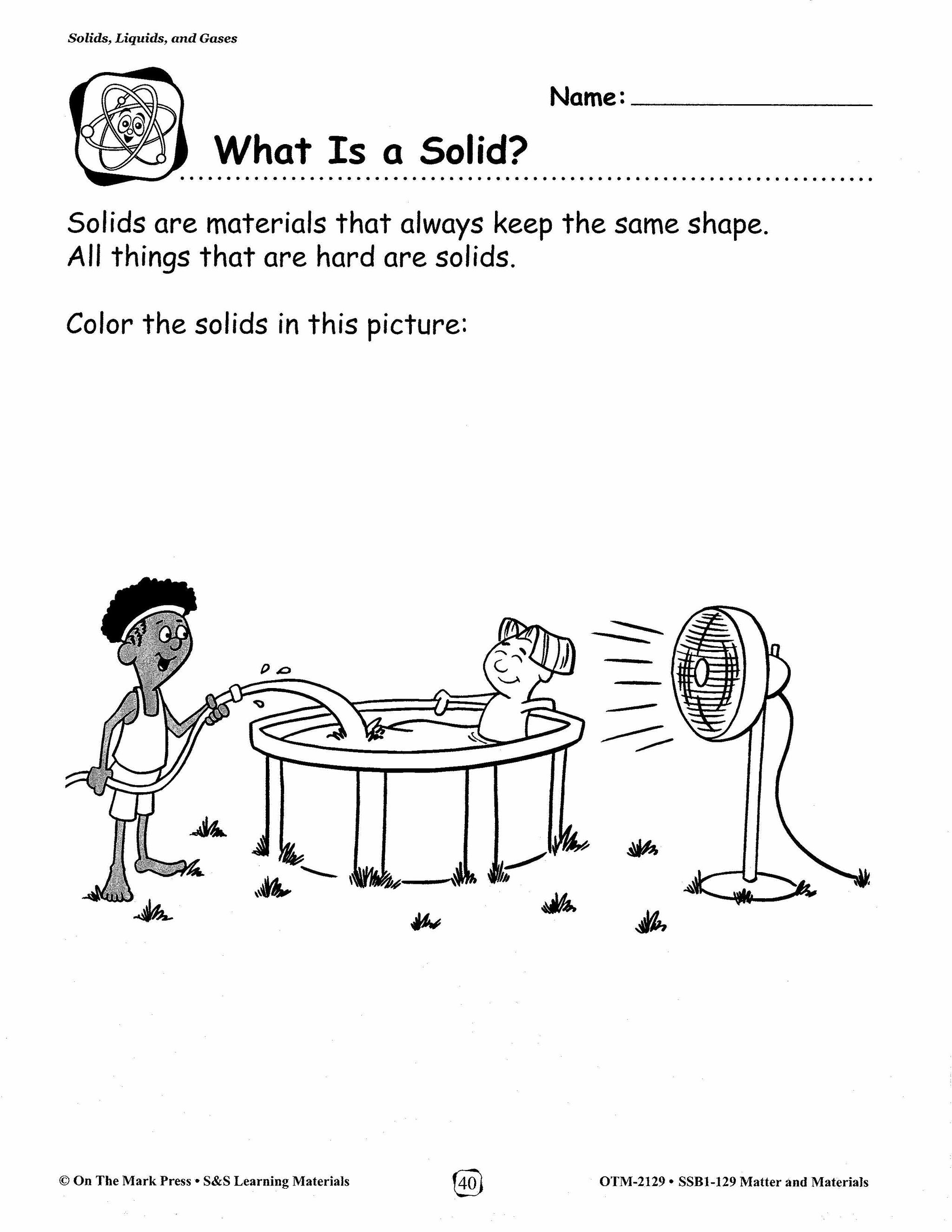
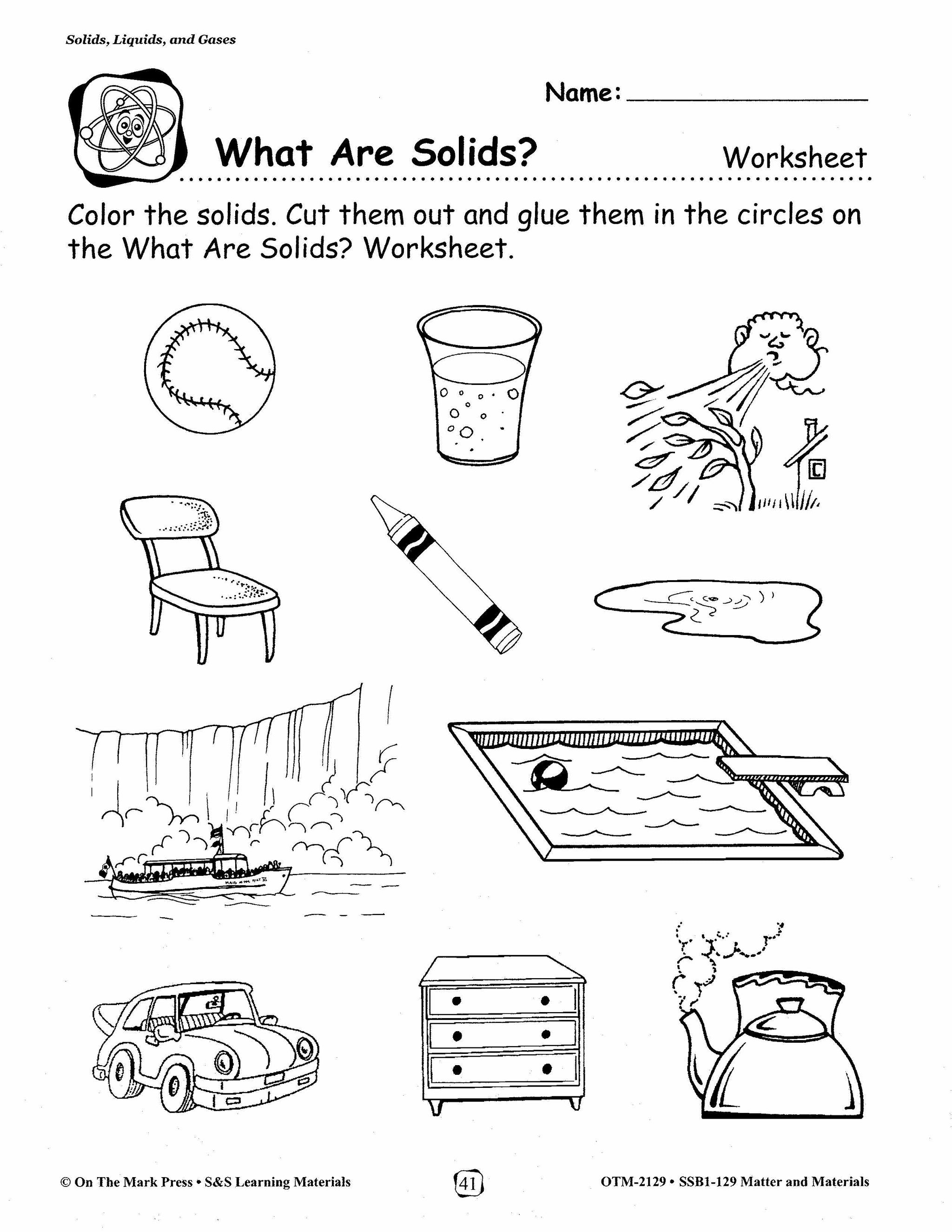
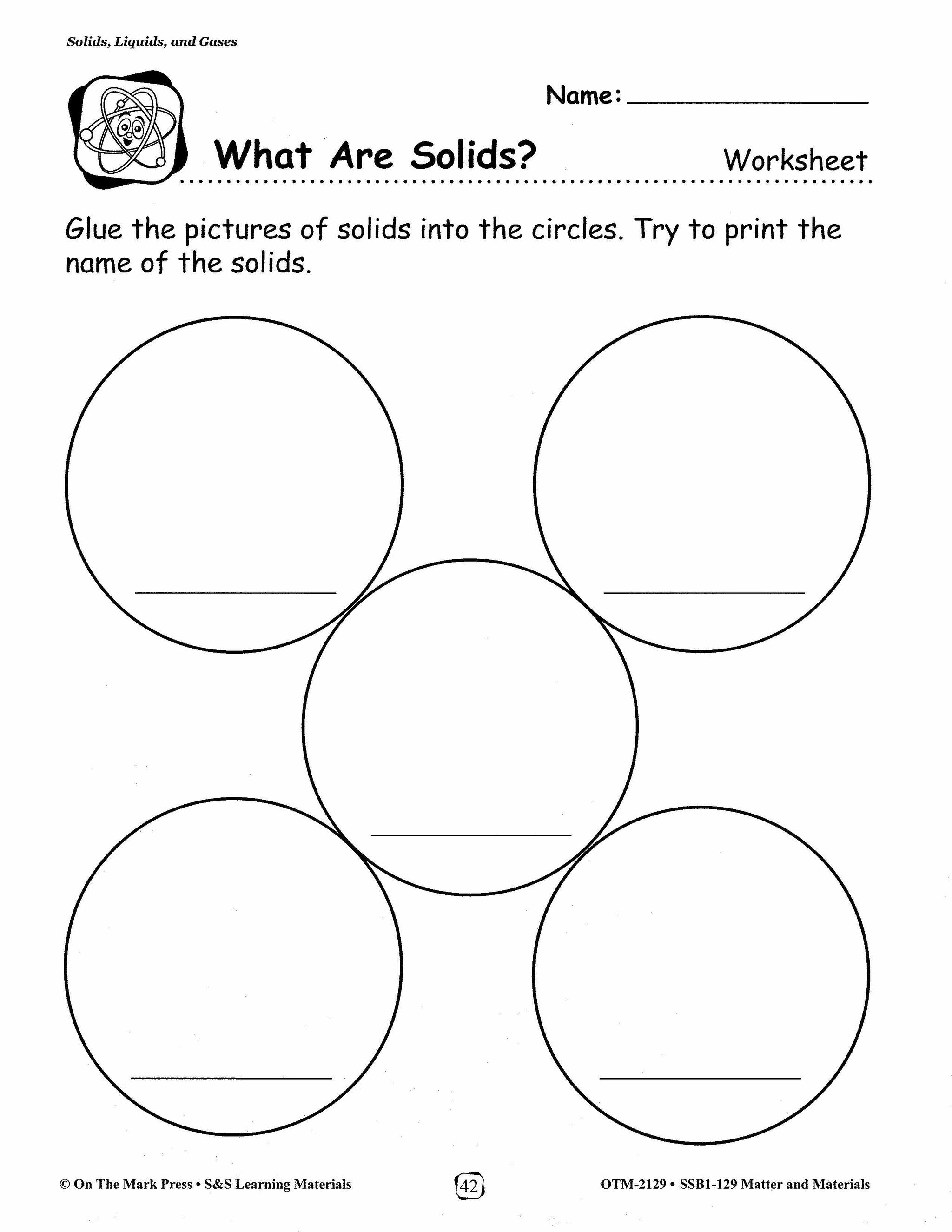
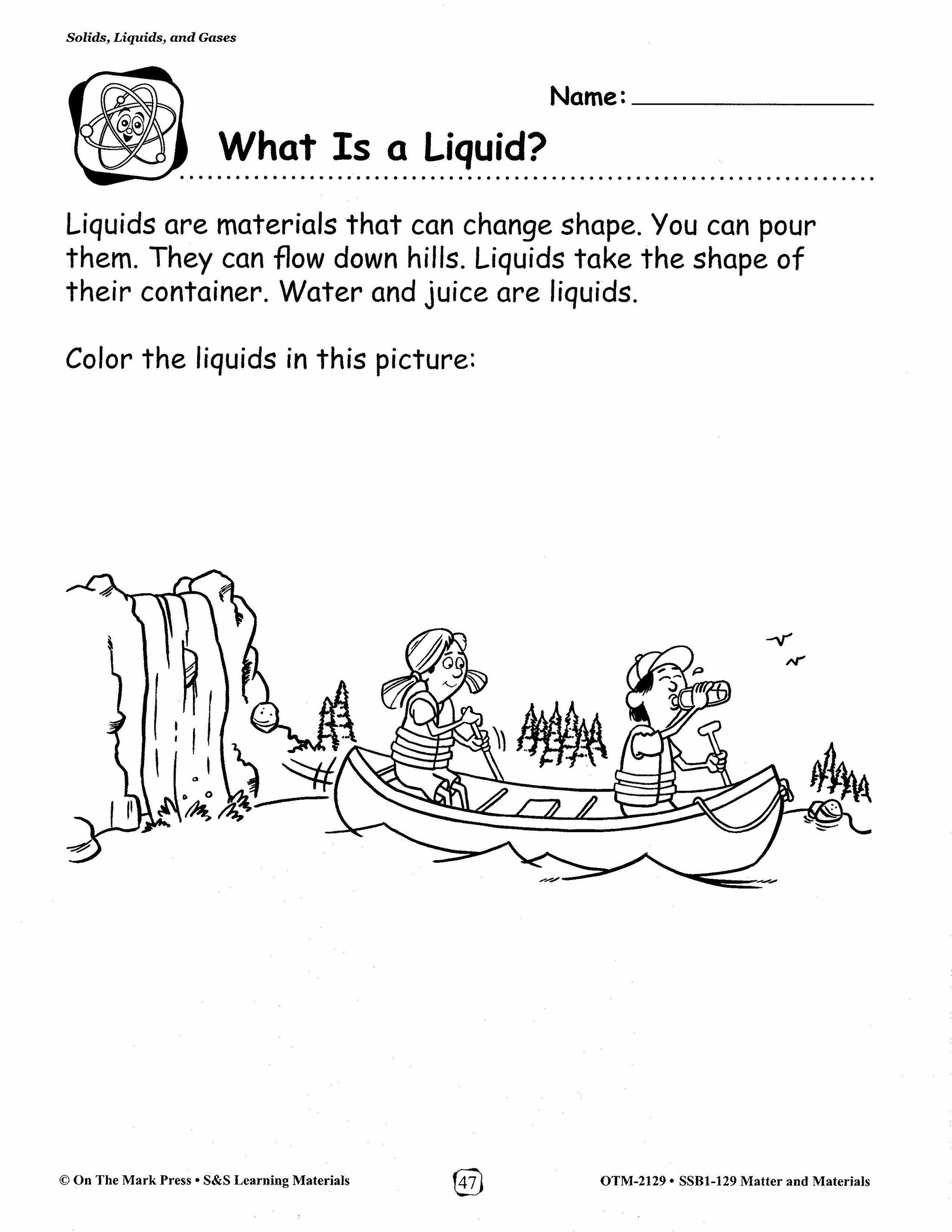
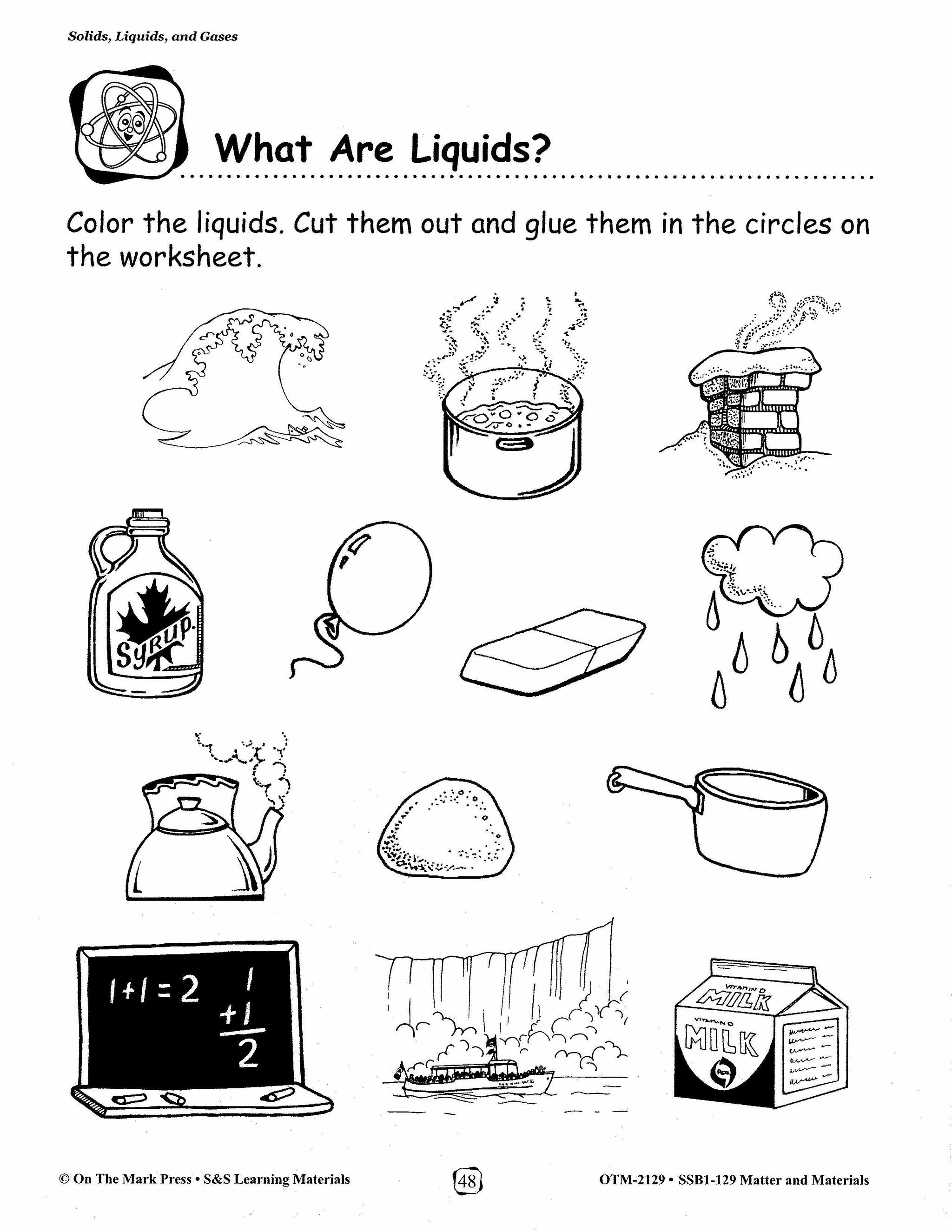
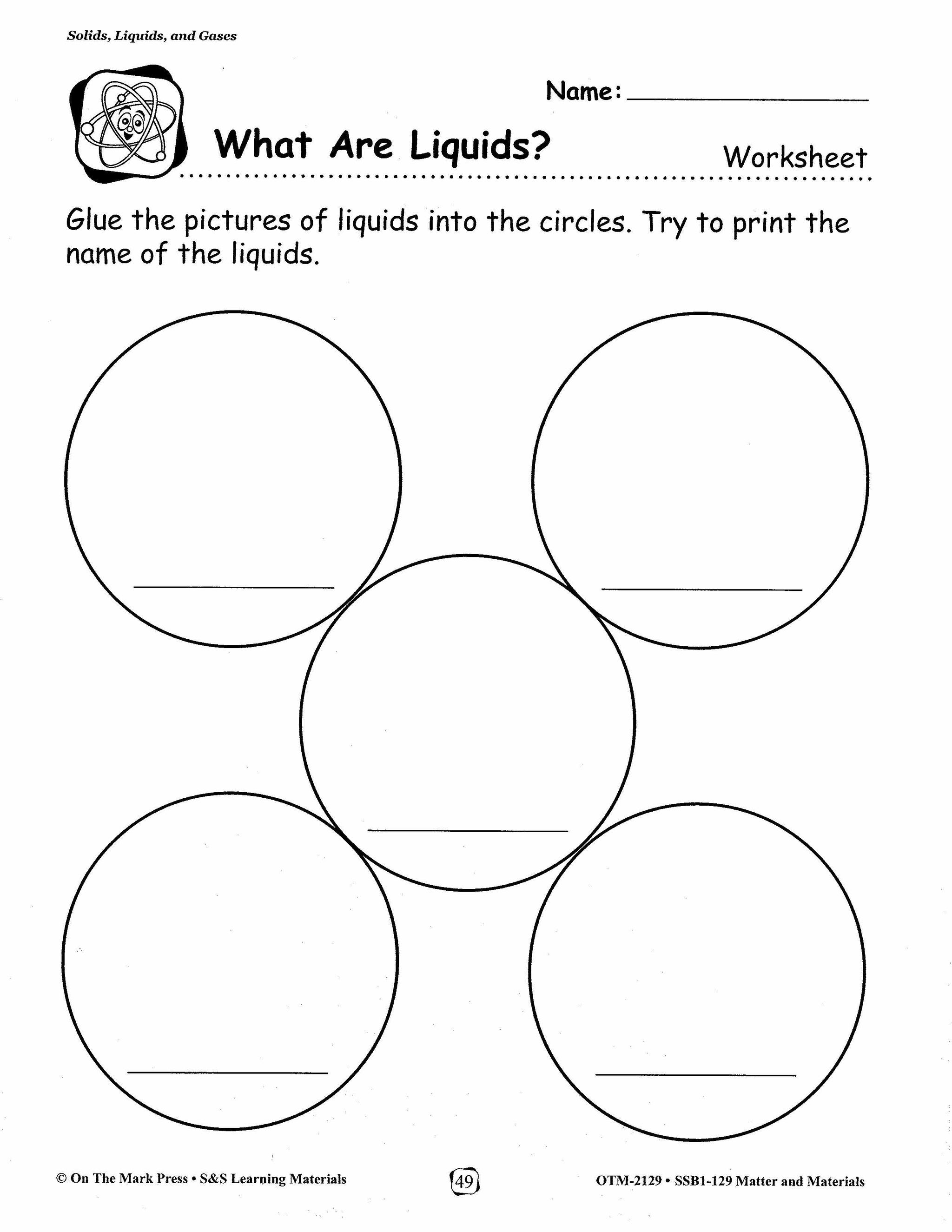
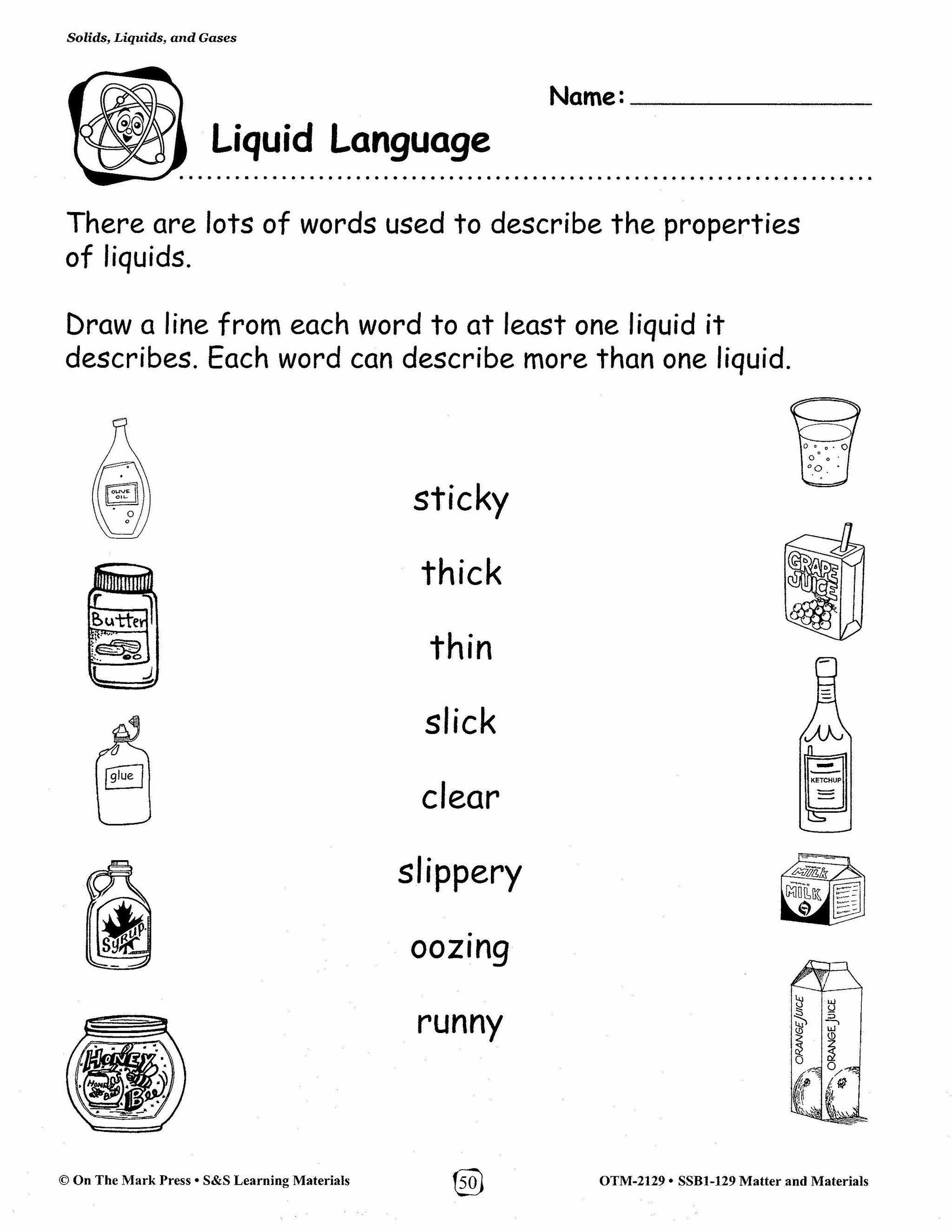
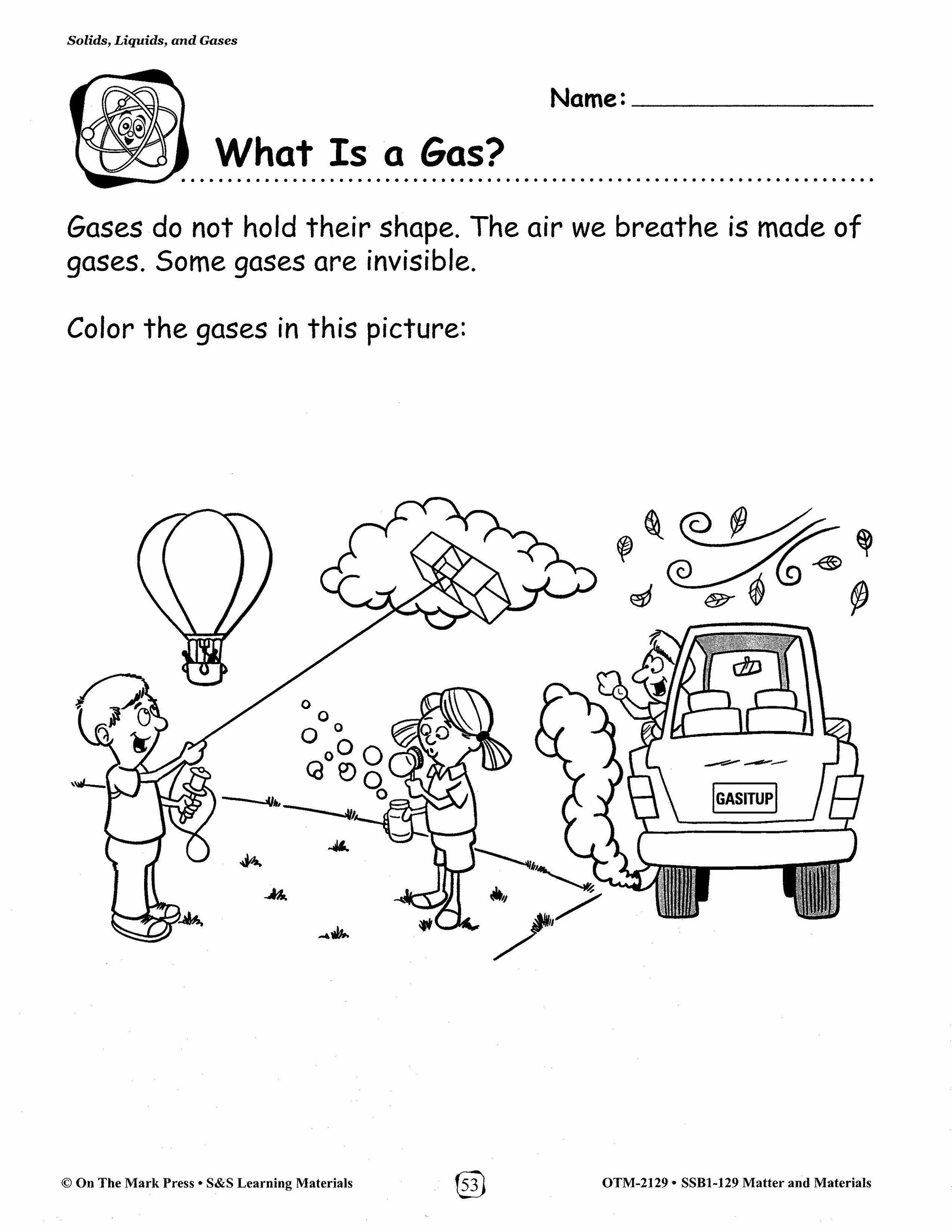
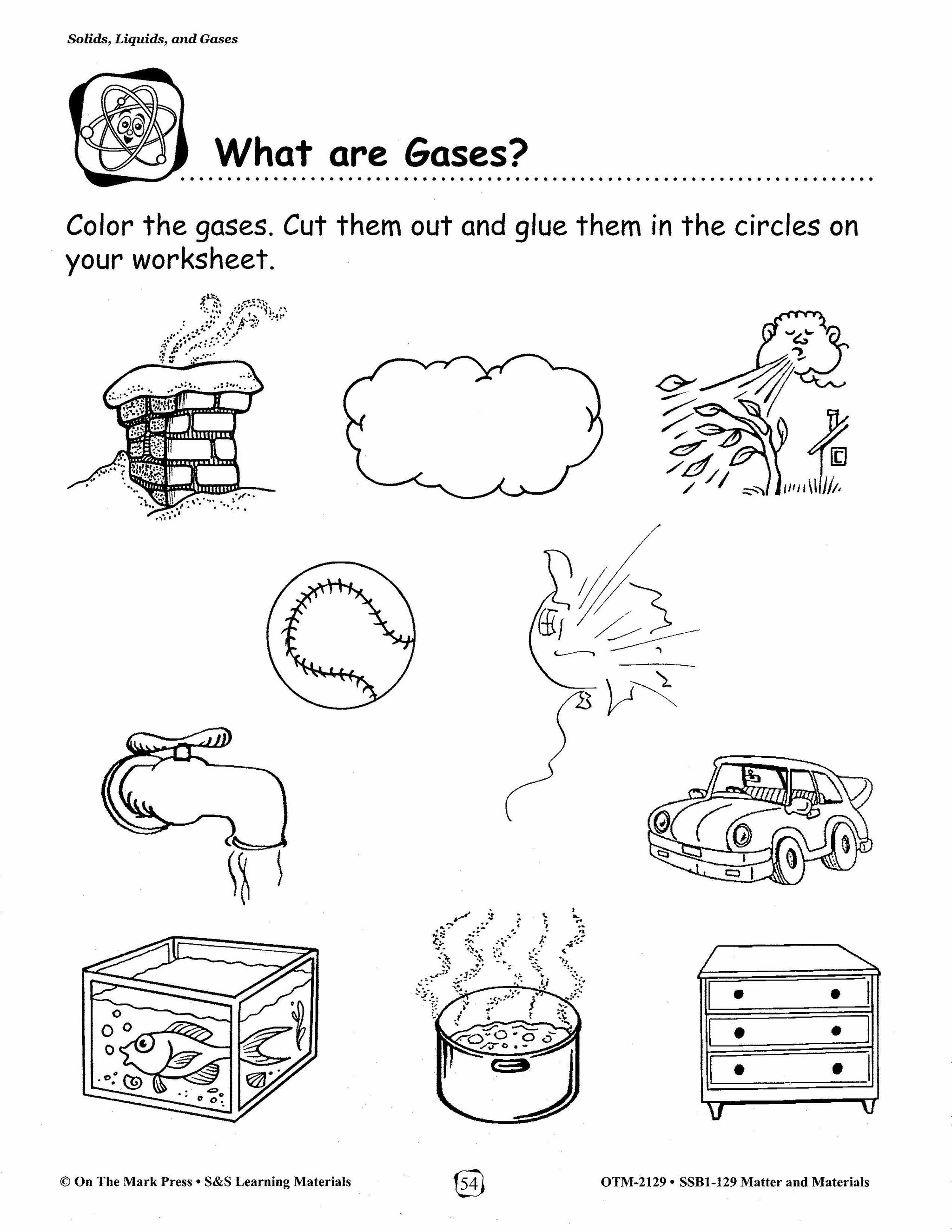
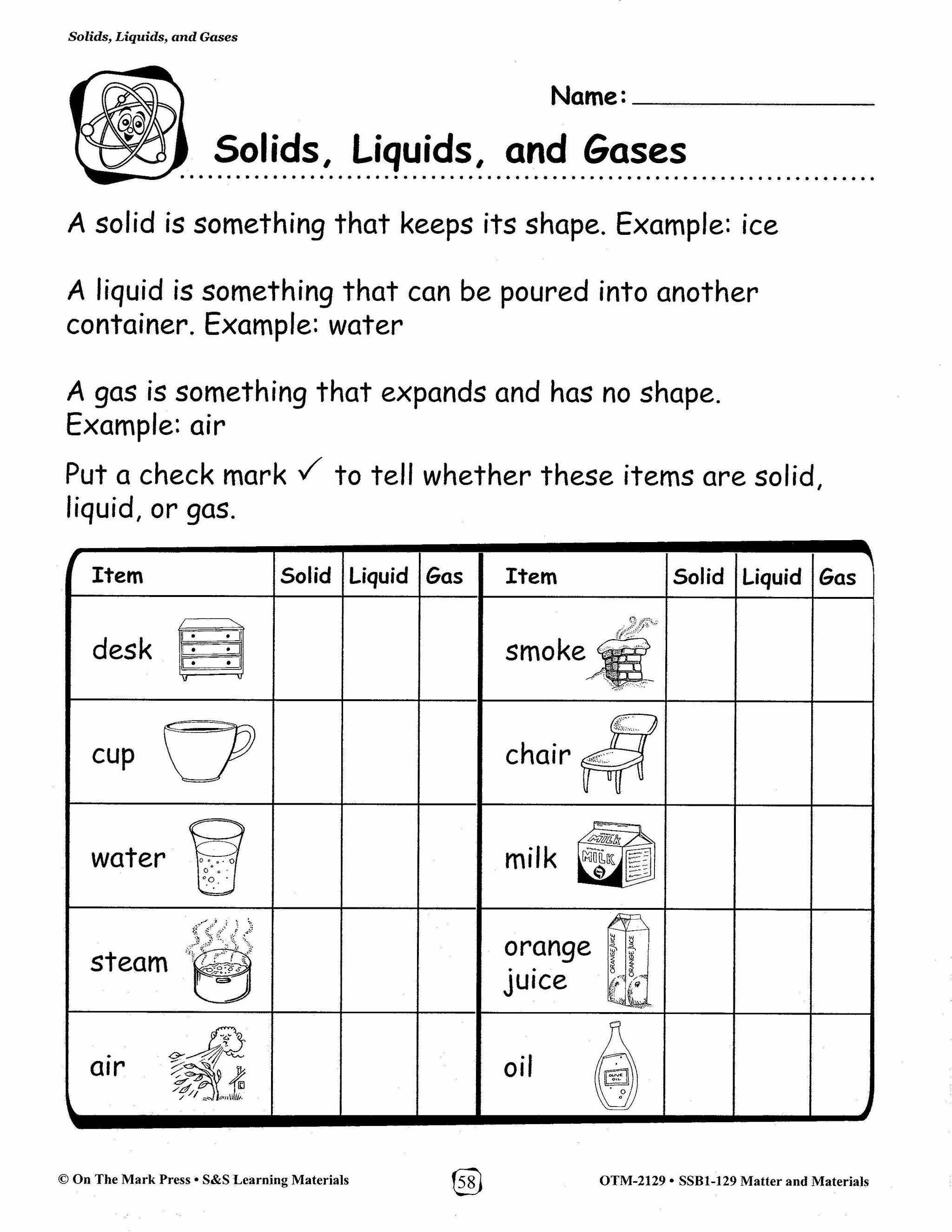
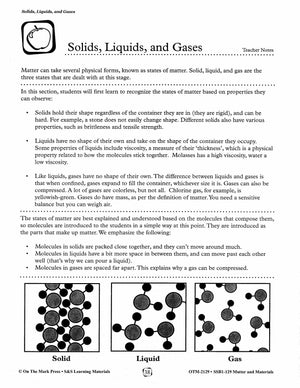
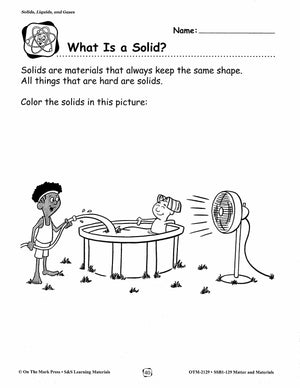
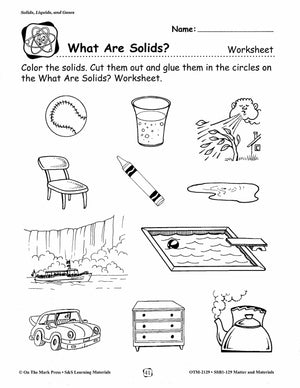
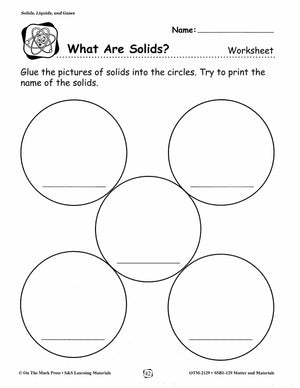
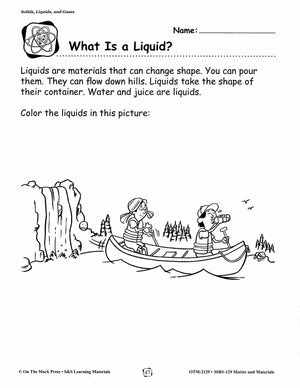
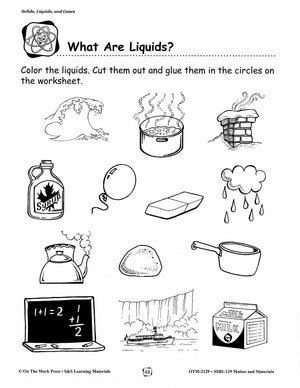
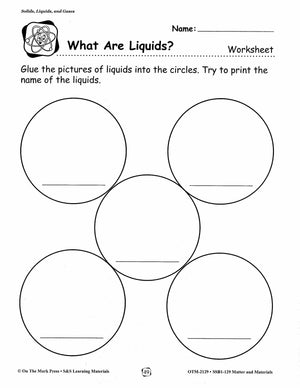
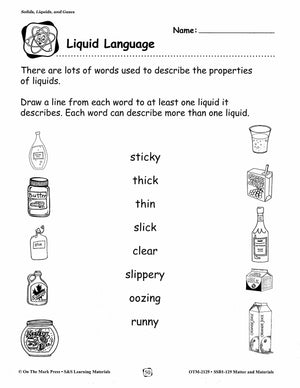
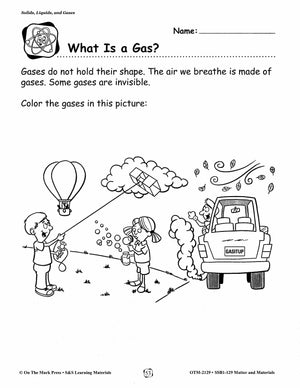
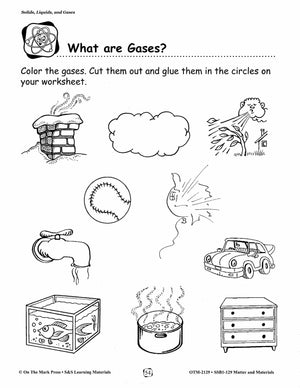
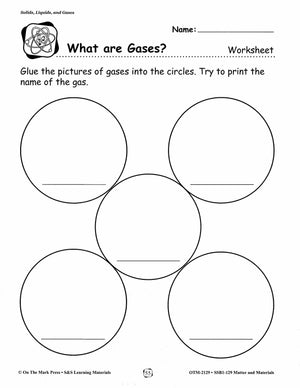
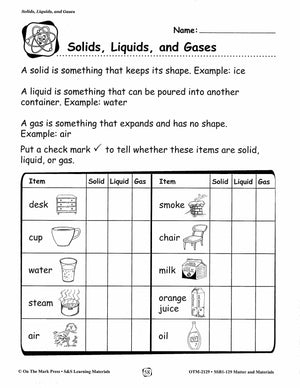
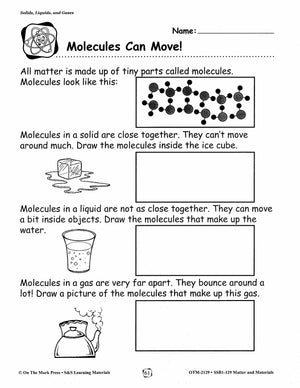
- Solids, Liquids, and Gases
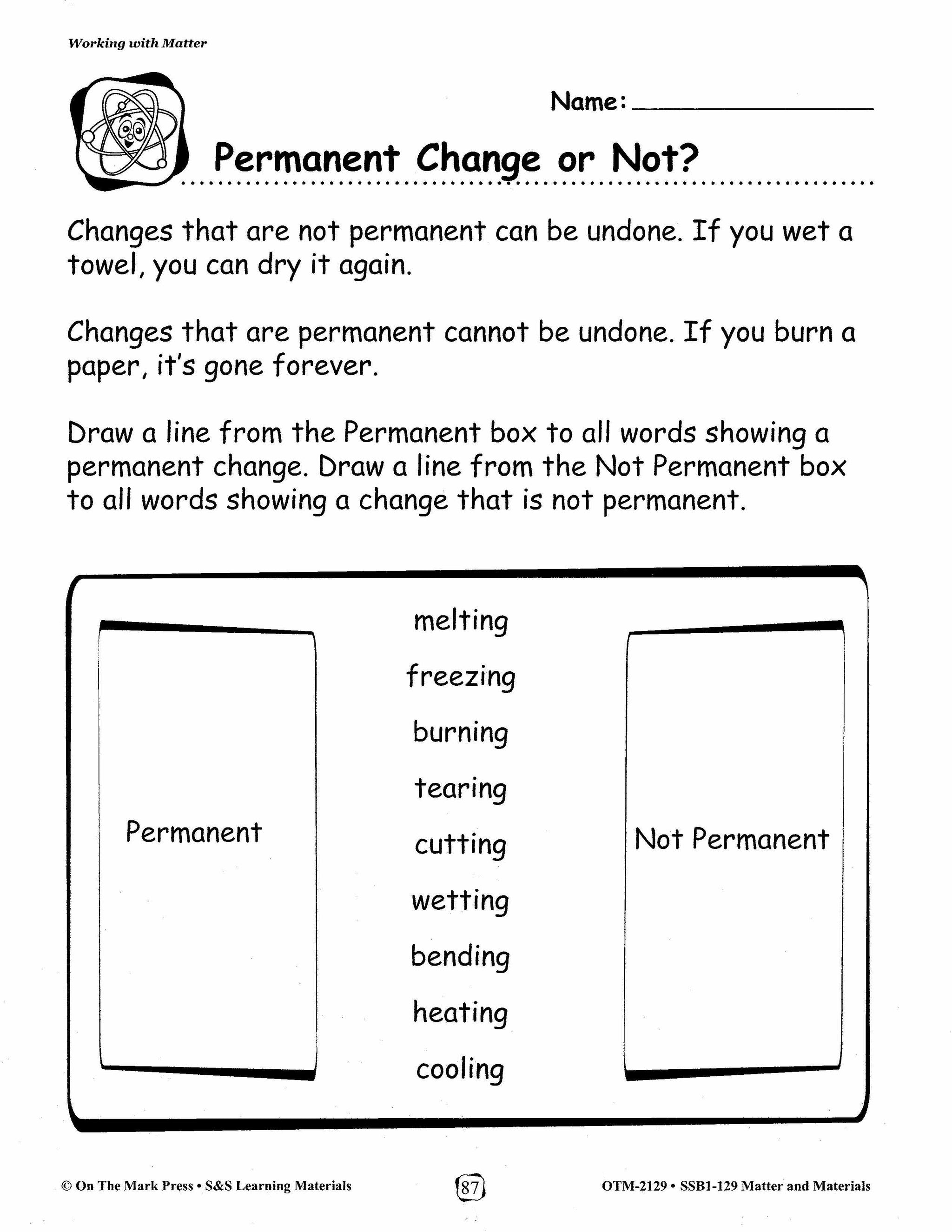
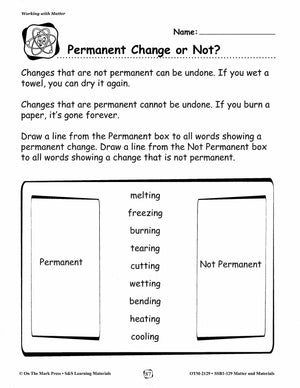
- Working with Matter
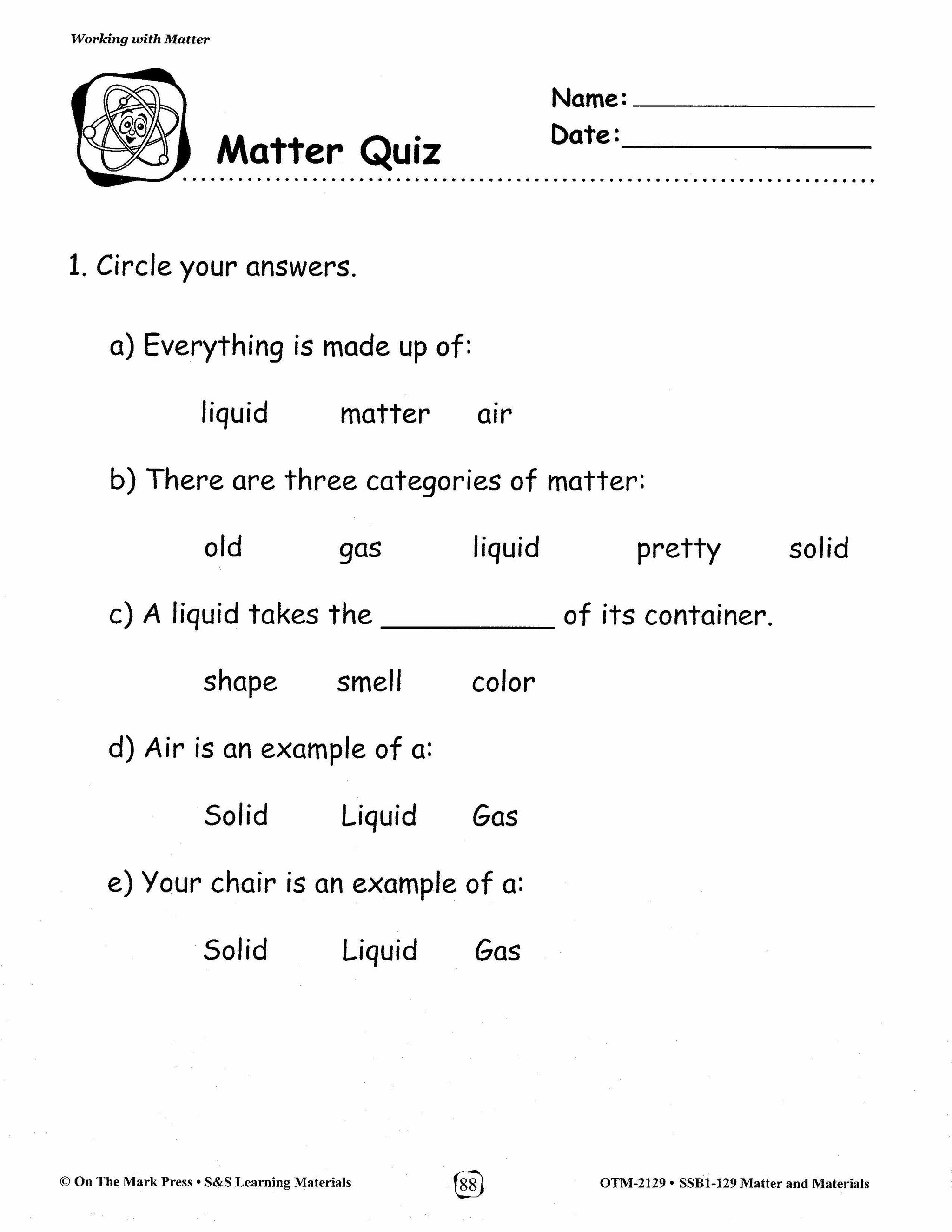
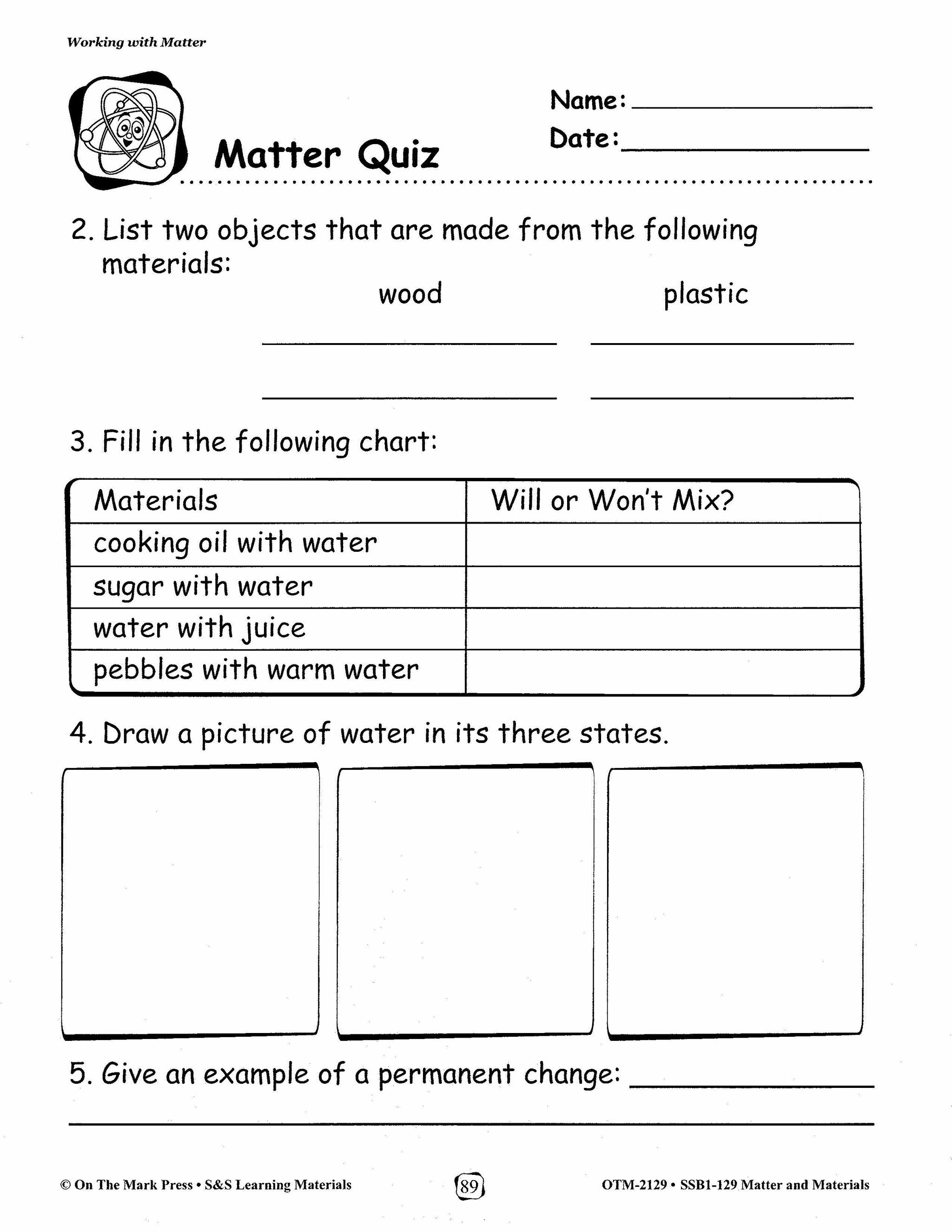
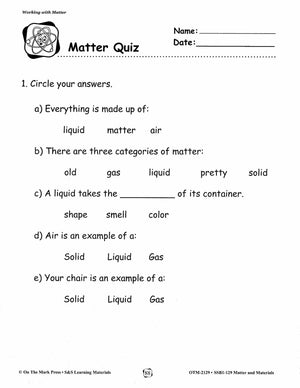
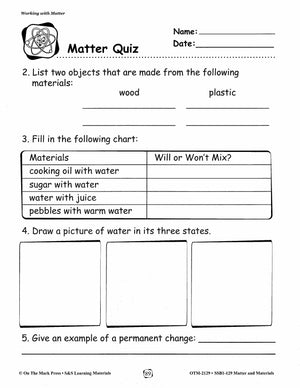
- Matter Quiz
Standards Alignment Overview
Core competencies covered across Grades 1–3:
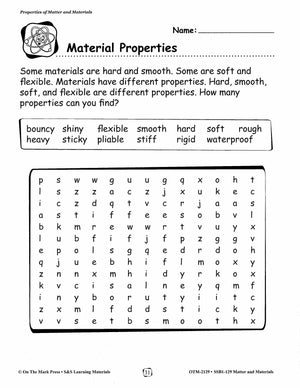
- Identifying materials and their properties
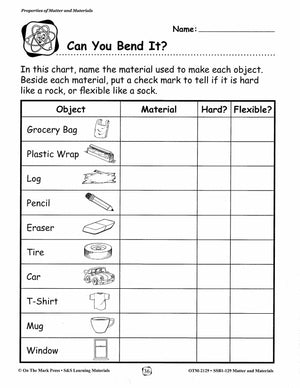
- Classifying objects and materials
- Understanding states of matter (solid, liquid, gas)
- Exploring changes in matter (melting, freezing, dissolving)
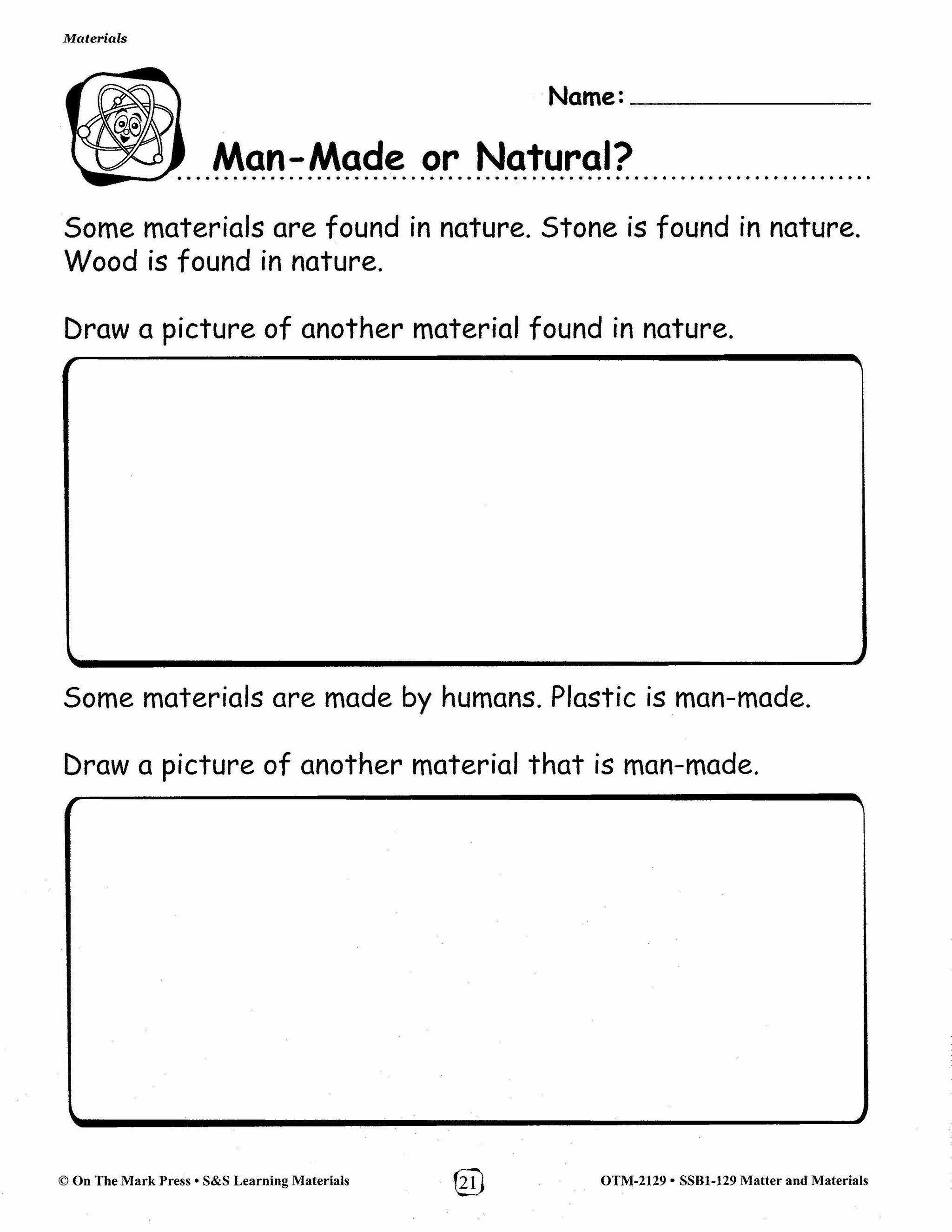
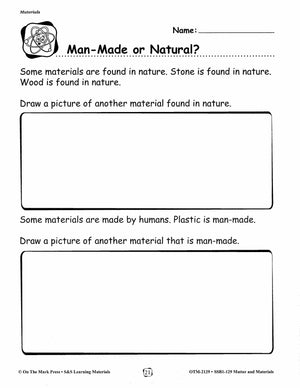
- Distinguishing natural vs. man‑made materials
- Using inquiry skills: predicting, observing, recording, concluding
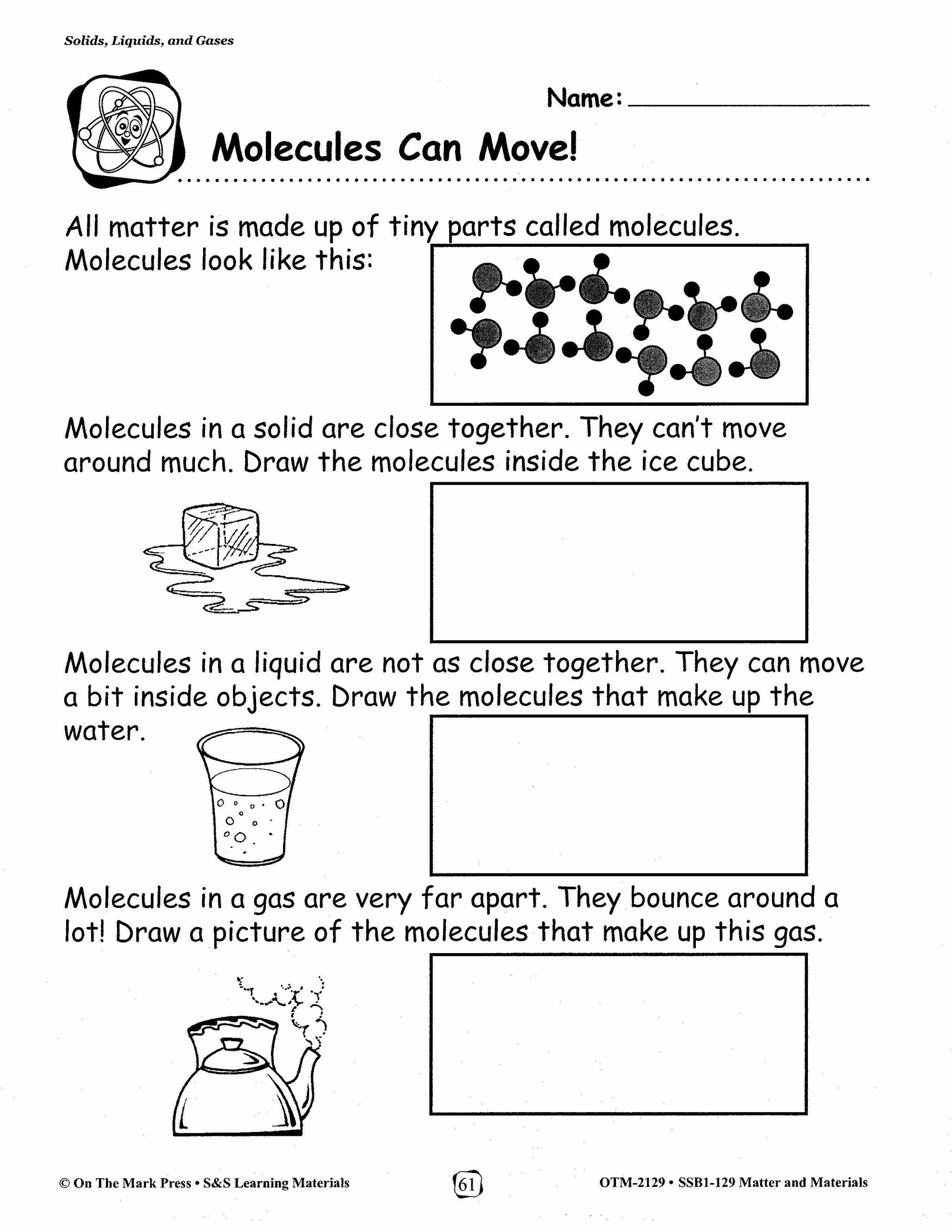
- Applying early particle theory concepts
- Relating science to everyday objects and environments
U.S. Standards Met
Common Core (ELA & Math Connections)
Although Common Core does not include science content standards, this resource supports CCSS skills through:
- Reading Informational Text (RI.1–3) – following procedures, identifying key details
- Writing (W.1–3) – recording observations, writing conclusions
- Speaking & Listening (SL.1–3) – group discussions, reporting results
- Math (MD.1–3) – sorting, classifying, counting, simple data tables
NGSS Next Generation Science Standards
Grade 1
- 1-PS4-1 (observations using senses)
- 1-PS4-2 (materials and properties)
- 1-PS4-3 (design solutions using materials)
- Science & Engineering Practices: predicting, observing, recording
Grade 2
- 2-PS1-1 (properties of materials)
- 2-PS1-2 (classifying materials)
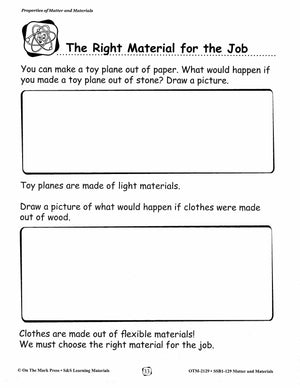
- 2-PS1-3 (testing materials for uses)
- 2-PS1-4 (changing matter)
Grade 3
- 3-PS2 & 3-PS1 (particle motion foundations)
- 3-5 ETS1 (design process, testing materials)
Canadian Provincial & Territorial Standards Met
Ontario – Grades 1–3 Science & Technology
- Understanding Matter & Energy (Overall Expectations)
- Grade 1: 1.1–1.4 (properties of materials), 2.1–2.5 (investigations), 3.1–3.3 (materials in everyday objects)
- Grade 2: 1.1–1.3 (properties), 2.1–2.4 (changes in matter), 3.1–3.3 (natural vs. man‑made)
- Grade 3: 1.1–1.3 (states of matter), 2.1–2.4 (changes), 3.1–3.2 (particle theory foundations)
British Columbia – Grades 1–3 Science
- Grade 1: Properties of objects and materials; First Peoples perspectives
- Grade 2: Solids and liquids; materials used for specific purposes
- Grade 3: Thermal energy and matter; changes in states
Alberta – Grades 1–3 Science
- Grade 1: Needs of plants/animals; objects & materials
- Grade 2: Exploring liquids; changes in materials
- Grade 3: Rocks/minerals; building materials; scientific inquiry
Saskatchewan – Grades 1–3 Science
- Grade 1: Characteristics of objects/materials
- Grade 2: States of matter; changes
- Grade 3: Forces, materials, and structures
Manitoba – Grades 1–3 Science
- Grade 1: Properties of materials
- Grade 2: Solids/liquids; changes
- Grade 3: Materials and structures; particle basics
Quebec – Science & Technology Cycle 1
- Properties of materials
- Transformation of matter
- Scientific inquiry processes
Nova Scotia – Grades P–3 Science
- Physical properties of materials
- States of matter
- Scientific investigation skills
New Brunswick – Grades K–3 Science
- Materials and their uses
- States of matter
- Inquiry and problem‑solving
Prince Edward Island – Grades 1–3 Science
- Properties of materials
- States of matter
- Scientific literacy and inquiry
Newfoundland & Labrador – Grades 1–3 Science
- Materials and their properties
- States of matter
- Scientific method and observation
Yukon – Follows BC Curriculum
Northwest Territories and Nunavut – Follows Alberta Curriculum